Bastiaansen J A C J, Thioux M, Keysers C
BCN NeuroImaging Center, University of Groningen, Antonius Deusinglaan 2, 9713 AW Groningen, The Netherlands.
Philos Trans R Soc Lond B Biol Sci. 2009 Aug 27;364(1528):2391-404. doi: 10.1098/rstb.2009.0058.
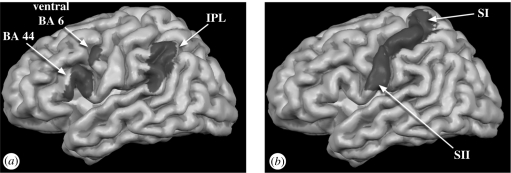
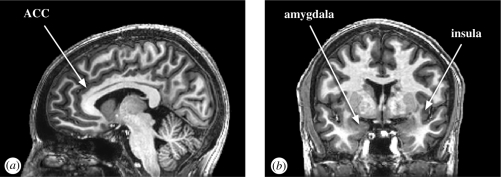
Why do we feel tears well up when we see a loved one cry? Why do we wince when we see other people hurt themselves? This review addresses these questions from the perspective of embodied simulation: observing the actions and tactile sensations of others activates premotor, posterior parietal and somatosensory regions in the brain of the observer which are also active when performing similar movements and feeling similar sensations. We will show that seeing the emotions of others also recruits regions involved in experiencing similar emotions, although there does not seem to be a reliable mapping of particular emotions onto particular brain regions. Instead, emotion simulation seems to involve a mosaic of affective, motor and somatosensory components. The relative contributions of these components to a particular emotion and their interrelationship are largely unknown, although recent experimental evidence suggests that motor simulation may be a trigger for the simulation of associated feeling states. This mosaic of simulations may be necessary for generating the compelling insights we have into the feelings of others. Through their integration with, and modulation by, higher cognitive functions, they could be at the core of important social functions, including empathy, mind reading and social learning.
为什么当我们看到所爱的人哭泣时会感到泪水涌上眼眶?为什么当我们看到别人伤害自己时会退缩?这篇综述从具身模拟的角度探讨了这些问题:观察他人的动作和触觉感受会激活观察者大脑中的运动前区、顶叶后部和体感区域,而这些区域在观察者执行类似动作和感受类似感觉时也会活跃。我们将表明,看到他人的情绪也会调动参与体验类似情绪的区域,尽管特定情绪与特定脑区之间似乎不存在可靠的对应关系。相反,情绪模拟似乎涉及情感、运动和体感成分的组合。这些成分对特定情绪的相对贡献及其相互关系在很大程度上尚不清楚,尽管最近的实验证据表明运动模拟可能是相关感觉状态模拟的触发因素。这种模拟的组合对于产生我们对他人感受的深刻理解可能是必要的。通过与更高层次的认知功能整合并受其调节,它们可能是包括同理心、读心术和社会学习在内的重要社会功能的核心。