Department of Neurosurgery, University of Iowa, Iowa City, 52242 USA.
Department of Radiology, University of Iowa, Iowa City, 52242 USA.
Philos Trans R Soc Lond B Biol Sci. 2024 Aug 26;379(1908):20230257. doi: 10.1098/rstb.2023.0257. Epub 2024 Jul 15.
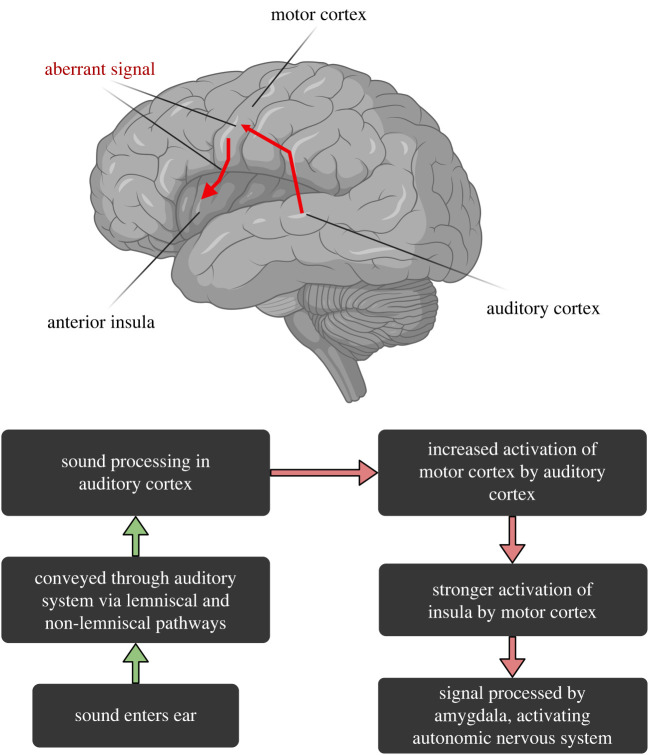
Misophonia is commonly classified by intense emotional reactions to common everyday sounds. The condition has an impact both on the mental health of its sufferers and societally. As yet, formal models on the basis of misophonia are in their infancy. Based on developing behavioural and neuroscientific research we are gaining a growing understanding of the phenomenology and empirical findings in misophonia, such as the importance of context, types of coping strategies used and the activation of particular brain regions. In this article, we argue for a model of misophonia that includes not only the sound but also the context within which sound is perceived and the emotional reaction triggered. We review the current behavioural and neuroimaging literature, which lends support to this idea. Based on the current evidence, we propose that misophonia should be understood within the broader context of social perception and cognition, and not restricted within the narrow domain of being a disorder of auditory processing. We discuss the evidence in support of this hypothesis, as well as the implications for potential treatment approaches. This article is part of the theme issue 'Sensing and feeling: an integrative approach to sensory processing and emotional experience'.
恐音症通常被归类为对常见日常声音的强烈情绪反应。这种情况不仅对患者的心理健康,也对整个社会产生影响。目前,基于恐音症的正式模型还处于起步阶段。基于不断发展的行为和神经科学研究,我们越来越了解恐音症的现象学和实证发现,例如环境的重要性、使用的应对策略类型以及特定大脑区域的激活。在本文中,我们主张建立一个包括声音、感知声音的环境以及引发的情绪反应的恐音症模型。我们回顾了当前的行为和神经影像学文献,这些文献支持了这一观点。基于现有证据,我们提出,应该将恐音症理解为社会感知和认知的更广泛背景的一部分,而不仅仅局限于听觉处理障碍的狭窄领域。我们讨论了支持这一假设的证据,以及对潜在治疗方法的影响。本文是“感知与感受:感官处理和情感体验的综合方法”主题特刊的一部分。