Wethal T, Lund M-B, Edvardsen T, Fosså S D, Pripp A H, Holte H, Kjekshus J, Fosså A
Department of Cardiology, University of Oslo, Sognsvannsveien 20, Oslo 0027, Norway.
Br J Cancer. 2009 Aug 18;101(4):575-81. doi: 10.1038/sj.bjc.6605191. Epub 2009 Jul 21.
Hodgkin's lymphoma survivors (HLSs) have an elevated risk for cardiovascular diseases that appear several years after radiotherapy. This study examined the time-dependent development and evolution of valvular and myocardial function related to treatment with mediastinal radiotherapy and anthracyclines in HLSs.
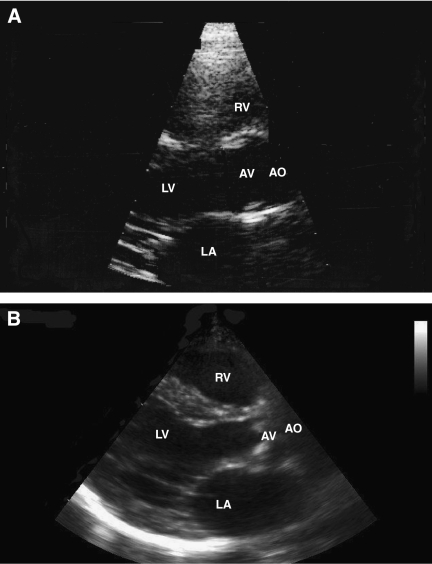
In 1993, echocardiography was performed in 116 HLSs median 10 years (range 6-13 years) after treatment with mediastinal radiotherapy. None of the 116 patients had valvular stenosis in 1993 whereas 36 (31%) had moderate valvular regurgitation. In 2005-2007, 51 of 57 invited patients were included in a second echocardiographic study - median 22 years (range 11-27 years) after treatment. Of these patients, 28 (55%) had also received anthracyclines. The patients were selected on the basis of the presence or absence of moderate valvular regurgitation in 1993.
The second echocardiographic study demonstrated that 10 out of 27 (37%) patients with only mild or no aortic or mitral regurgitation in 1993 had developed moderate regurgitation in either or both the aortic or mitral valve. Of the 24 patients with moderate (n=23) or severe (n=1) regurgitation in the aortic or mitral valve in 1993, 8 (33%) had progressed to severe regurgitation, developed moderate regurgitation in a previously normal or mild regurgitant valve or had received valvular replacement. In total, of all patients, 20 (39%) had developed mild to severe aortic stenosis and 3 patients had received valvular replacement. In a multiple linear regression the use of anthracyclines predicted left ventricular remodelling between ECHO 1993 and 2005 as demonstrated by increased left ventricular end systolic diameter (beta =0.09 (95% CI 0.01-0.17), P=0.04) and reduced thickness of the left ventricular posterior wall (beta =-0.18 (95% CI -0.33 to -0.03), P=0.02) and interventricular septum (beta =-0.16 (95% CI -0.30 to -0.03), P=0.02).
Given the progressive nature of valvular dysfunction and left ventricular remodelling 20-30 years after diagnosis, we recommend life-long cardiological follow-up of HLSs treated with mediastinal radiotherapy.
霍奇金淋巴瘤幸存者(HLSs)患心血管疾病的风险升高,这些疾病在放疗后数年出现。本研究调查了与纵隔放疗和蒽环类药物治疗相关的HLSs瓣膜和心肌功能随时间的发展和演变。
1993年,对116例接受纵隔放疗后的HLSs进行了超声心动图检查,中位时间为放疗后10年(范围6 - 13年)。1993年这116例患者中无一人有瓣膜狭窄,而36例(31%)有中度瓣膜反流。在2005 - 2007年,57例受邀患者中的51例纳入了第二项超声心动图研究——治疗后中位22年(范围11 - 27年)。这些患者中,28例(55%)也接受了蒽环类药物治疗。根据1993年是否存在中度瓣膜反流对患者进行选择。
第二项超声心动图研究表明,1993年仅有轻度或无主动脉或二尖瓣反流的27例患者中有10例(37%)在主动脉瓣或二尖瓣出现了中度反流。1993年主动脉瓣或二尖瓣有中度(n = 23)或重度(n = 1)反流的24例患者中,8例(33%)进展为重度反流,在之前正常或轻度反流的瓣膜出现中度反流或接受了瓣膜置换。总体而言,所有患者中有20例(39%)出现了轻度至重度主动脉狭窄,3例患者接受了瓣膜置换。在多元线性回归中,蒽环类药物的使用可预测1993年至2005年超声心动图检查之间的左心室重构,表现为左心室收缩末期内径增加(β = 0.09(95% CI 0.01 - 0.17),P = 0.04)以及左心室后壁厚度减小(β = -0.18(95% CI -0.33至 -0.03),P = 0.02)和室间隔厚度减小(β = -0.16(95% CI -0.30至 -0.03),P = 0.02)。
鉴于诊断后20 - 30年瓣膜功能障碍和左心室重构的进展性,我们建议对接受纵隔放疗的HLSs进行终身心脏随访。