Kruse Astrid L D, Grätz Klaus W
Department of Craniomaxillofacial and Oral Surgery, University of Zurich, Zurich, Switzerland.
Head Neck Oncol. 2009 Jul 22;1:29. doi: 10.1186/1758-3284-1-29.
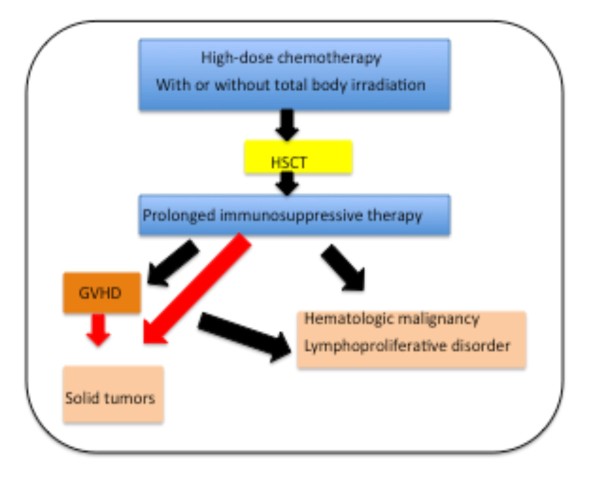
Patients undergoing hematopoietic stem cell transplantation (HSCT) have a higher risk of developing secondary solid tumors, in particular squamous cell carcinoma, because of several risk factors, including full-body irradiation (TBI), chemotherapy, and chronic graft versus host disease (GVHD). Based on the review presented here, a classification of oral changes is suggested in order to provide a tool to detect high-risk patients.
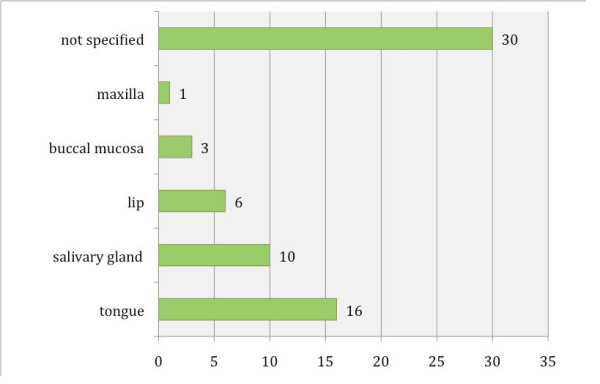
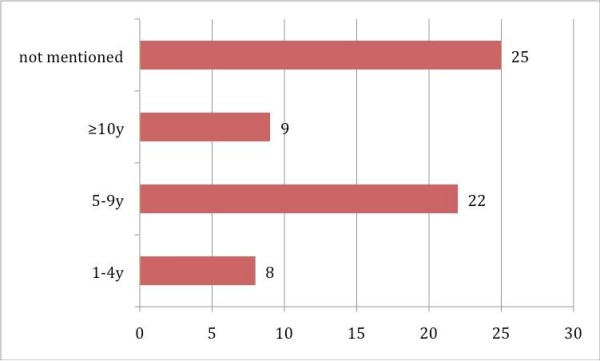
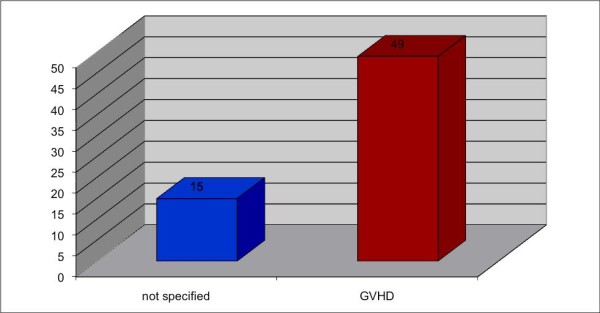
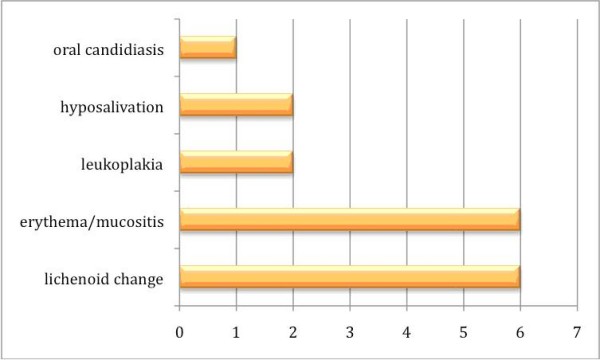
The literature over the last 30 years was reviewed for development of malignoma of the oral cavity after HSCT. Overall, 64 cases were found. In 16 out of 30 cases, the tongue was the primary location, followed by the salivary gland (10 out of 30); 56.4% appeared in a latency time of 5 to 9 years after HSCT. In 76.6%, GVHD was noticed before the occurrence of oral malignancy. Premalignant changes of the oral mucosa were mucositis, xerostomia, and lichenoid changes, developing into erosive form.
All physicians involved in the treatment of post-HSCT patients should be aware of the increased risk, even after 5 years from the development of oral malignancy, in particular when oral graft versus host changes are visible. In order to develop evidence based management, screening and offer adequate therapy as early as possible in this patient group, multicenter studies, involving oncologists and head and neck surgeons, should be established.
由于包括全身照射(TBI)、化疗和慢性移植物抗宿主病(GVHD)等多种风险因素,接受造血干细胞移植(HSCT)的患者发生继发性实体瘤尤其是鳞状细胞癌的风险更高。基于此处呈现的综述,建议对口腔变化进行分类,以便提供一种检测高危患者的工具。
回顾了过去30年中关于HSCT后口腔恶性肿瘤发生情况的文献。总共发现64例病例。在30例病例中的16例中,舌头是主要发病部位,其次是唾液腺(30例中的10例);56.4%的病例在HSCT后5至9年的潜伏期出现。在76.6%的病例中,在口腔恶性肿瘤发生之前已发现GVHD。口腔黏膜的癌前变化为黏膜炎、口干症和苔藓样改变,并发展为糜烂形式。
所有参与HSCT后患者治疗的医生都应意识到风险增加,即使在口腔恶性肿瘤发生5年后也是如此,特别是当出现口腔移植物抗宿主改变时。为了制定基于证据的管理方案,对该患者群体进行筛查并尽早提供适当治疗,应开展涉及肿瘤学家和头颈外科医生的多中心研究。