Division of Clinical Cancer Epidemiology, Department of Oncology, Sahlgrenska Academy, University of Gothenburg, Sweden.
BMC Med Res Methodol. 2009 Jul 27;9:56. doi: 10.1186/1471-2288-9-56.
In epidemiological studies researchers use logistic regression as an analytical tool to study the association of a binary outcome to a set of possible exposures.
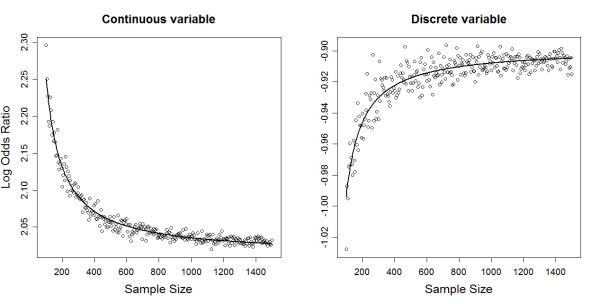
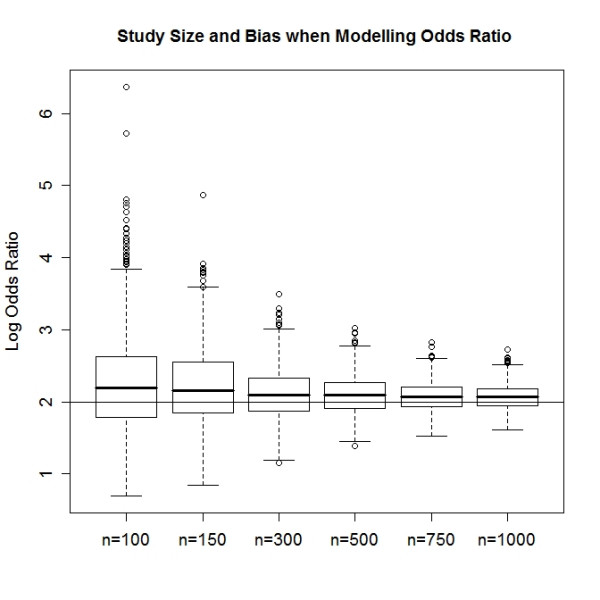
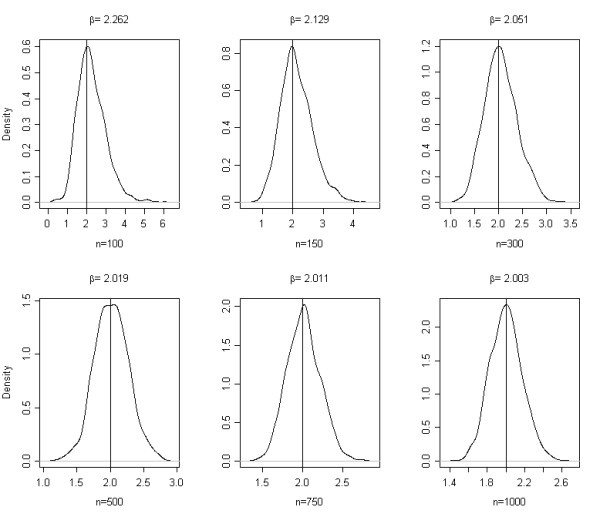
Using a simulation study we illustrate how the analytically derived bias of odds ratios modelling in logistic regression varies as a function of the sample size.
Logistic regression overestimates odds ratios in studies with small to moderate samples size. The small sample size induced bias is a systematic one, bias away from null. Regression coefficient estimates shifts away from zero, odds ratios from one.
If several small studies are pooled without consideration of the bias introduced by the inherent mathematical properties of the logistic regression model, researchers may be mislead to erroneous interpretation of the results.
在流行病学研究中,研究人员使用逻辑回归作为分析工具,研究二项结果与一组可能的暴露因素之间的关联。
我们通过模拟研究说明了逻辑回归中优势比模型的分析偏差如何随样本量的变化而变化。
在样本量小至中等的研究中,逻辑回归高估了优势比。小样本量引起的偏差是系统的,向零偏差。回归系数估计值偏离零,优势比偏离一。
如果在没有考虑逻辑回归模型固有的数学性质引入的偏差的情况下对几个小研究进行汇总,研究人员可能会错误地解释结果。