Department of Psychology, University of North Carolina, Chapel Hill, USA.
J Youth Adolesc. 2009 Feb;38(2):153-63. doi: 10.1007/s10964-008-9356-x. Epub 2008 Oct 24.
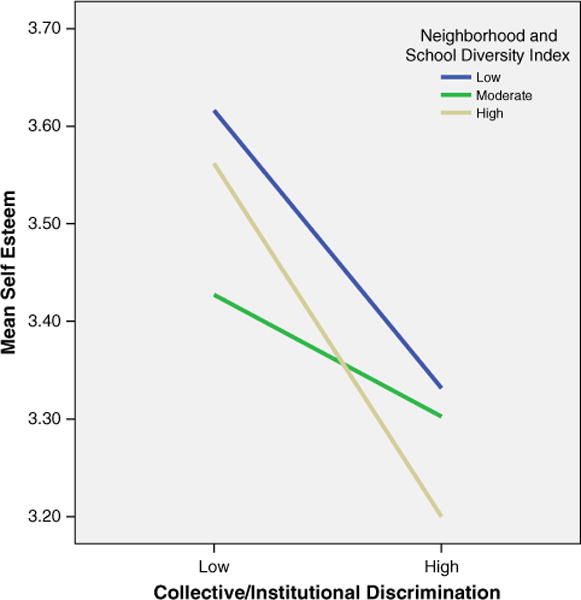
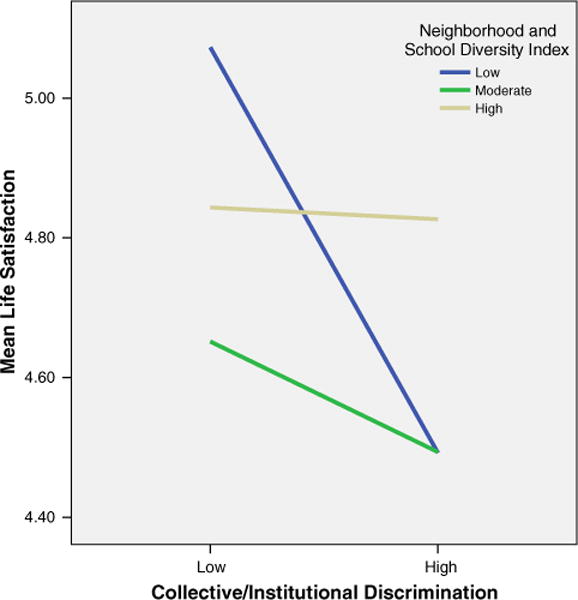
The present study examined contextual influences on the relationship between racial discrimination (individual, cultural, and collective/institutional) and psychological well-being. Two hundred and fifty two African American adolescents (46% male and 54% female, average age = 16) completed measures of racial discrimination, self-esteem, depressive symptoms and life satisfaction. Archival information regarding the racial/ethnic composition of the participants' neighborhoods and schools was used and increased school diversity was linked to increased perceptions of cultural discrimination. Regardless of school and neighborhood diversity, high perceptions of collective/institutional discrimination were linked to lower self-esteem for students in high diversity settings. Further, high levels of collective/institutional discrimination were associated with lower life satisfaction for African American youth in low diversity settings.
本研究考察了种族歧视(个体、文化和集体/制度)与心理健康之间关系的背景影响。252 名非裔美国青少年(46%为男性,54%为女性,平均年龄=16 岁)完成了种族歧视、自尊、抑郁症状和生活满意度的测量。使用了参与者所在社区和学校的种族/族裔构成的档案信息,并且学校的多样性增加与文化歧视的感知增加有关。无论学校和社区的多样性如何,在高多样性环境中,学生对集体/制度歧视的高度认知与较低的自尊有关。此外,在低多样性环境中,高水平的集体/制度歧视与非裔美国青年的生活满意度降低有关。