Dash Ajit, Inman Walker, Hoffmaster Keith, Sevidal Samantha, Kelly Joan, Obach R Scott, Griffith Linda G, Tannenbaum Steven R
Massachusetts Institute of Technology, Cambridge, MA 02139, USA.
Expert Opin Drug Metab Toxicol. 2009 Oct;5(10):1159-74. doi: 10.1517/17425250903160664.
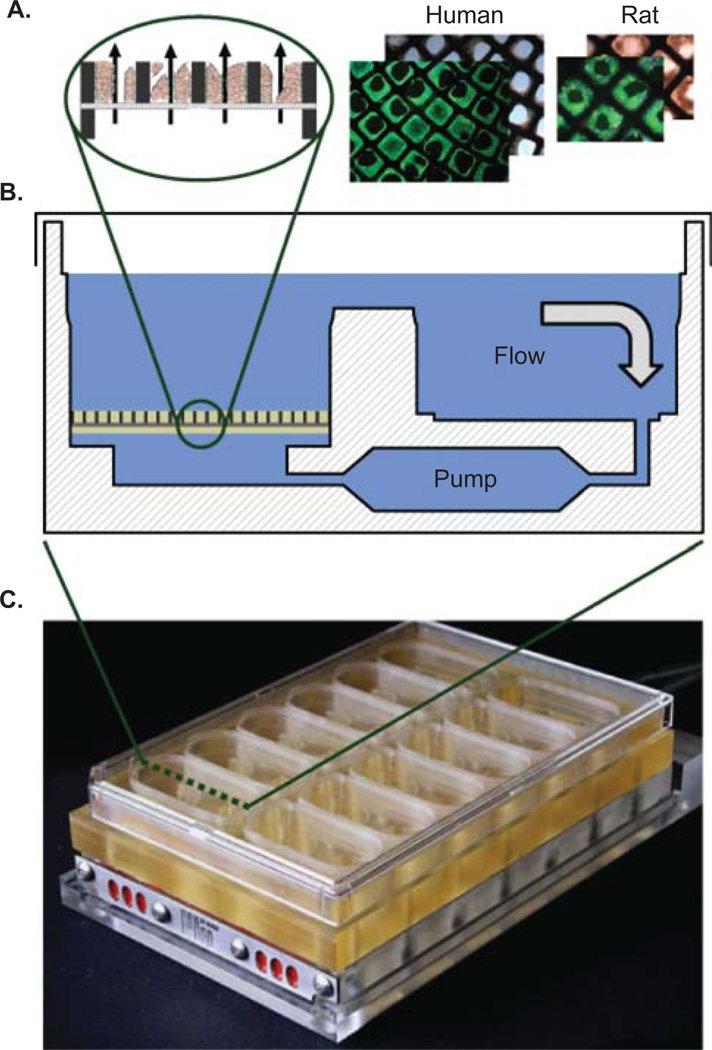
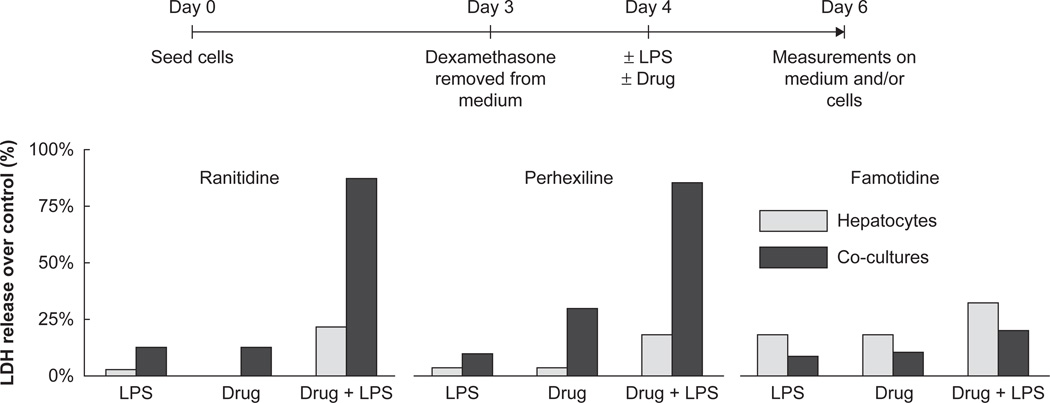
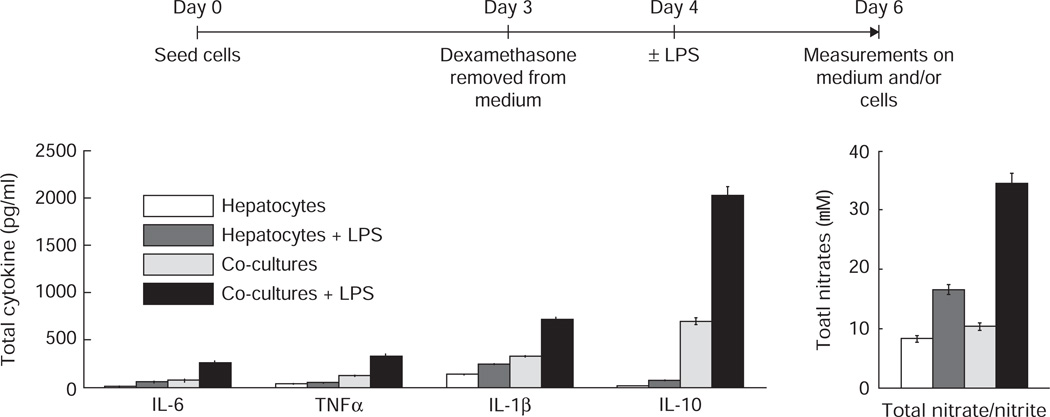
Assessment of drug-liver interactions is an integral part of predicting the safety profile of new drugs. Existing model systems range from in vitro cell culture models to FDA-mandated animal tests. Data from these models often fail, however, to predict human liver toxicity, resulting in costly failures of clinical trials. In vitro screens based on cultured hepatocytes are now commonly used in early stages of development, but many toxic responses in vivo seem to be mediated by a complex interplay among several different cell types. We discuss some of the evolving trends in liver cell culture systems applied to drug safety assessment and describe an experimental model that captures complex liver physiology through incorporation of heterotypic cell-cell interactions, 3D architecture and perfused flow. We demonstrate how heterotypic interactions in this system can be manipulated to recreate an inflammatory environment and apply the model to test compounds that potentially exhibit idiosyncratic drug toxicity. Finally, we provide a perspective on how the range of existing and emerging in vitro liver culture approaches, from simple to complex, might serve needs across the range of stages in drug discovery and development, including applications in molecular therapeutics.
药物与肝脏相互作用的评估是预测新药安全性的一个重要组成部分。现有的模型系统涵盖从体外细胞培养模型到美国食品药品监督管理局规定的动物试验。然而,这些模型的数据常常无法预测人体肝脏毒性,导致临床试验成本高昂的失败。基于培养肝细胞的体外筛选目前常用于药物研发的早期阶段,但体内的许多毒性反应似乎是由几种不同细胞类型之间复杂的相互作用介导的。我们讨论了应用于药物安全性评估的肝细胞培养系统的一些发展趋势,并描述了一种通过纳入异型细胞间相互作用、三维结构和灌注流来捕捉复杂肝脏生理学的实验模型。我们展示了如何在该系统中操纵异型相互作用以重建炎症环境,并应用该模型测试可能表现出特异质性药物毒性的化合物。最后,我们就现有的和新兴的从简单到复杂的体外肝脏培养方法如何满足药物发现和开发各个阶段的需求,包括在分子治疗中的应用,提供了一个观点。