Miles Lee G, Isberg Sally R, Glenn Travis C, Lance Stacey L, Dalzell Pauline, Thomson Peter C, Moran Chris
Faculty of Veterinary Science, University of Sydney, NSW 2006, Australia.
BMC Genomics. 2009 Jul 29;10:339. doi: 10.1186/1471-2164-10-339.
Genome elucidation is now in high gear for many organisms, and whilst genetic maps have been developed for a broad array of species, surprisingly, no such maps exist for a crocodilian, or indeed any other non-avian member of the Class Reptilia. Genetic linkage maps are essential tools for the mapping and dissection of complex quantitative trait loci (QTL), and in order to permit systematic genome scans for the identification of genes affecting economically important traits in farmed crocodilians, a comprehensive genetic linage map will be necessary.
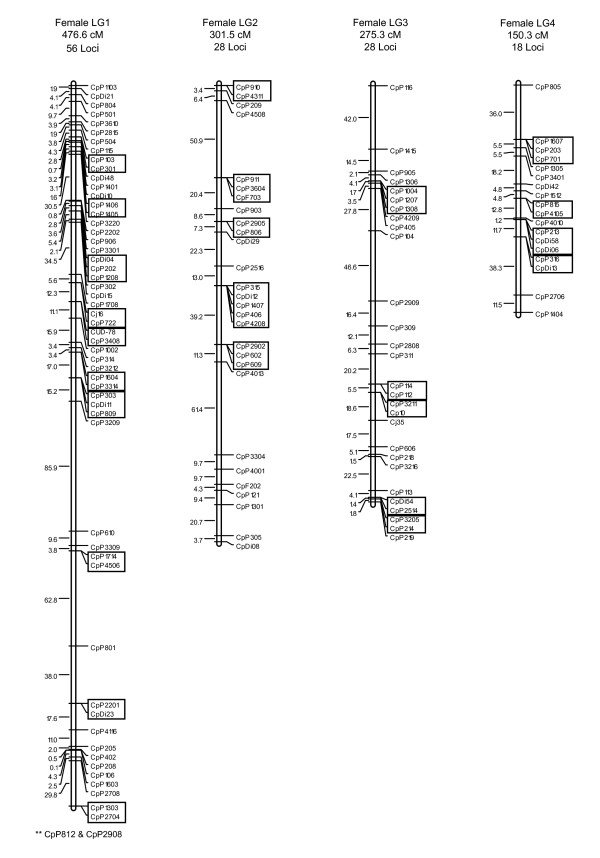
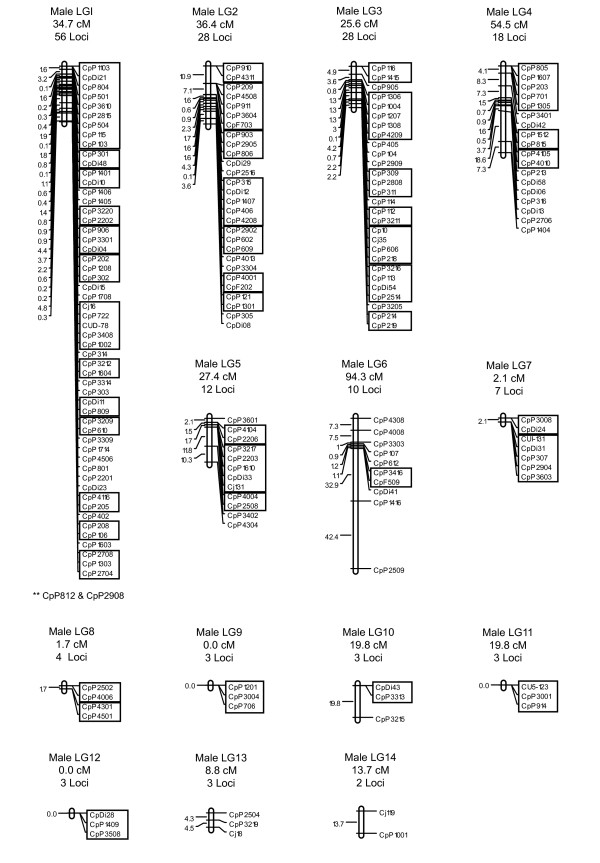
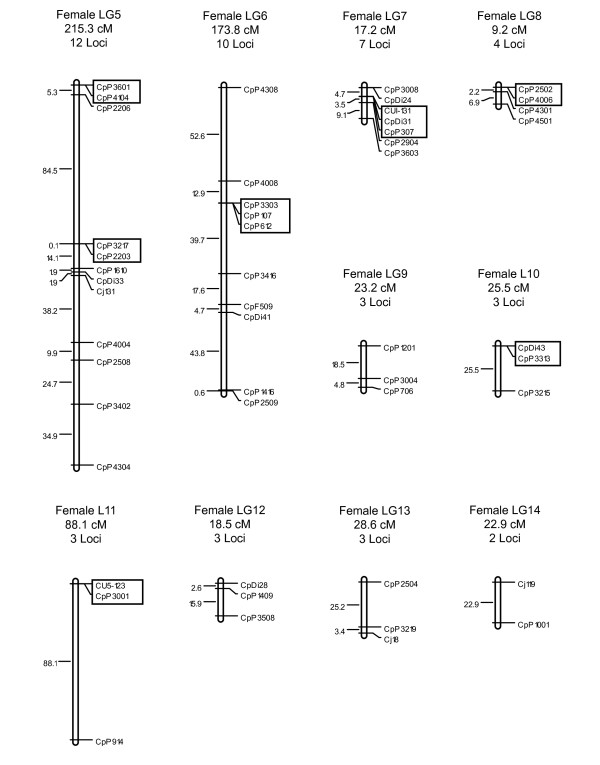
A first-generation genetic linkage map for the saltwater crocodile (Crocodylus porosus) was constructed using 203 microsatellite markers amplified across a two-generation pedigree comprising ten full-sib families from a commercial population at Darwin Crocodile Farm, Northern Territory, Australia. Linkage analyses identified fourteen linkage groups comprising a total of 180 loci, with 23 loci remaining unlinked. Markers were ordered within linkage groups employing a heuristic approach using CRIMAP v3.0 software. The estimated female and male recombination map lengths were 1824.1 and 319.0 centimorgans (cM) respectively, revealing an uncommonly large disparity in recombination map lengths between sexes (ratio of 5.7:1).
We have generated the first genetic linkage map for a crocodilian, or indeed any other non-avian reptile. The uncommonly large disparity in recombination map lengths confirms previous preliminary evidence of major differences in sex-specific recombination rates in a species that exhibits temperature-dependent sex determination (TSD). However, at this point the reason for this disparity in saltwater crocodiles remains unclear.This map will be a valuable resource for crocodilian researchers, facilitating the systematic genome scans necessary for identifying genes affecting complex traits of economic importance in the crocodile industry. In addition, since many of the markers placed on this genetic map have been evaluated in up to 18 other extant species of crocodilian, this map will be of intrinsic value to comparative mapping efforts aimed at understanding genome content and organization among crocodilians, as well as the molecular evolution of reptilian and other amniote genomes. As researchers continue to work towards elucidation of the crocodilian genome, this first generation map lays the groundwork for more detailed mapping investigations, as well as providing a valuable scaffold for future genome sequence assembly.
目前许多生物的基因组解析工作正在紧锣密鼓地进行,虽然已经为众多物种构建了遗传图谱,但令人惊讶的是,鳄鱼或爬行纲的任何其他非鸟类成员都没有这样的图谱。遗传连锁图谱是定位和剖析复杂数量性状基因座(QTL)的重要工具,为了能够系统地扫描基因组以鉴定影响养殖鳄鱼经济重要性状的基因,有必要构建一个全面的遗传连锁图谱。
利用203个微卫星标记构建了咸水鳄(Crocodylus porosus)的第一代遗传连锁图谱,这些标记在一个两代家系中进行了扩增,该家系由澳大利亚北领地达尔文鳄鱼养殖场商业种群中的十个全同胞家系组成。连锁分析确定了14个连锁群,共包含180个基因座,23个基因座未连锁。使用CRIMAP v3.0软件采用启发式方法在连锁群内对标记进行排序。估计雌性和雄性重组图谱长度分别为1824.1和319.0厘摩(cM),揭示了两性之间重组图谱长度存在异常大的差异(比例为5.7:1)。
我们构建了首个鳄鱼或任何其他非鸟类爬行动物的遗传连锁图谱。重组图谱长度存在异常大的差异,证实了之前关于一个表现出温度依赖型性别决定(TSD)的物种中性别特异性重组率存在重大差异的初步证据。然而,目前咸水鳄中这种差异的原因尚不清楚。该图谱将为鳄鱼研究人员提供宝贵资源,有助于进行系统的基因组扫描,以鉴定影响鳄鱼养殖行业中具有经济重要性的复杂性状的基因。此外,由于该遗传图谱上的许多标记已在多达18种其他现存鳄鱼物种中进行了评估,该图谱对于旨在了解鳄鱼基因组内容和组织以及爬行动物和其他羊膜动物基因组分子进化的比较图谱研究具有内在价值。随着研究人员继续致力于解析鳄鱼基因组,这第一代图谱为更详细的图谱研究奠定了基础,并为未来的基因组序列组装提供了宝贵的框架。