Joussen Antonia M, Doehmen Sven, Le Minh L, Koizumi Kan, Radetzky Sven, Krohne Tim U, Poulaki Vassiliki, Semkova Irina, Kociok Norbert
Department of Ophthalmology, Heinrich Heine University, Duesseldorf, Germany.
Mol Vis. 2009 Jul 25;15:1418-28.
The pathophysiology of diabetic retinopathy involves leukocyte adhesion to retinal vasculature, early blood-retinal barrier breakdown, capillary nonperfusion, and endothelial cell death. We investigated the involvement of tumor necrosis factor alpha (TNF-alpha) in diabetes-related histopathological changes in two relevant rodent models.
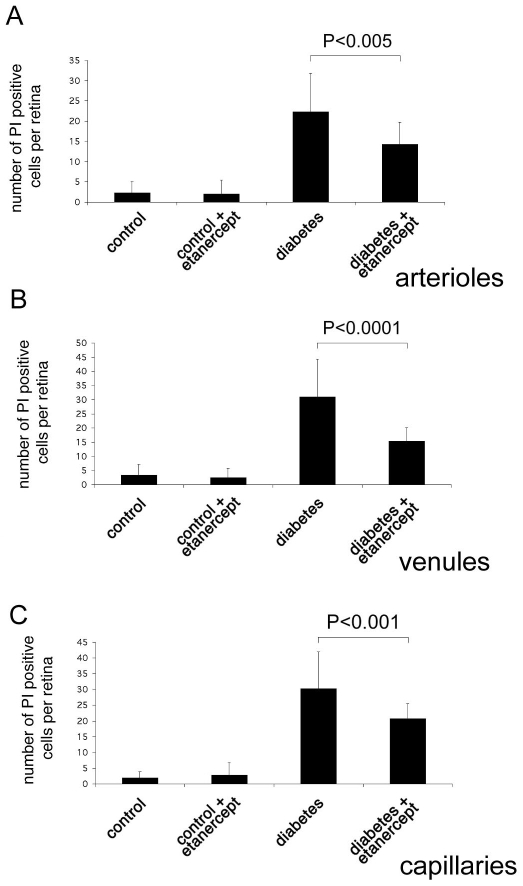
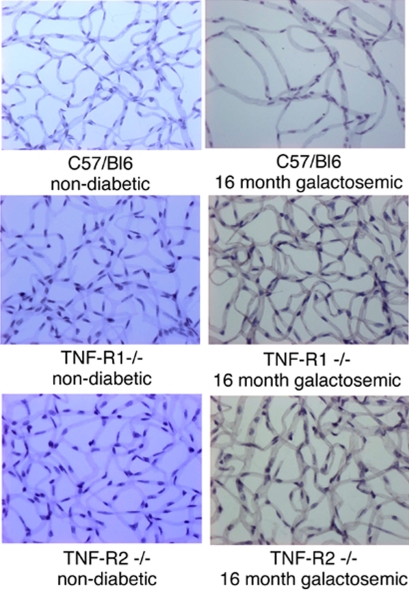
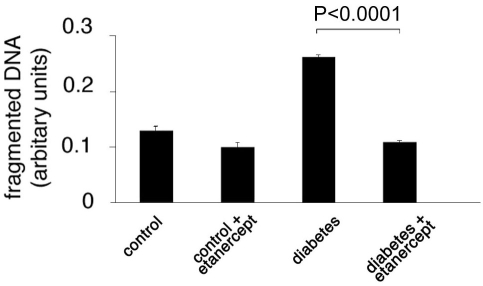
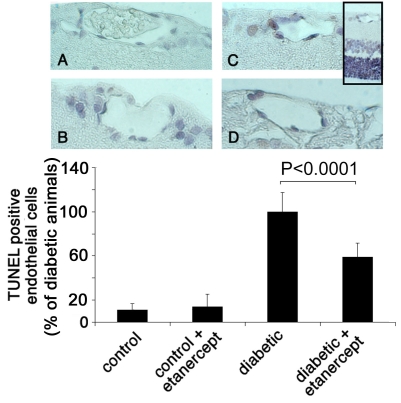
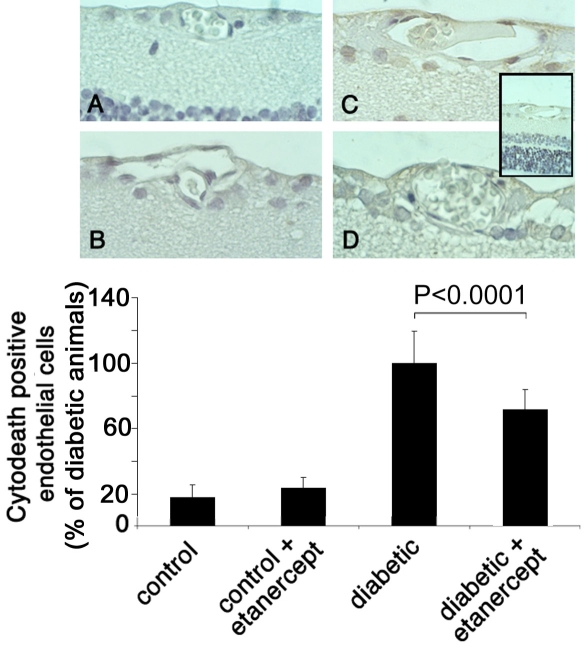
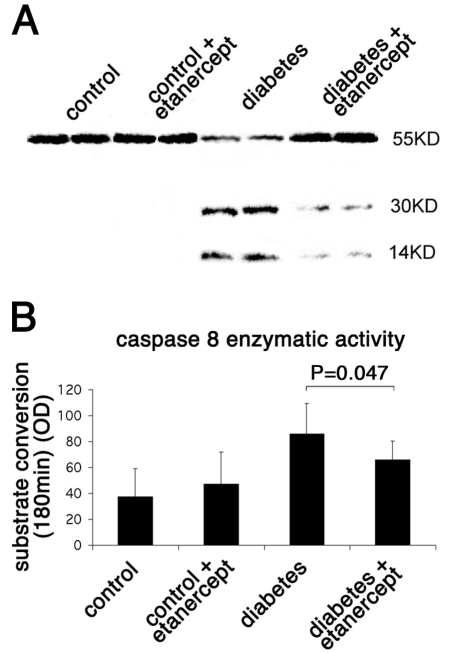
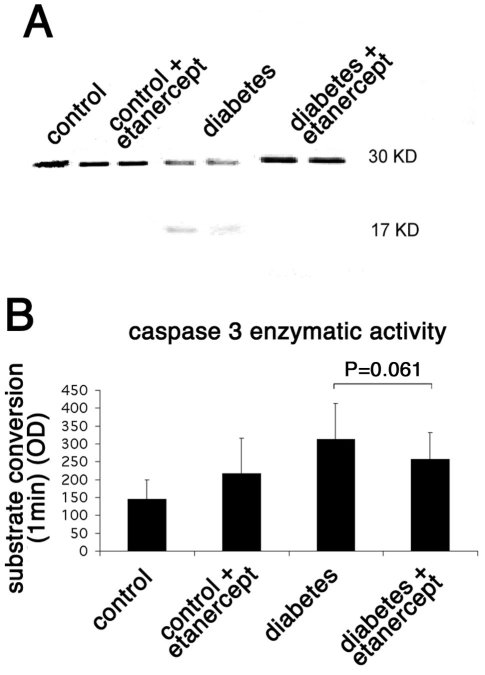
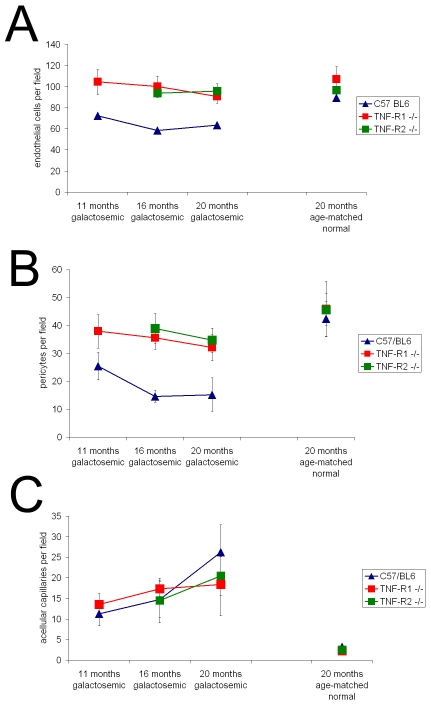
In short-term studies, Long-Evans rats with streptozotocin-induced diabetes were treated with or without the TNF-alpha inhibitor, etanercept. For long-term studies, tumor necrosis factor receptor I (TNF-RI)-deficient mice and TNF-RII-deficient mice, as well as C57/Bl6 wild-type mice, were fed 30% galactose for up to 20 months. The retinal histopathological alterations of hypergalactosemia were analyzed in trypsin digest preparations. Endothelial cell injury and apoptosis in rat retinas were evaluated by propidium iodide, TUNEL, CytoDeath staining, and DNA fragmentation ELISA. Caspase 3 and 8 activity was evaluated by immunoblotting and quantitative enzymatic activity assay.
Etanercept suppressed caspase activation, retinal cell injury, and apoptosis in short-term diabetic rats. Pericyte and endothelial cell loss were also reduced in long-term hypergalactosemic mice. Long-term studies demonstrated that pericyte loss and endothelial cell loss were reduced in comparison to wild-type diabetic controls.
Our study identifies an important role for TNF-alpha in the pathogenesis of signature diabetic retinopathy pathologies and demonstrates that etanercept can inhibit retinal cell death and long-term complication of diabetes. Taken together, our results suggest that etanercept could prove beneficial in preventing both early and late vascular diabetic complications.
糖尿病视网膜病变的病理生理学涉及白细胞黏附于视网膜血管、早期血视网膜屏障破坏、毛细血管无灌注以及内皮细胞死亡。我们在两种相关的啮齿动物模型中研究了肿瘤坏死因子α(TNF-α)在糖尿病相关组织病理学变化中的作用。
在短期研究中,用链脲佐菌素诱导糖尿病的Long-Evans大鼠接受或不接受TNF-α抑制剂依那西普治疗。在长期研究中,给肿瘤坏死因子受体I(TNF-RI)缺陷小鼠、TNF-RII缺陷小鼠以及C57/Bl6野生型小鼠喂食30%半乳糖长达20个月。在胰蛋白酶消化制剂中分析高半乳糖血症的视网膜组织病理学改变。通过碘化丙啶、TUNEL、细胞死亡染色和DNA片段化ELISA评估大鼠视网膜中的内皮细胞损伤和凋亡。通过免疫印迹和定量酶活性测定评估半胱天冬酶3和8的活性。
依那西普抑制短期糖尿病大鼠中的半胱天冬酶激活、视网膜细胞损伤和凋亡。长期高半乳糖血症小鼠中的周细胞和内皮细胞丢失也减少。长期研究表明,与野生型糖尿病对照相比,周细胞丢失和内皮细胞丢失减少。
我们的研究确定了TNF-α在典型糖尿病视网膜病变病理发生中的重要作用,并证明依那西普可抑制视网膜细胞死亡和糖尿病的长期并发症。综上所述,我们的结果表明依那西普可能在预防糖尿病早期和晚期血管并发症方面有益。