Centro Investigaciones Médicas y Departamento Nefrología, Escuela Medicina Pontificia Universidad Católica, Santiago, Chile.
Reprod Biol Endocrinol. 2009 Jul 31;7:79. doi: 10.1186/1477-7827-7-79.
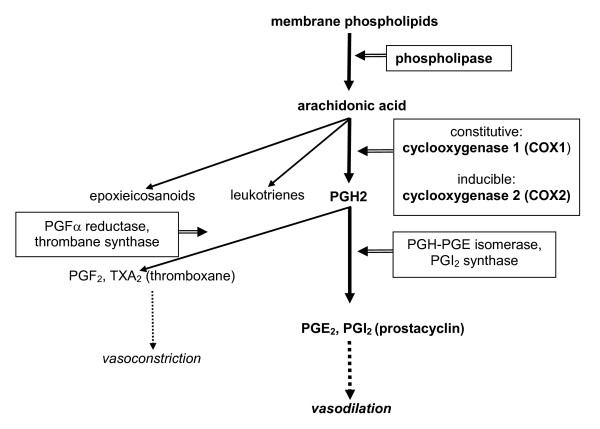
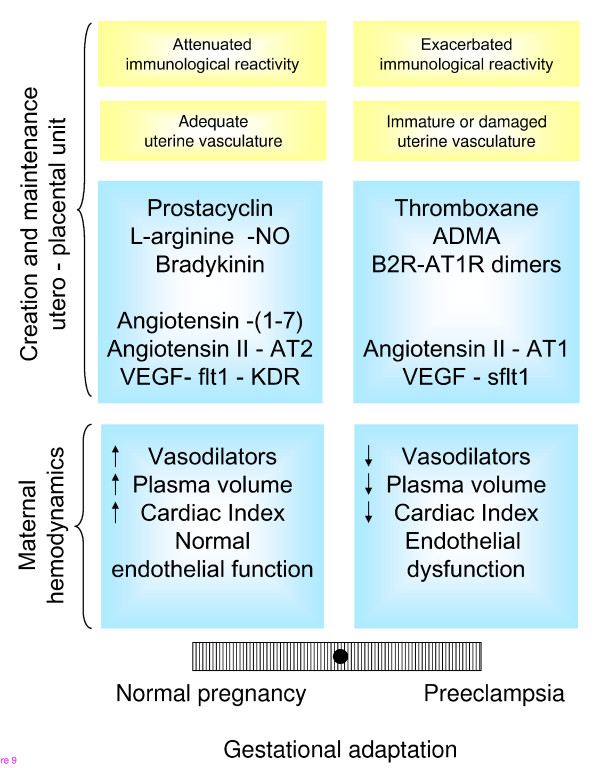
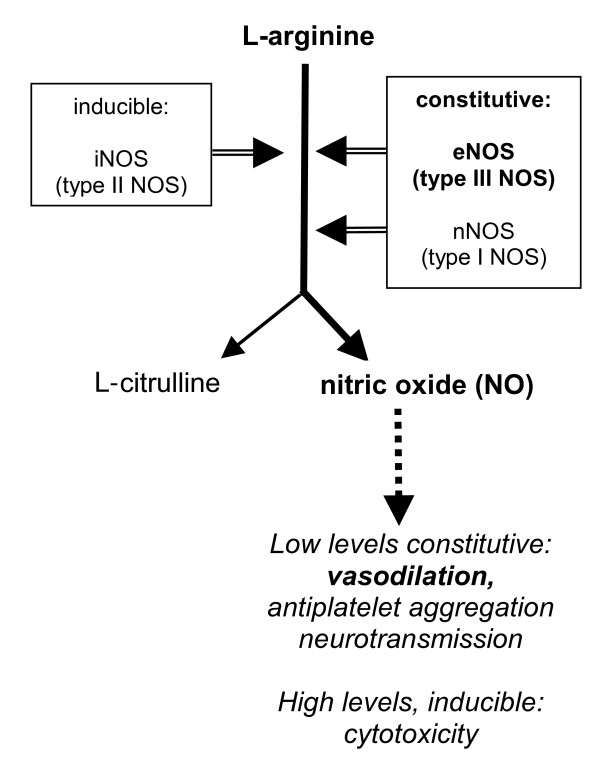
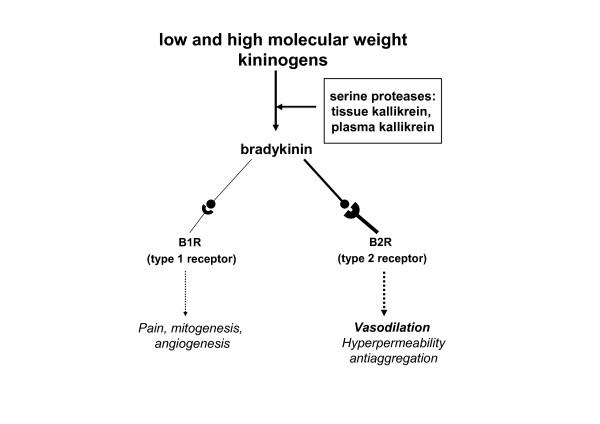
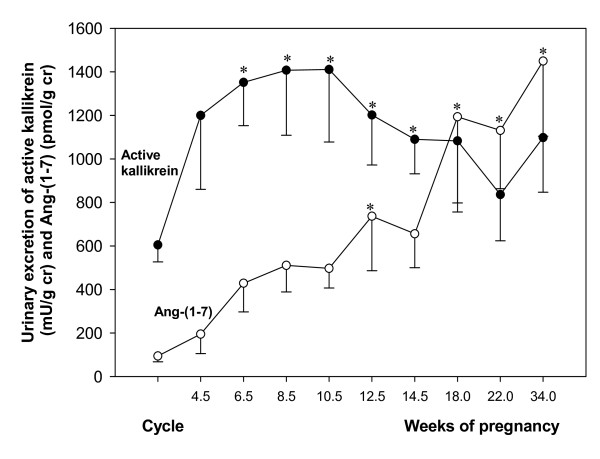
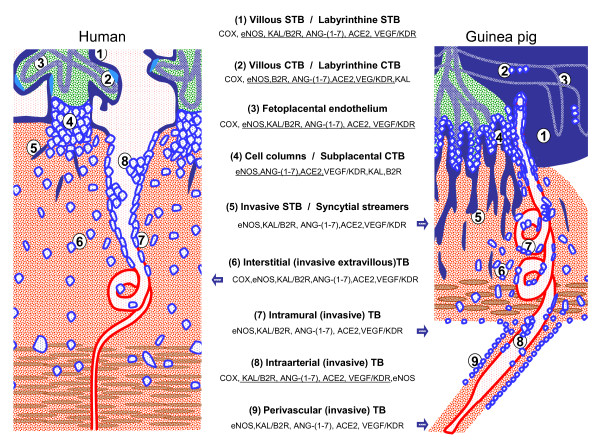
We postulate that an orchestrated network composed of various vasodilatory systems participates in the systemic and local hemodynamic adaptations in pregnancy. The temporal patterns of increase in the circulating and urinary levels of five vasodilator factors/systems, prostacyclin, nitric oxide, kallikrein, angiotensin-(1-7) and VEGF, in normal pregnant women and animals, as well as the changes observed in preeclamptic pregnancies support their functional role in maintaining normotension by opposing the vasoconstrictor systems. In addition, the expression of these vasodilators in the different trophoblastic subtypes in various species supports their role in the transformation of the uterine arteries. Moreover, their expression in the fetal endothelium and in the syncytiotrophoblast in humans, rats and guinea-pigs, favour their participation in maintaining the uteroplacental circulation. The findings that sustain the functional associations of the various vasodilators, and their participation by endocrine, paracrine and autocrine regulation of the systemic and local vasoactive changes of pregnancy are abundant and compelling. However, further elucidation of the role of the various players is hampered by methodological problems. Among these difficulties is the complexity of the interactions between the different factors, the likelihood that experimental alterations induced in one system may be compensated by the other players of the network, and the possibility that data obtained by manipulating single factors in vitro or in animal studies may be difficult to translate to the human. In addition, the impossibility of sampling the uteroplacental interface along normal pregnancy precludes obtaining longitudinal profiles of the various players. Nevertheless, the possibility of improving maternal blood pressure regulation, trophoblast invasion and uteroplacental flow by enhancing vasodilation (e.g. L-arginine, NO donors, VEGF transfection) deserves unravelling the intricate association of vasoactive factors and the systemic and local adaptations to pregnancy.
我们假设一个由各种血管舒张系统组成的协调网络参与了妊娠期间的全身和局部血液动力学适应。在正常孕妇和动物中,五种血管舒张因子/系统(前列腺素 I2、一氧化氮、激肽释放酶、血管紧张素-(1-7)和血管内皮生长因子)的循环和尿水平的增加呈现出时间模式,以及在子痫前期妊娠中观察到的变化,支持它们通过对抗血管收缩系统来维持正常血压的功能作用。此外,这些血管舒张剂在不同物种的不同滋养层亚型中的表达支持它们在子宫动脉转化中的作用。此外,它们在人类、大鼠和豚鼠的胎儿内皮细胞和合体滋养层中的表达,有利于它们参与维持胎盘循环。支持各种血管舒张剂的功能关联的发现,以及它们通过内分泌、旁分泌和自分泌调节妊娠全身和局部血管活性变化的参与,是丰富和有说服力的。然而,进一步阐明各种参与者的作用受到方法学问题的阻碍。这些困难包括:不同因素之间相互作用的复杂性;实验改变一个系统可能被网络中的其他参与者补偿的可能性;以及通过在体外或动物研究中操纵单一因素获得的数据可能难以转化为人类的可能性。此外,由于无法在正常妊娠期间取样胎盘界面,因此无法获得各种参与者的纵向谱。然而,通过增强血管舒张(例如 L-精氨酸、NO 供体、VEGF 转染)来改善母体血压调节、滋养细胞浸润和胎盘血流的可能性,值得进一步探讨血管活性因子和全身及局部适应妊娠的复杂关联。