Tian Xinsheng, Lu Guangwen, Gao Feng, Peng Hao, Feng Youjun, Ma Guangpeng, Bartlam Mark, Tian Kegong, Yan Jinghua, Hilgenfeld Rolf, Gao George F
CAS Key Laboratory of Pathogenic Microbiology and Immunology, Institute of Microbiology, Chinese Academy of Sciences, Beijing 100101, China.
J Mol Biol. 2009 Oct 2;392(4):977-93. doi: 10.1016/j.jmb.2009.07.062. Epub 2009 Jul 29.
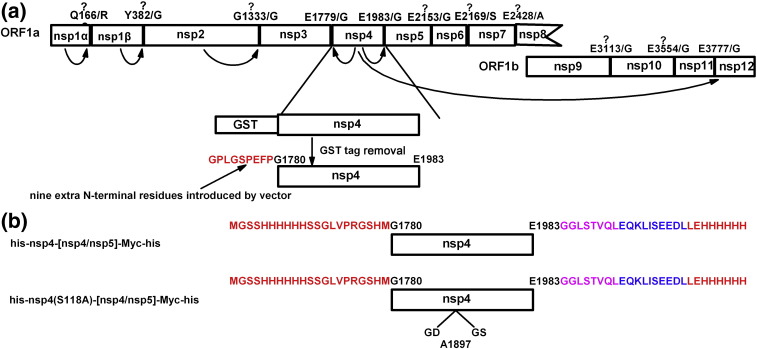
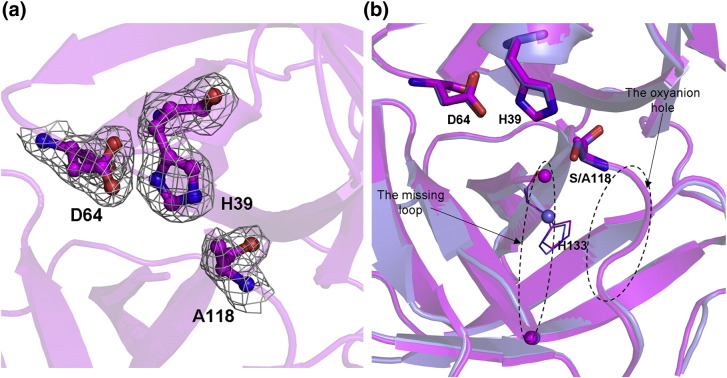
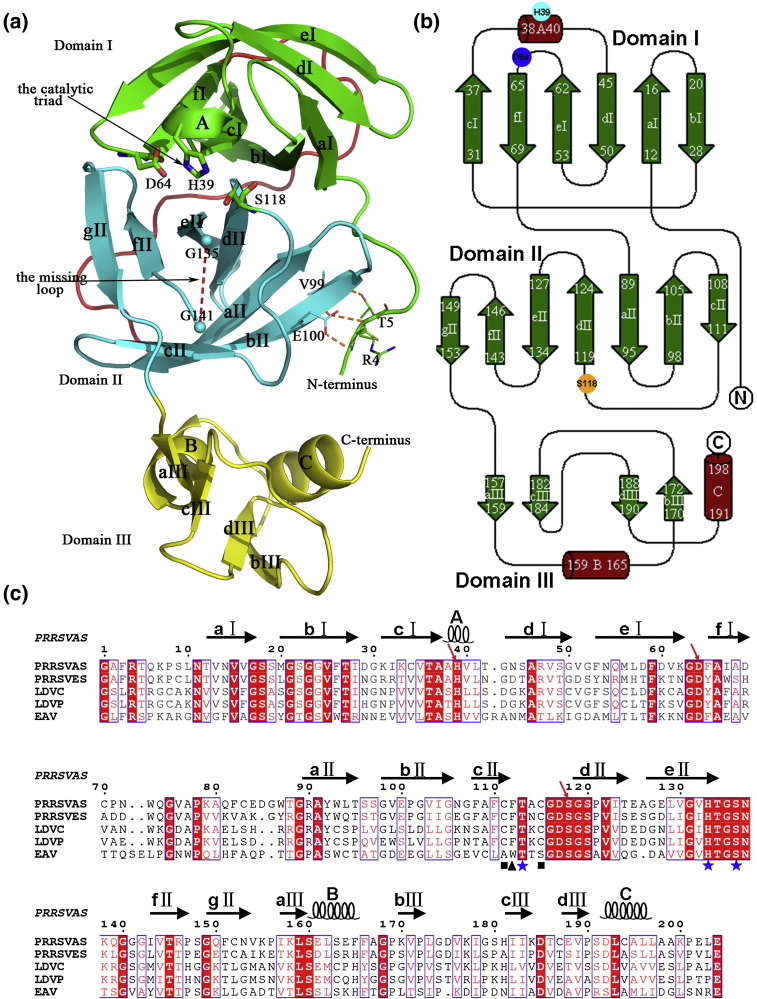
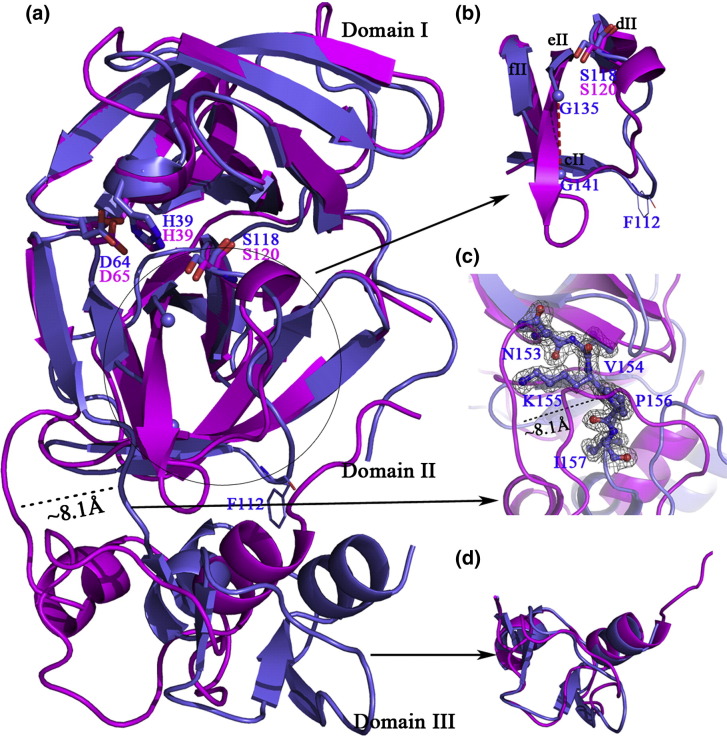
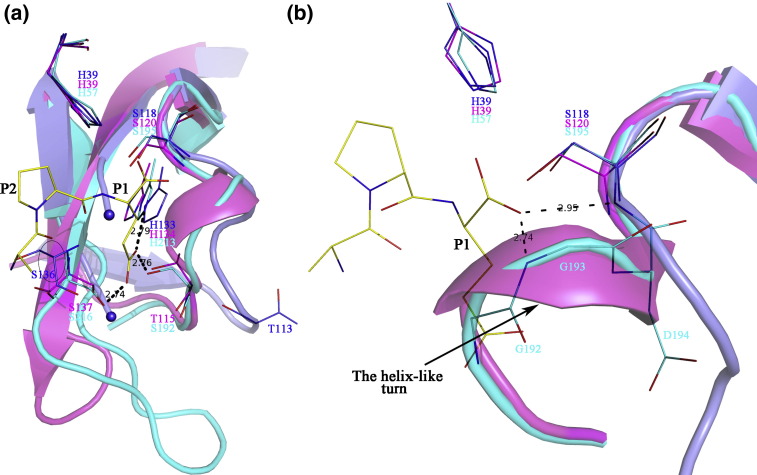
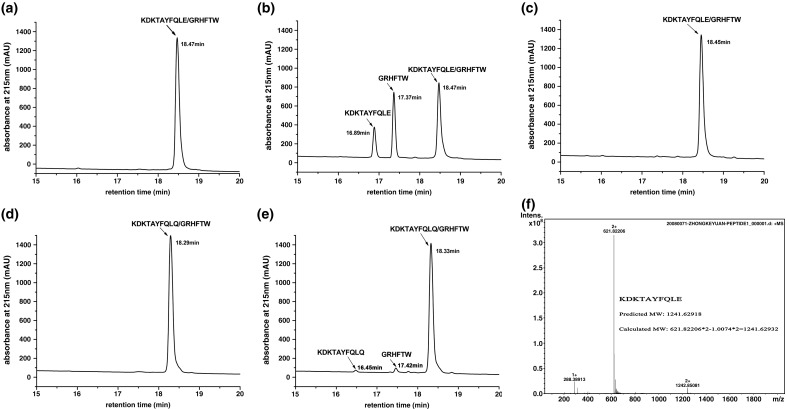
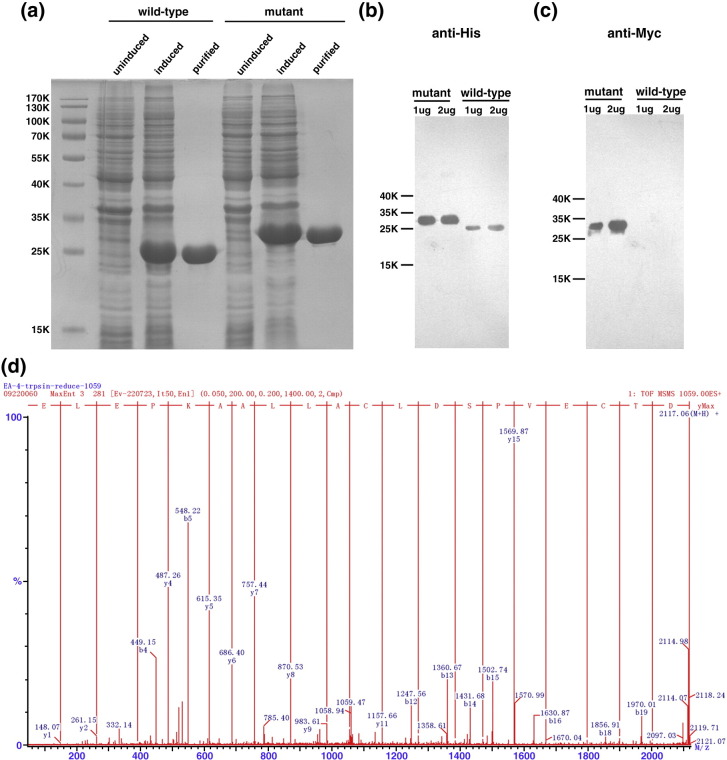
Biogenesis and replication of the porcine reproductive and respiratory syndrome virus (PRRSV) include the crucial step of replicative polyprotein processing by self-encoded proteases. Whole genome bioinformatics analysis suggests that nonstructural protein 4 (nsp4) is a 3C-like serine protease (3CLSP), responsible for most of the nonstructural protein processing. The gene encoding this protease was cloned and expressed in Escherichia coli in order to confirm this prediction. The purified protein was crystallized, and the structure was solved at 1.9 A resolution. In addition, the crystal structure of the Ser118Ala mutant was determined at 2.0 A resolution. The monomeric enzyme folds into three domains, similar to that of the homologous protease of equine arteritis virus, which, like PRRSV, is a member of the family Arteriviridae in the order of Nidovirales. The active site of the PRRSV 3CLSP is located between domains I and II and harbors a canonical catalytic triad comprising Ser118, His39, and Asp64. The structure also shows an atypical oxyanion hole and a partially collapsed S1 specificity pocket. The proteolytic activity of the purified protein was assessed in vitro. Three sites joining nonstructural protein domains in the PRRSV replicative polyprotein are confirmed to be processed by the enzyme. Two of them, the nsp3/nsp4 and nsp11/nsp12 junctions, are shown to be cleaved in trans, while cis cleavage is demonstrated for the nsp4/nsp5 linker. Thus, we provide structural evidence as well as enzymatic proof of the nsp4 protein being a functional 3CLSP. We also show that the enzyme has a strong preference for glutamic acid at the P1 position of the substrate.
猪繁殖与呼吸综合征病毒(PRRSV)的生物发生和复制包括通过自身编码蛋白酶进行复制性多聚蛋白加工这一关键步骤。全基因组生物信息学分析表明,非结构蛋白4(nsp4)是一种类3C丝氨酸蛋白酶(3CLSP),负责大部分非结构蛋白的加工。为了证实这一预测,编码该蛋白酶的基因被克隆并在大肠杆菌中表达。纯化后的蛋白被结晶,并以1.9 Å的分辨率解析了其结构。此外,还以2.0 Å的分辨率测定了Ser118Ala突变体的晶体结构。该单体酶折叠成三个结构域,类似于马动脉炎病毒的同源蛋白酶,马动脉炎病毒与PRRSV一样,是尼多病毒目动脉炎病毒科的成员。PRRSV 3CLSP的活性位点位于结构域I和II之间,包含一个由Ser118、His39和Asp64组成的典型催化三联体。该结构还显示出一个非典型的氧阴离子洞和一个部分塌陷的S1特异性口袋。在体外评估了纯化蛋白的蛋白水解活性。证实PRRSV复制性多聚蛋白中连接非结构蛋白结构域的三个位点可被该酶加工。其中两个位点,即nsp3/nsp4和nsp11/nsp12连接处,显示为反式切割,而nsp4/nsp5连接区则为顺式切割。因此,我们提供了nsp4蛋白是一种功能性3CLSP的结构证据和酶学证据。我们还表明,该酶对底物P1位置的谷氨酸有强烈偏好。