Suh Hyeon-Sook, Zhao Meng-Liang, Choi Namjong, Belbin Thomas J, Brosnan Celia F, Lee Sunhee C
Department of Pathology, Albert Einstein College of Medicine, Bronx, NY 10461, USA.
Virology. 2009 Sep 30;392(2):246-59. doi: 10.1016/j.virol.2009.07.001. Epub 2009 Jul 30.
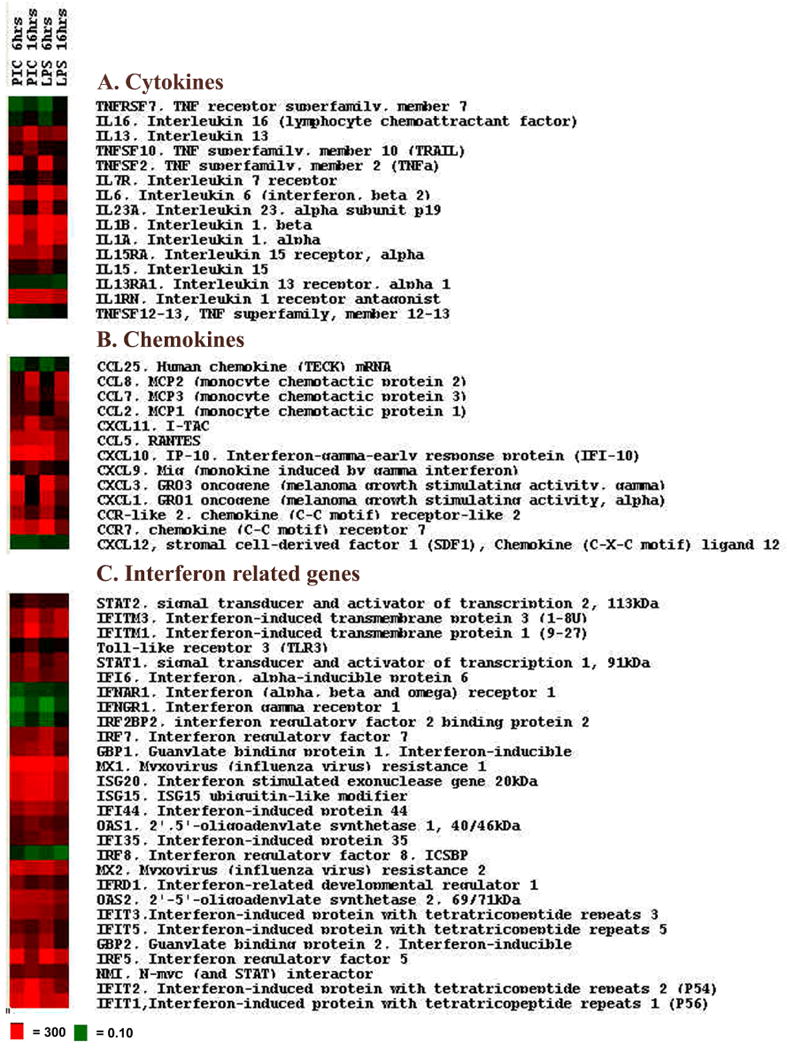
In the CNS, microglia are the primary targets of HIV infection. In this study, we investigated the effect of activation of the innate antiviral receptors TLR3 and TLR4 on HIV infection of primary human microglia, as well as microglial cell signaling and gene expression. Ligands for both TLR3 and TLR4 potently inhibited HIV replication in microglia through a pathway requiring IRF3. Surprisingly, a remarkably similar pattern of cell signaling and gene expression was observed in TLR3- and TLR4-activated microglia, suggesting a relatively minor role for MyD88 following TLR4 activation in these cells. HIV did not activate IRF3 but rather decreased IRF3 protein, indicating that HIV does not activate TLR3 or RIG-like helicases in microglia. Taken together, these results indicate that activation of TLR3 or TLR4 will elicit antiviral immunity, in addition to inducing proinflammatory responses. We suggest that a balanced expression between inflammatory and innate immune genes might be achieved by IRF3 over-expression.
在中枢神经系统中,小胶质细胞是HIV感染的主要靶标。在本研究中,我们调查了天然抗病毒受体TLR3和TLR4的激活对原代人小胶质细胞HIV感染的影响,以及小胶质细胞的信号传导和基因表达。TLR3和TLR4的配体通过需要IRF3的途径有效抑制小胶质细胞中的HIV复制。令人惊讶的是,在TLR3和TLR4激活的小胶质细胞中观察到了明显相似的细胞信号传导和基因表达模式,这表明在这些细胞中TLR4激活后MyD88的作用相对较小。HIV并未激活IRF3,反而降低了IRF3蛋白水平,这表明HIV不会激活小胶质细胞中的TLR3或RIG样解旋酶。综上所述,这些结果表明,TLR3或TLR4的激活除了诱导促炎反应外,还将引发抗病毒免疫。我们建议通过IRF3的过表达来实现炎症和天然免疫基因之间的平衡表达。