• 文献检索
  • 文档翻译
  • 深度研究
  • 学术资讯
  • Suppr Zotero 插件Zotero 插件
  • 邀请有礼
  • 套餐&价格
  • 历史记录
应用&插件
Suppr Zotero 插件Zotero 插件浏览器插件Mac 客户端Windows 客户端微信小程序
定价
高级版会员购买积分包购买API积分包
服务
文献检索文档翻译深度研究API 文档MCP 服务
关于我们
关于 Suppr公司介绍联系我们用户协议隐私条款
关注我们

Suppr 超能文献

核心技术专利:CN118964589B侵权必究
粤ICP备2023148730 号-1Suppr @ 2026

文献检索

告别复杂PubMed语法,用中文像聊天一样搜索,搜遍4000万医学文献。AI智能推荐,让科研检索更轻松。

立即免费搜索

文件翻译

保留排版,准确专业,支持PDF/Word/PPT等文件格式,支持 12+语言互译。

免费翻译文档

深度研究

AI帮你快速写综述,25分钟生成高质量综述,智能提取关键信息,辅助科研写作。

立即免费体验

三种监测贫困人口医疗服务利用情况的方法。

Three methods to monitor utilization of healthcare services by the poor.

机构信息

Social and Behvioural Sciences Unit, Public Health Sciences Division, ICDDR, B, Mohakhali, Dhaka 1212, Bangladesh.

出版信息

Int J Equity Health. 2009 Aug 4;8:29. doi: 10.1186/1475-9276-8-29.

DOI:10.1186/1475-9276-8-29
PMID:19650938
原文链接:https://pmc.ncbi.nlm.nih.gov/articles/PMC2729304/
Abstract

BACKGROUND

Achieving equity by way of improving the condition of the economically poor or otherwise disadvantaged is among the core goals of contemporary development paradigm. This places importance on monitoring outcome indicators among the poor. National surveys allow disaggregation of outcomes by socioeconomic status at national level and do not have statistical adequacy to provide estimates for lower level administrative units. This limits the utility of these data for programme managers to know how well particular services are reaching the poor at the lowest level. Managers are thus left without a tool for monitoring results for the poor at lower levels. This paper demonstrates that with some extra efforts community and facility based data at the lower level can be used to monitor utilization of healthcare services by the poor.

METHODS

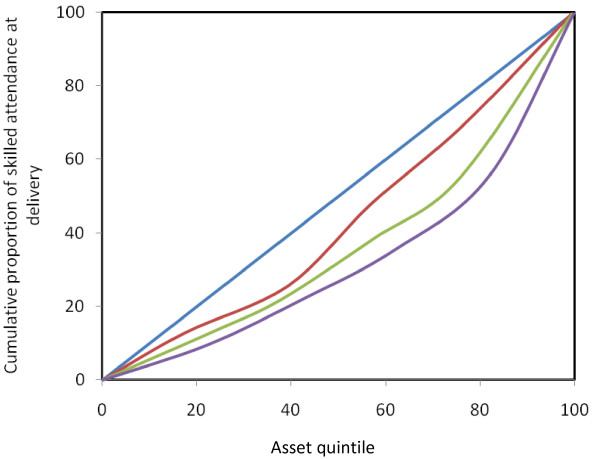
Data used in this paper came from two sources- Chakaria Health and Demographic Surveillance System (HDSS) of ICDDR,B and from a special study conducted during 2006 among patients attending the public and private health facilities in Chakaria, Bangladesh. The outcome variables included use of skilled attendants for delivery and use of facilities. Rate-ratio, rate-difference, concentration index, benefit incidence ratio, sequential sampling, and Lot Quality Assurance Sampling were used to assess how pro-poor is the use of skilled attendants for delivery and healthcare facilities.

FINDINGS

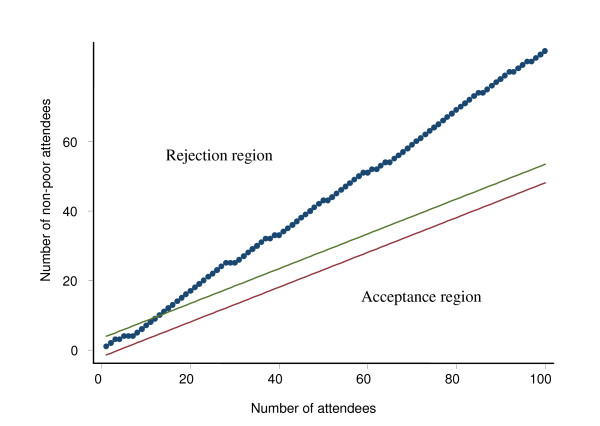
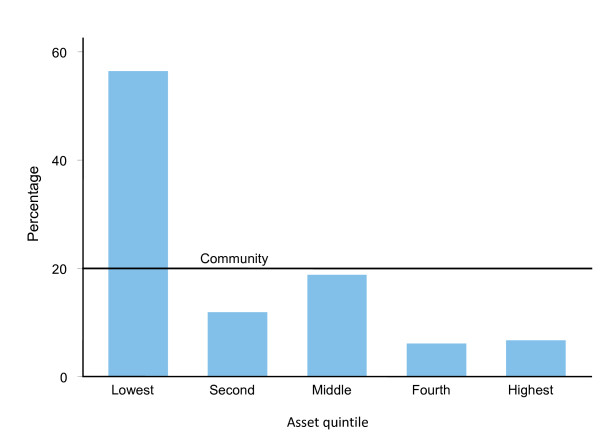
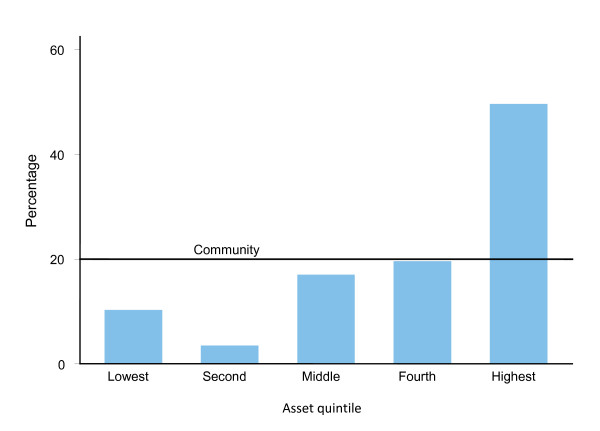
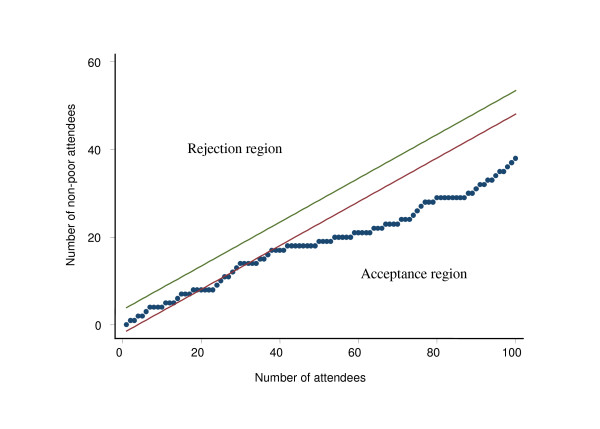
Poor are using skilled attendants for delivery far less than the better offs. Government health service facilities are used more than the private facilities by the poor.Benefit incidence analysis and sequential sampling techniques could assess the situation realistically which can be used for monitoring utilization of services by poor. The visual display of the findings makes both these methods attractive. LQAS, on the other hand, requires small fixed sample and always enables decision making.

CONCLUSION

With some extra efforts monitoring of the utilization of healthcare services by the poor at the facilities can be done reliably. If monitored, the findings can guide the programme and facility managers to act in a timely fashion to improve the effectiveness of the programme in reaching the poor.

摘要

背景

通过改善经济贫困或其他弱势群体的条件来实现公平,是当代发展模式的核心目标之一。这就需要关注贫困人口的结果指标。国家调查允许在国家层面上按社会经济地位对结果进行细分,但没有足够的统计能力为较低级别的行政单位提供估计值。这限制了这些数据对于方案管理者的用途,无法了解特定服务在最低级别上对穷人的覆盖程度。因此,管理者没有工具来监测较低级别穷人的成果。本文证明,通过一些额外的努力,可以利用较低级别社区和设施的数据来监测穷人对医疗保健服务的利用情况。

方法

本文使用的数据来自两个来源—— ICDDR,B 的查卡里亚健康和人口监测系统(HDSS)和 2006 年在孟加拉国查卡里亚的公立和私立卫生设施就诊的患者进行的一项特别研究。结果变量包括熟练助产士的分娩和设施的使用。使用率比、率差、集中指数、受益发生率比、序贯抽样和批量质量保证抽样来评估熟练助产士分娩和医疗设施使用对穷人的倾斜程度。

结果

穷人使用熟练助产士分娩的比例远远低于富裕人群。穷人更倾向于使用政府卫生服务设施,而不是私人设施。受益发生率分析和序贯抽样技术可以现实地评估情况,可用于监测穷人对服务的利用情况。调查结果的直观显示使这两种方法都具有吸引力。另一方面,LQAS 需要固定的小样本,并且总是能够做出决策。

结论

通过一些额外的努力,可以可靠地监测穷人在设施中对医疗保健服务的利用情况。如果进行监测,这些发现可以指导方案和设施管理者及时采取行动,提高方案在覆盖穷人方面的有效性。
https://cdn.ncbi.nlm.nih.gov/pmc/blobs/1818/2729304/902607b0b86f/1475-9276-8-29-5.jpg
https://cdn.ncbi.nlm.nih.gov/pmc/blobs/1818/2729304/e4736b29c5ca/1475-9276-8-29-1.jpg
https://cdn.ncbi.nlm.nih.gov/pmc/blobs/1818/2729304/7b86a3d3289d/1475-9276-8-29-2.jpg
https://cdn.ncbi.nlm.nih.gov/pmc/blobs/1818/2729304/724a29c3f177/1475-9276-8-29-3.jpg
https://cdn.ncbi.nlm.nih.gov/pmc/blobs/1818/2729304/f280b3fe18d4/1475-9276-8-29-4.jpg
https://cdn.ncbi.nlm.nih.gov/pmc/blobs/1818/2729304/902607b0b86f/1475-9276-8-29-5.jpg
https://cdn.ncbi.nlm.nih.gov/pmc/blobs/1818/2729304/e4736b29c5ca/1475-9276-8-29-1.jpg
https://cdn.ncbi.nlm.nih.gov/pmc/blobs/1818/2729304/7b86a3d3289d/1475-9276-8-29-2.jpg
https://cdn.ncbi.nlm.nih.gov/pmc/blobs/1818/2729304/724a29c3f177/1475-9276-8-29-3.jpg
https://cdn.ncbi.nlm.nih.gov/pmc/blobs/1818/2729304/f280b3fe18d4/1475-9276-8-29-4.jpg
https://cdn.ncbi.nlm.nih.gov/pmc/blobs/1818/2729304/902607b0b86f/1475-9276-8-29-5.jpg

相似文献

1
Three methods to monitor utilization of healthcare services by the poor.三种监测贫困人口医疗服务利用情况的方法。
Int J Equity Health. 2009 Aug 4;8:29. doi: 10.1186/1475-9276-8-29.
2
Action monitoring for equity and gender in health.卫生领域公平与性别问题的行动监测。
J Health Popul Nutr. 2008 Sep;26(3):378-83. doi: 10.3329/jhpn.v26i3.1902.
3
Public-sector maternal health programmes and services for rural Bangladesh.孟加拉国农村地区的公共部门孕产妇保健计划与服务
J Health Popul Nutr. 2009 Apr;27(2):124-38. doi: 10.3329/jhpn.v27i2.3326.
4
Did the poor gain from India's health policy interventions? Evidence from benefit-incidence analysis, 2004-2018.印度的卫生政策干预措施使穷人受益了吗?来自受益-发生率分析的证据,2004-2018 年。
Int J Equity Health. 2021 Jul 10;20(1):159. doi: 10.1186/s12939-021-01489-0.
5
Performance of the lot quality assurance sampling method compared to surveillance for identifying inadequately-performing areas in Matlab, Bangladesh.与监测相比,批量质量保证抽样方法在孟加拉国达卡识别表现不佳地区的效果。
J Health Popul Nutr. 2007 Mar;25(1):37-46.
6
Factors associated with the utilization of institutional delivery services in Bangladesh.孟加拉国与机构分娩服务利用相关的因素。
PLoS One. 2017 Feb 13;12(2):e0171573. doi: 10.1371/journal.pone.0171573. eCollection 2017.
7
Feasibility, acceptability and initial outcome of implementing community scorecard to monitor community level public health facilities: experience from rural Bangladesh.实施社区记分卡监测社区级公共卫生设施的可行性、可接受性和初步结果:来自孟加拉国农村地区的经验。
Int J Equity Health. 2020 Nov 2;19(1):155. doi: 10.1186/s12939-020-01265-6.
8
The patient experience of patient-centered communication with nurses in the hospital setting: a qualitative systematic review protocol.医院环境中患者与护士以患者为中心的沟通体验:一项定性系统评价方案
JBI Database System Rev Implement Rep. 2015 Jan;13(1):76-87. doi: 10.11124/jbisrir-2015-1072.
9
Lot quality assurance sampling for monitoring immunization programmes: cost-efficient or quick and dirty?用于监测免疫规划的批质量保证抽样:成本效益高还是草率行事?
Health Policy Plan. 1993 Sep;8(3):217-23. doi: 10.1093/heapol/8.3.217.
10
Causes of maternal mortality decline in Matlab, Bangladesh.孟加拉国马特拉布孕产妇死亡率下降的原因。
J Health Popul Nutr. 2009 Apr;27(2):108-23. doi: 10.3329/jhpn.v27i2.3325.

引用本文的文献

1
Low and unequal use of outpatient health services in public primary health care facilities in southern Ethiopia: a facility-based cross-sectional study.埃塞俄比亚南部公立初级卫生保健机构中门诊卫生服务的使用率低且不平等:基于机构的横断面研究。
BMC Health Serv Res. 2021 Aug 6;21(1):776. doi: 10.1186/s12913-021-06846-x.
2
Infrastructure and contamination of the physical environment in three Bangladeshi hospitals: putting infection control into context.孟加拉国三家医院的基础设施和物理环境污染情况:从感染控制角度进行分析。
PLoS One. 2014 Feb 19;9(2):e89085. doi: 10.1371/journal.pone.0089085. eCollection 2014.
3
Levels, trends and disparities in public-health-related indicators among reproductive-age women in Bangladesh by urban-rural and richest-poorest groups, 1993-2011.

本文引用的文献

1
A novel sequential sampling technique for the surveillance of transmitted HIV drug resistance by cross-sectional survey for use in low resource settings.一种用于在资源匮乏地区通过横断面调查监测传播的HIV耐药性的新型序贯抽样技术。
Antivir Ther. 2008;13 Suppl 2:37-48.
2
Issues in the construction of wealth indices for the measurement of socio-economic position in low-income countries.低收入国家用于衡量社会经济地位的财富指数构建中的问题。
Emerg Themes Epidemiol. 2008 Jan 30;5:3. doi: 10.1186/1742-7622-5-3.
3
Performance of the lot quality assurance sampling method compared to surveillance for identifying inadequately-performing areas in Matlab, Bangladesh.
1993-2011 年孟加拉国城乡和贫富群体育龄妇女与公共卫生相关指标的水平、趋势和差异。
PLoS One. 2013 Sep 25;8(9):e75261. doi: 10.1371/journal.pone.0075261. eCollection 2013.
4
Equity of inpatient health care in rural Tanzania: a population- and facility-based survey.坦桑尼亚农村地区住院医疗保健的公平性:基于人群和机构的调查。
Int J Equity Health. 2012 Feb 15;11:7. doi: 10.1186/1475-9276-11-7.
5
Trends in sociodemographic and health-related indicators in Bangladesh, 1993-2007: will inequities persist?1993-2007 年孟加拉国社会人口学和与健康相关指标的趋势:不平等现象会持续存在吗?
Bull World Health Organ. 2011 Aug 1;89(8):583-93. doi: 10.2471/BLT.11.087429. Epub 2011 May 26.
6
High concentration of childhood deaths in the low-lying areas of Chakaria HDSS, Bangladesh: findings from a spatial analysis.孟加拉国恰卡利亚高密度发展社会科学研究区低洼地区儿童死亡率较高:空间分析结果。
Glob Health Action. 2010 Aug 30;3. doi: 10.3402/gha.v3i0.5274.
与监测相比,批量质量保证抽样方法在孟加拉国达卡识别表现不佳地区的效果。
J Health Popul Nutr. 2007 Mar;25(1):37-46.
4
How much would poor people gain from faster progress towards the Millennium Development Goals for health?贫困人口能从在实现千年发展目标的健康方面更快取得进展中获得多少益处?
Lancet. 2005;365(9461):813-7. doi: 10.1016/S0140-6736(05)17992-6.
5
Measuring health inequalities: Gini coefficient and concentration index.衡量健康不平等:基尼系数与集中指数。
Epidemiol Bull. 2001 Mar;22(1):3-4.
6
Estimating wealth effects without expenditure data--or tears: an application to educational enrollments in states of India.在没有支出数据或无需费力的情况下估算财富效应:以印度各邦的教育入学率为例
Demography. 2001 Feb;38(1):115-32. doi: 10.1353/dem.2001.0003.
7
On the measurement of inequalities in health.论健康不平等的衡量。
Soc Sci Med. 1991;33(5):545-57. doi: 10.1016/0277-9536(91)90212-u.