Molecular Immunology and Pharmacology Laboratory, Institute of Materia Medica, Chinese Academy of Medical Sciences & Peking Union Medical College, Beijing, China.
PLoS One. 2009 Aug 5;4(8):e6520. doi: 10.1371/journal.pone.0006520.
Metastasis is the most pivotal cause of mortality in cancer patients. Immune tolerance plays a crucial role in tumor progression and metastasis.
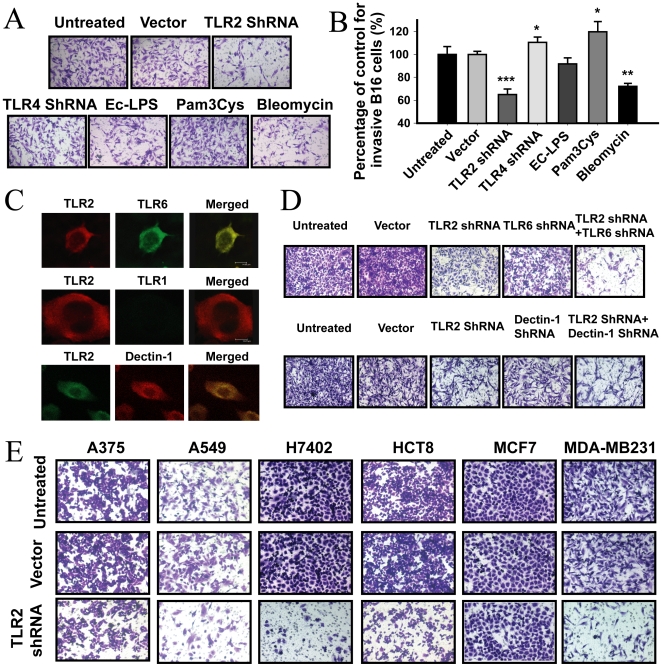
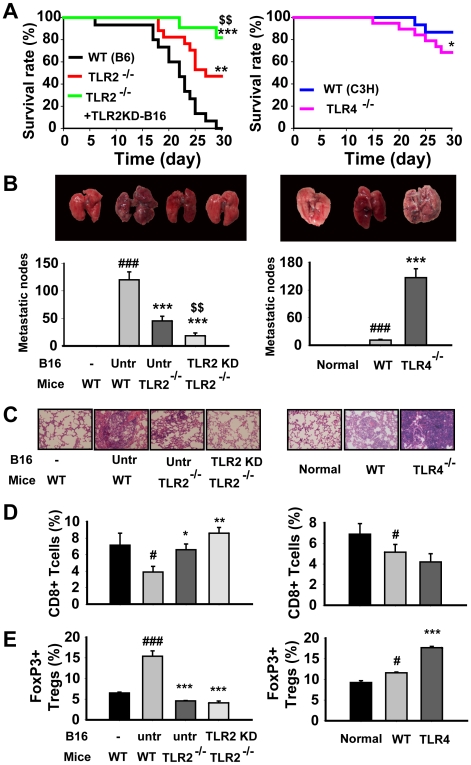
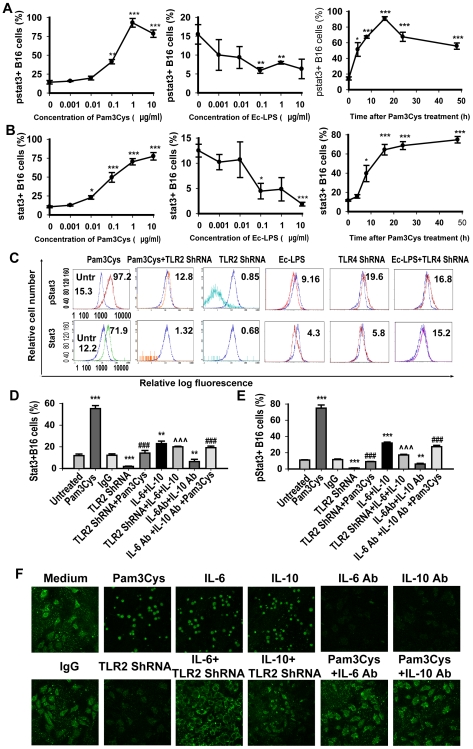
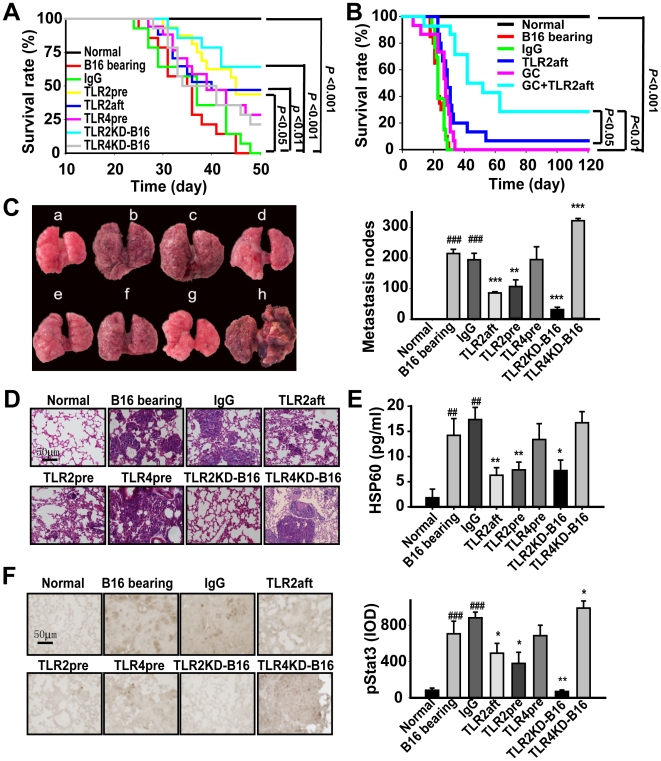
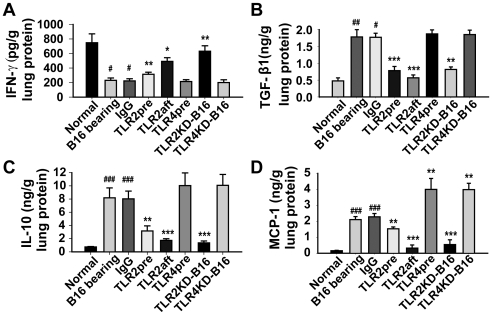
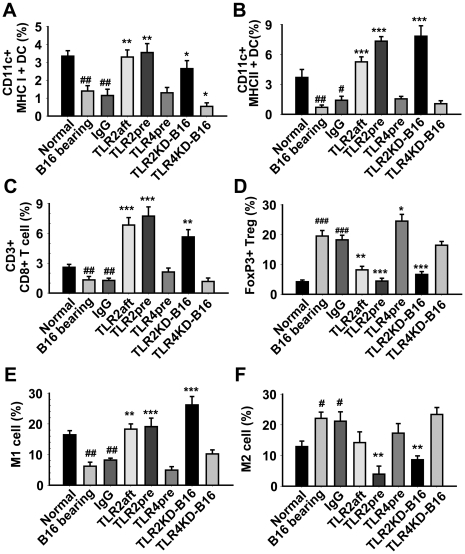
In this study, we investigated the potential roles and mechanisms of TLR2 signaling on tumor metastasis in a mouse model of intravenously injected B16 melanoma cells. Multiple subtypes of TLRs were expressed on B16 cells and several human cancer cell lines; TLR2 mediated the invasive activity of these cells. High metastatic B16 cells released more heat shock protein 60 than poor metastatic B16-F1 cells. Importantly, heat shock protein 60 released by tumor cells caused a persistent activation of TLR2 and was critical in the constitutive activation of transcription factor Stat3, leading to the release of immunosuppressive cytokines and chemokines. Moreover, targeting TLR2 markedly reduced pulmonary metastases and increased the survival of B16-bearing mice by reversing B16 cells induced immunosuppressive microenvironment and restoring tumor-killing cells such as CD8(+) T cells and M1 macrophages. Combining an anti-TLR2 antibody and a cytotoxic agent, gemcitabine, provided a further improvement in the survival of tumor-bearing mice.
Our results demonstrate that TLR2 is an attractive target against metastasis and that targeting immunosuppressive microenvironment using anti-TLR2 antibody is a novel therapeutic strategy for combating a life-threatening metastasis.
转移是癌症患者死亡的最关键原因。免疫耐受在肿瘤进展和转移中起着至关重要的作用。
在这项研究中,我们在静脉注射 B16 黑色素瘤细胞的小鼠模型中研究了 TLR2 信号在肿瘤转移中的潜在作用和机制。B16 细胞和几种人类癌细胞系表达多种 TLR 亚型;TLR2 介导这些细胞的侵袭活性。高转移性 B16 细胞释放的热休克蛋白 60 多于低转移性 B16-F1 细胞。重要的是,肿瘤细胞释放的热休克蛋白 60 导致 TLR2 的持续激活,在转录因子 Stat3 的组成性激活中起关键作用,导致免疫抑制细胞因子和趋化因子的释放。此外,通过逆转 B16 细胞诱导的免疫抑制微环境并恢复如 CD8(+)T 细胞和 M1 巨噬细胞等杀伤肿瘤的细胞,靶向 TLR2 可显著减少肺转移并提高荷瘤小鼠的存活率。联合使用抗 TLR2 抗体和细胞毒性药物吉西他滨可进一步提高荷瘤小鼠的存活率。
我们的结果表明,TLR2 是一种有吸引力的抗转移靶点,使用抗 TLR2 抗体靶向免疫抑制微环境是一种针对危及生命的转移的新型治疗策略。