Skinner Benjamin M, Robertson Lindsay B W, Tempest Helen G, Langley Elizabeth J, Ioannou Dimitris, Fowler Katie E, Crooijmans Richard P M A, Hall Anthony D, Griffin Darren K, Völker Martin
Department of Biosciences, University of Kent, Canterbury CT2 7NJ, UK.
BMC Genomics. 2009 Aug 5;10:357. doi: 10.1186/1471-2164-10-357.
The availability of the complete chicken (Gallus gallus) genome sequence as well as a large number of chicken probes for fluorescent in-situ hybridization (FISH) and microarray resources facilitate comparative genomic studies between chicken and other bird species. In a previous study, we provided a comprehensive cytogenetic map for the turkey (Meleagris gallopavo) and the first analysis of copy number variants (CNVs) in birds. Here, we extend this approach to the Pekin duck (Anas platyrhynchos), an obvious target for comparative genomic studies due to its agricultural importance and resistance to avian flu.
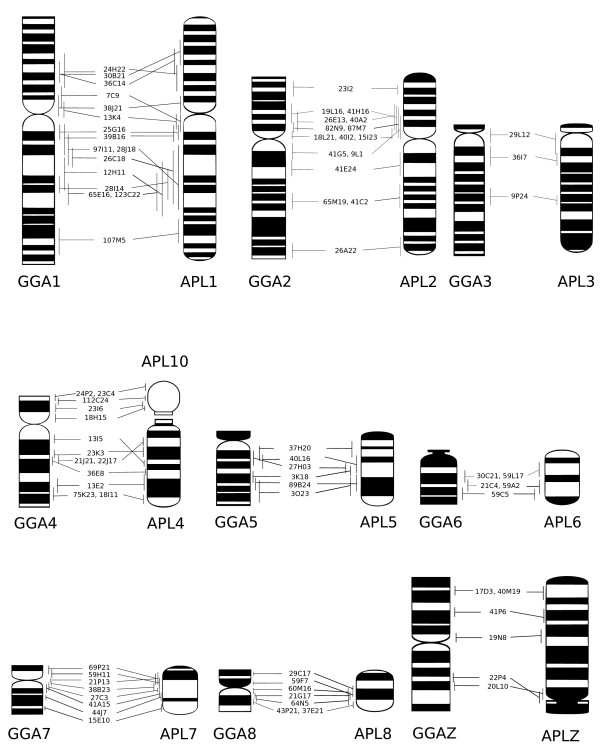
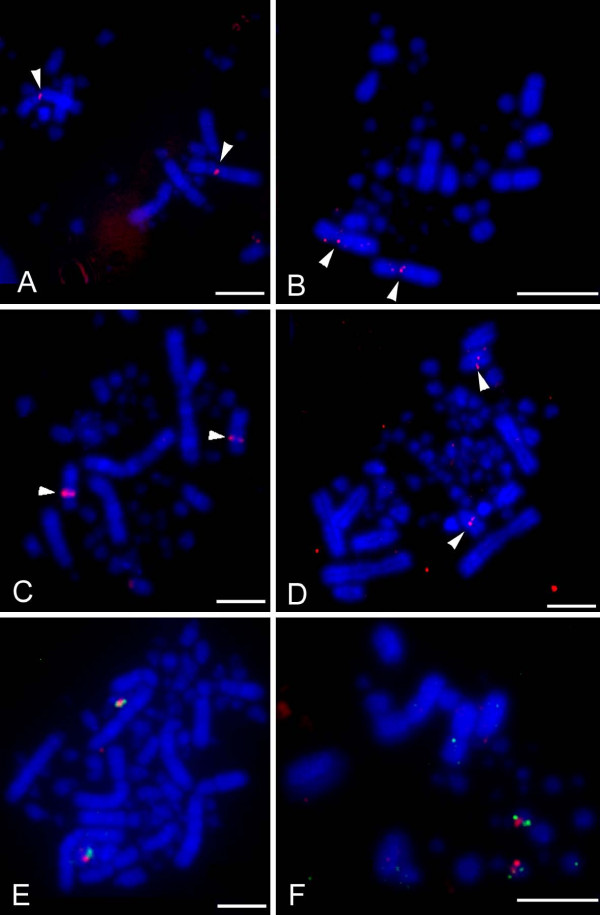
We provide a detailed molecular cytogenetic map of the duck genome through FISH assignment of 155 chicken clones. We identified one inter- and six intrachromosomal rearrangements between chicken and duck macrochromosomes and demonstrated conserved synteny among all microchromosomes analysed. Array comparative genomic hybridisation revealed 32 CNVs, of which 5 overlap previously designated "hotspot" regions between chicken and turkey.
Our results suggest extensive conservation of avian genomes across 90 million years of evolution in both macro- and microchromosomes. The data on CNVs between chicken and duck extends previous analyses in chicken and turkey and supports the hypotheses that avian genomes contain fewer CNVs than mammalian genomes and that genomes of evolutionarily distant species share regions of copy number variation ("CNV hotspots"). Our results will expedite duck genomics, assist marker development and highlight areas of interest for future evolutionary and functional studies.
完整的鸡(原鸡)基因组序列的可得性,以及大量用于荧光原位杂交(FISH)的鸡探针和微阵列资源,促进了鸡与其他鸟类之间的比较基因组研究。在之前的一项研究中,我们提供了火鸡(吐绶鸡)的全面细胞遗传图谱,并首次对鸟类的拷贝数变异(CNV)进行了分析。在此,我们将这种方法扩展到北京鸭(绿头鸭),由于其农业重要性和对禽流感的抵抗力,它是比较基因组研究的一个明显目标。
我们通过对155个鸡克隆进行FISH定位,提供了鸭基因组的详细分子细胞遗传图谱。我们鉴定出鸡和鸭的大染色体之间有一次染色体间重排和六次染色体内重排,并证明了所分析的所有微染色体之间存在保守的同线性。阵列比较基因组杂交揭示了32个CNV,其中5个与鸡和火鸡之间先前指定的“热点”区域重叠。
我们的结果表明,在9000万年的进化过程中,鸟类基因组在大染色体和微染色体上都有广泛的保守性。鸡和鸭之间CNV的数据扩展了先前对鸡和火鸡的分析,并支持了以下假设:鸟类基因组中的CNV比哺乳动物基因组中的少,并且进化距离较远的物种的基因组共享拷贝数变异区域(“CNV热点”)。我们的结果将加快鸭基因组学的研究,有助于标记开发,并突出未来进化和功能研究的感兴趣领域。