Wei Hans H, Lu Xi-Chun M, Shear Deborah A, Waghray Anu, Yao Changping, Tortella Frank C, Dave Jitendra R
Department of Applied Neurobiology, Division of Psychiatry and Neuroscience, Walter Reed Army Institute of Research, Silver Spring, Maryland 20910, USA.
J Neuroinflammation. 2009 Aug 5;6:19. doi: 10.1186/1742-2094-6-19.
Inflammatory cytokines play a crucial role in the pathophysiology of traumatic brain injury (TBI), exerting either deleterious effects on the progression of tissue damage or beneficial roles during recovery and repair. NNZ-2566, a synthetic analogue of the neuroprotective tripeptide Glypromate, has been shown to be neuroprotective in animal models of brain injury. The goal of this study was to determine the effects of NNZ-2566 on inflammatory cytokine expression and neuroinflammation induced by penetrating ballistic-like brain injury (PBBI) in rats.
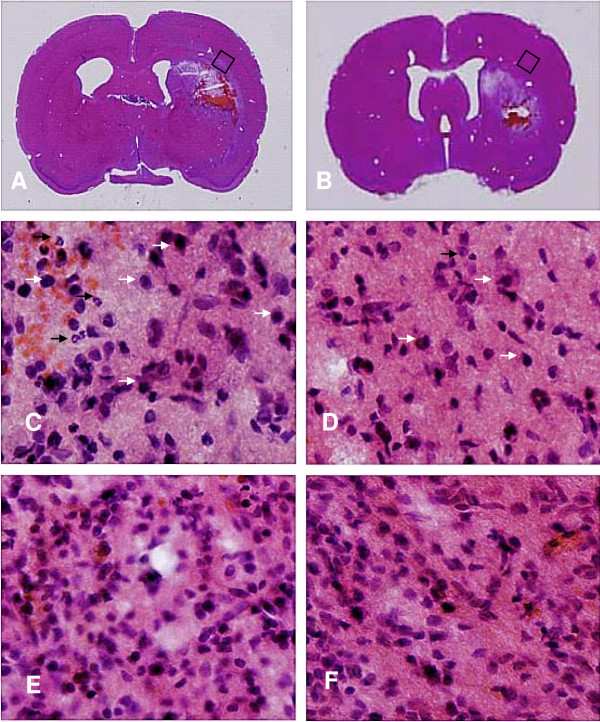
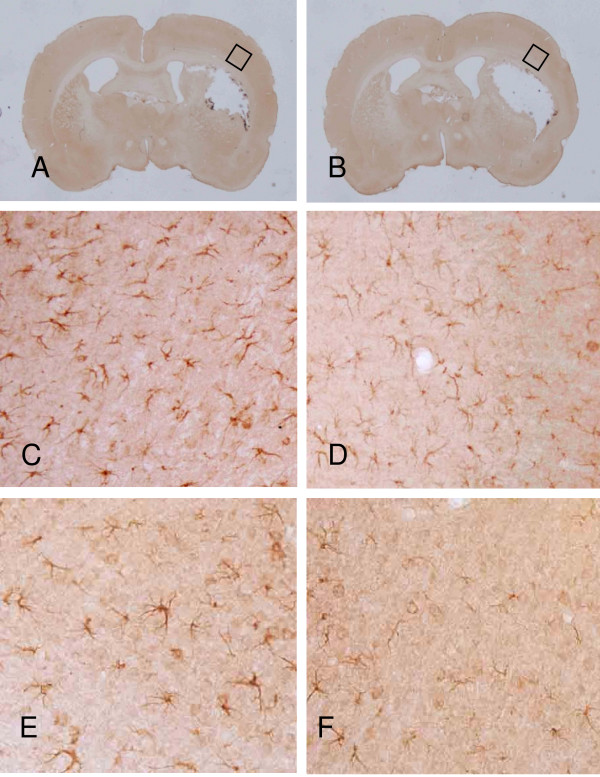
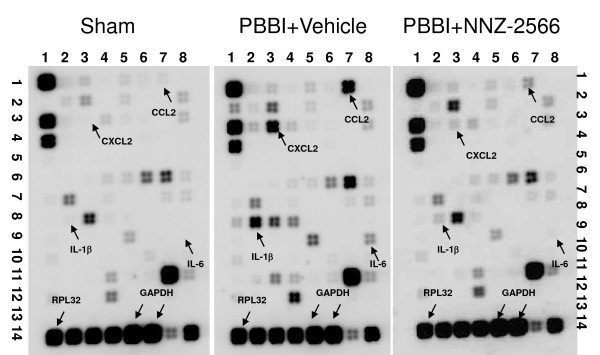
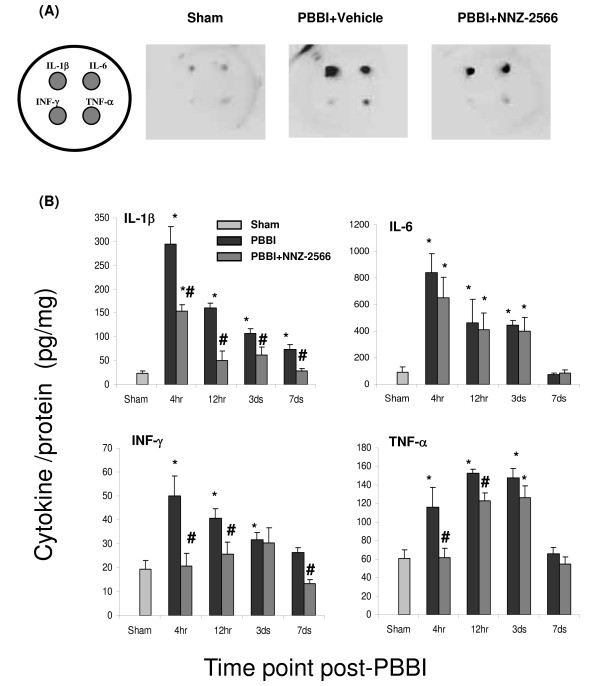
NNZ-2566 or vehicle (saline) was administered intravenously as a bolus injection (10 mg/kg) at 30 min post-injury, immediately followed by a continuous infusion of NNZ-2566 (3 mg/kg/h), or equal volume of vehicle, for various durations. Inflammatory cytokine gene expression from the brain tissue of rats exposed to PBBI was evaluated using microarray, quantitative real time PCR (QRT-PCR), and enzyme-linked immunosorbent assay (ELISA) array. Histopathology of the injured brains was examined using hematoxylin and eosin (H&E) and immunocytochemistry of inflammatory cytokine IL-1beta.
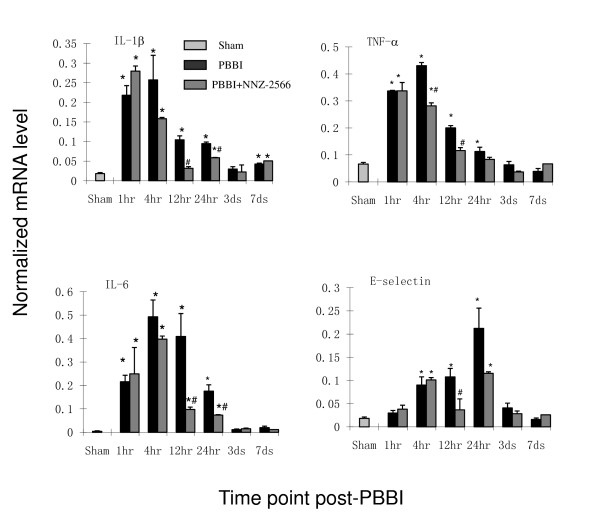
NNZ-2566 treatment significantly reduced injury-mediated up-regulation of IL-1beta, TNF-alpha, E-selectin and IL-6 mRNA during the acute injury phase. ELISA cytokine array showed that NZ-2566 treatment significantly reduced levels of the pro-inflammatory cytokines IL-1beta, TNF-alpha and IFN-gamma in the injured brain, but did not affect anti-inflammatory cytokine IL-6 levels.
Collectively, these results suggest that the neuroprotective effects of NNZ-2566 may, in part, be functionally attributed to the compound's ability to modulate expression of multiple neuroinflammatory mediators in the injured brain.
炎性细胞因子在创伤性脑损伤(TBI)的病理生理学中起关键作用,对组织损伤的进展产生有害影响,或在恢复和修复过程中发挥有益作用。NNZ - 2566是神经保护三肽甘氨脯氨酸的合成类似物,已在脑损伤动物模型中显示出神经保护作用。本研究的目的是确定NNZ - 2566对大鼠穿透性弹道样脑损伤(PBBI)诱导的炎性细胞因子表达和神经炎症的影响。
在损伤后30分钟静脉推注(10mg/kg)给予NNZ - 2566或载体(生理盐水),随后立即持续输注NNZ - 2566(3mg/kg/h)或等体积载体,持续不同时间。使用微阵列、定量实时PCR(QRT - PCR)和酶联免疫吸附测定(ELISA)阵列评估暴露于PBBI的大鼠脑组织中的炎性细胞因子基因表达。使用苏木精和伊红(H&E)检查受伤大脑的组织病理学,并对炎性细胞因子IL - 1β进行免疫细胞化学检查。
在急性损伤期,NNZ - 2566治疗显著降低了损伤介导的IL - 1β、TNF - α、E - 选择素和IL - 6 mRNA的上调。ELISA细胞因子阵列显示,NNZ - 2566治疗显著降低了受伤大脑中促炎细胞因子IL - 1β、TNF - α和IFN - γ的水平,但不影响抗炎细胞因子IL - 6的水平。
总体而言,这些结果表明NNZ - 2566的神经保护作用可能部分归因于该化合物调节受伤大脑中多种神经炎症介质表达的能力。