Clinical Enteric Neuroscience Translational and Epidemiological Research Program, Mayo Clinic and Mayo Foundation, Rochester, Minnesota 55905, USA.
Gastroenterology. 2010 Jan;138(1):89-97. doi: 10.1053/j.gastro.2009.07.057. Epub 2009 Aug 4.
BACKGROUND & AIMS: Colonic motor disturbances in chronic constipation (CC) are heterogeneous and incompletely understood; the relationship between colonic transit and motor activity is unclear. We sought to characterize the phenotypic variability in chronic constipation.
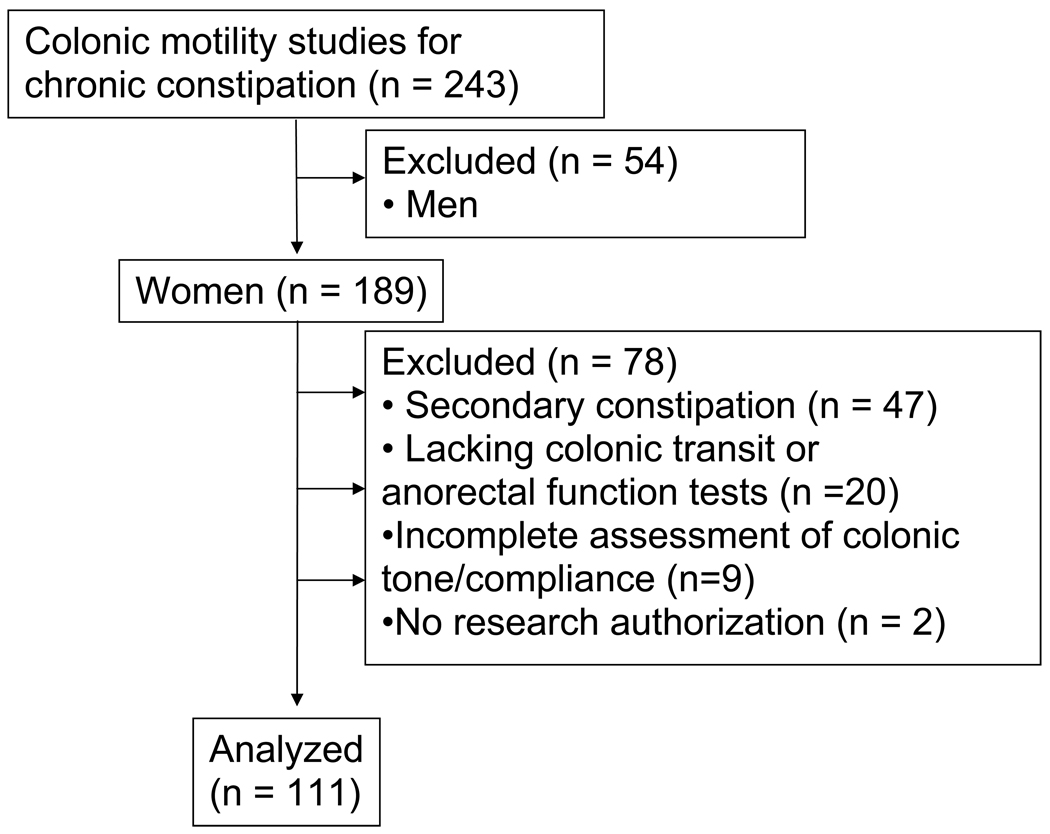
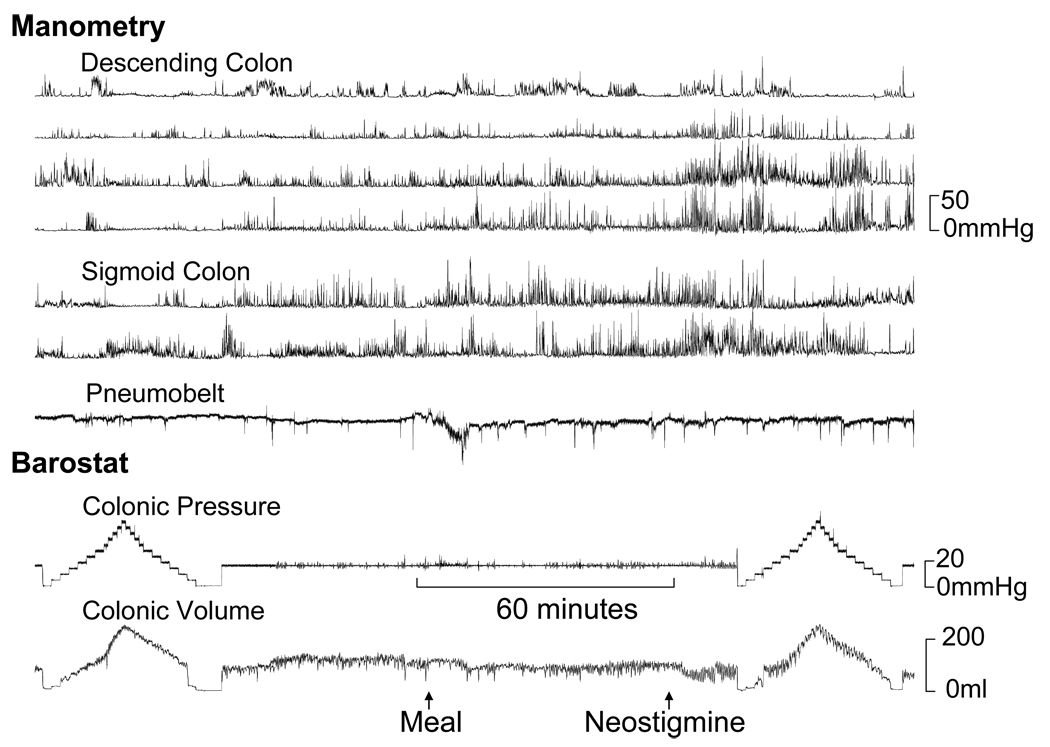
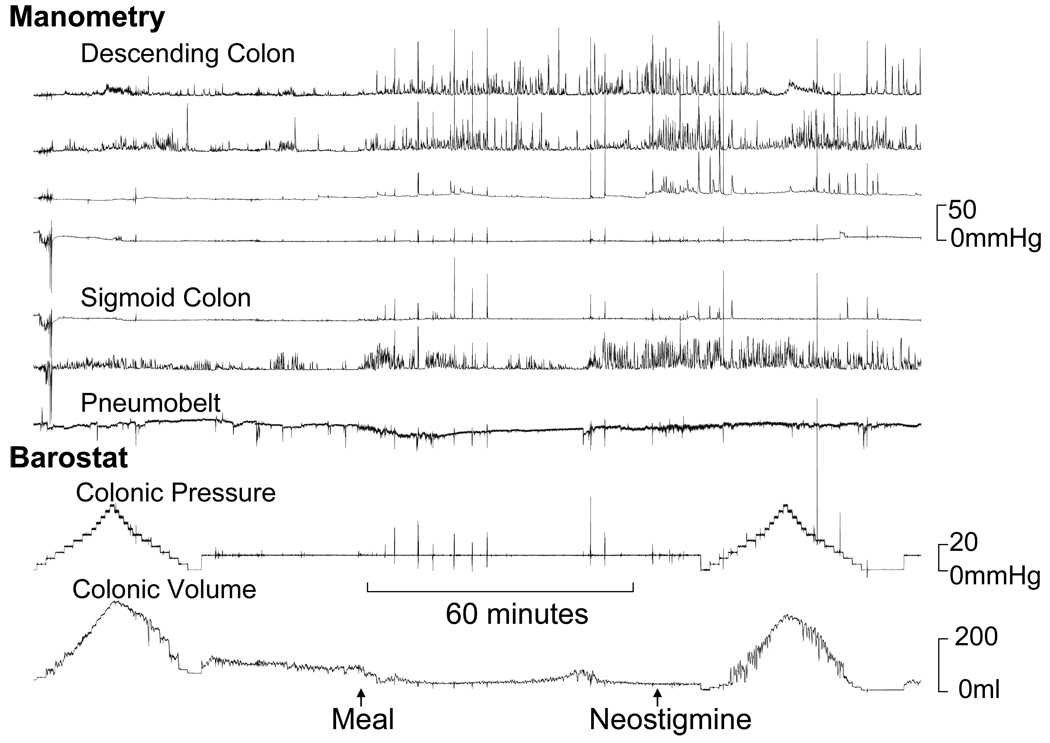
Fasting and postprandial colonic tone and phasic activity and pressure-volume relationships were assessed by a barostat manometric assembly in 35 healthy women and 111 women with CC who had normal colon transit (NTC; n = 25), slow transit (STC; n = 19), and defecatory disorders with normal (DD-normal; n = 34) or slow transit (DD-slow; n = 33). Logistic regression models assessed whether motor parameters could discriminate among these groups. Among CC, phenotypes were characterized by principal components analysis of these measurements.
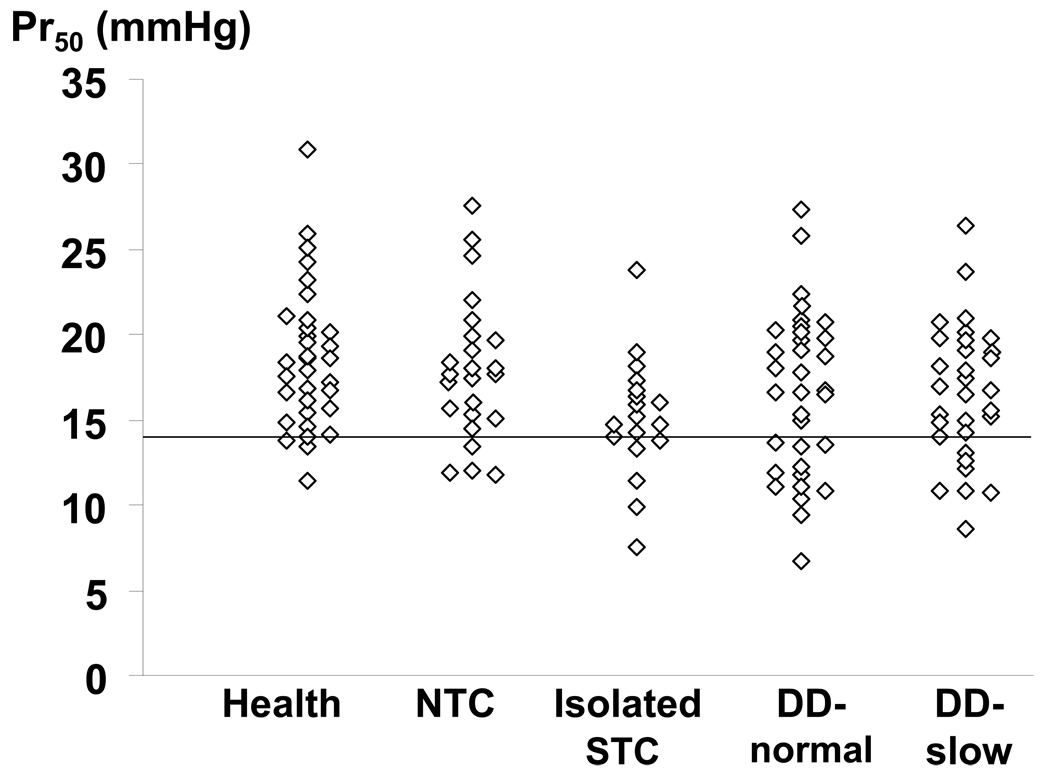
Compared with 10th percentile values in healthy subjects, fasting and/or postprandial colonic tone and/or compliance were reduced in 40% with NTC, 47% with STC, 53% with DD-normal, and 42% with DD-slow transit. Compared with healthy subjects, compliance was reduced (P <or= .05) in isolated STC and DD but not in NTC. Four principal components accounted for 85% of the total variation among patients: factors 1 and 2 were predominantly weighted by fasting and postprandial colonic phasic activity and tone, respectively; factor 3 by postprandial high-amplitude propagated contractions; and factor 4 by postprandial tonic response.
Fasting and/or postprandial colonic tone are reduced, reflecting motor dysfunctions, even in NTC. Colonic motor assessments allow chronic constipation to be characterized into phenotypes. Further studies are needed to evaluate the relationship among these phenotypes, enteric neuropathology, and response to treatment in CC.
慢性便秘(CC)中的结肠运动障碍具有异质性,且尚未完全阐明;结肠传输与运动活动之间的关系尚不清楚。我们试图描述慢性便秘的表型变异性。
通过测压套囊装置评估 35 名健康女性和 111 名 CC 女性(其中结肠传输正常(NTC;n=25)、传输缓慢(STC;n=19)、伴有正常(DD-正常;n=34)或缓慢(DD-缓慢;n=33)传输的排便障碍)空腹和餐后结肠张力和相位活动以及压力-容积关系。逻辑回归模型评估了运动参数是否可以区分这些组。在 CC 中,通过对这些测量值进行主成分分析来描述表型。
与健康受试者的第 10 百分位值相比,NTC 中 40%、STC 中 47%、DD-正常中 53%和 DD-缓慢中 42%的空腹和/或餐后结肠张力和/或顺应性降低。与健康受试者相比,仅在孤立的 STC 和 DD 中顺应性降低(P<0.05),而在 NTC 中则没有。四个主成分解释了患者之间 85%的总变异:第 1 个和第 2 个主要由空腹和餐后结肠相位活动和张力加权,第 3 个主要由餐后高振幅传播收缩加权,第 4 个主要由餐后张力反应加权。
即使在 NTC 中,空腹和/或餐后结肠张力也会降低,这反映了运动功能障碍。结肠运动评估可将慢性便秘的表型特征描述为不同的表型。需要进一步研究这些表型之间的关系、肠神经病理学以及 CC 对治疗的反应。