Karatayev O, Gaysinskaya V, Chang G-Q, Leibowitz S F
The Rockefeller University, 1230 York Avenue, New York, NY 10065, USA.
Brain Res. 2009 Nov 17;1298:111-22. doi: 10.1016/j.brainres.2009.08.001. Epub 2009 Aug 8.
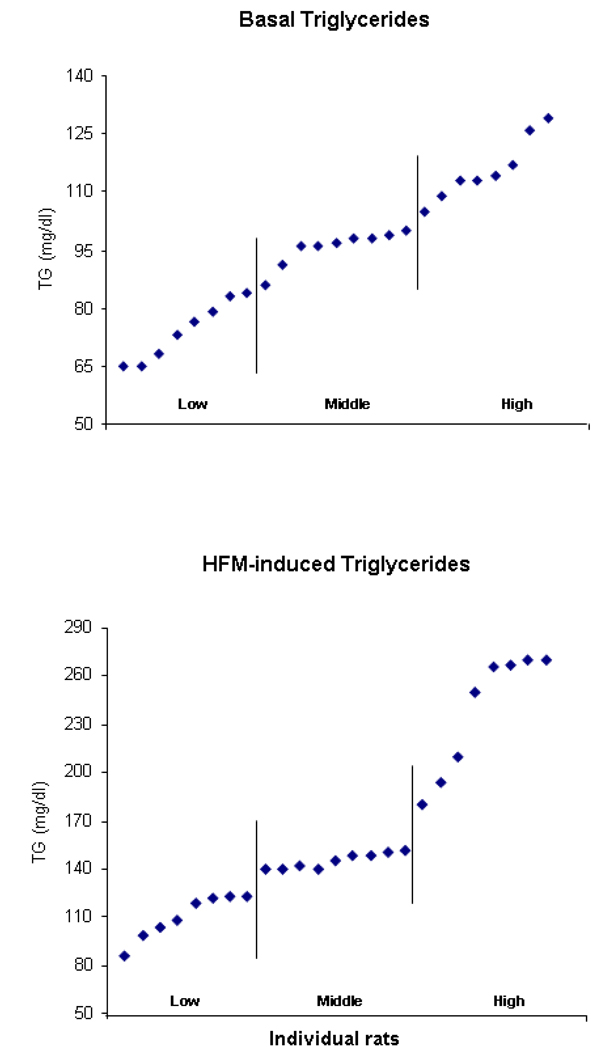
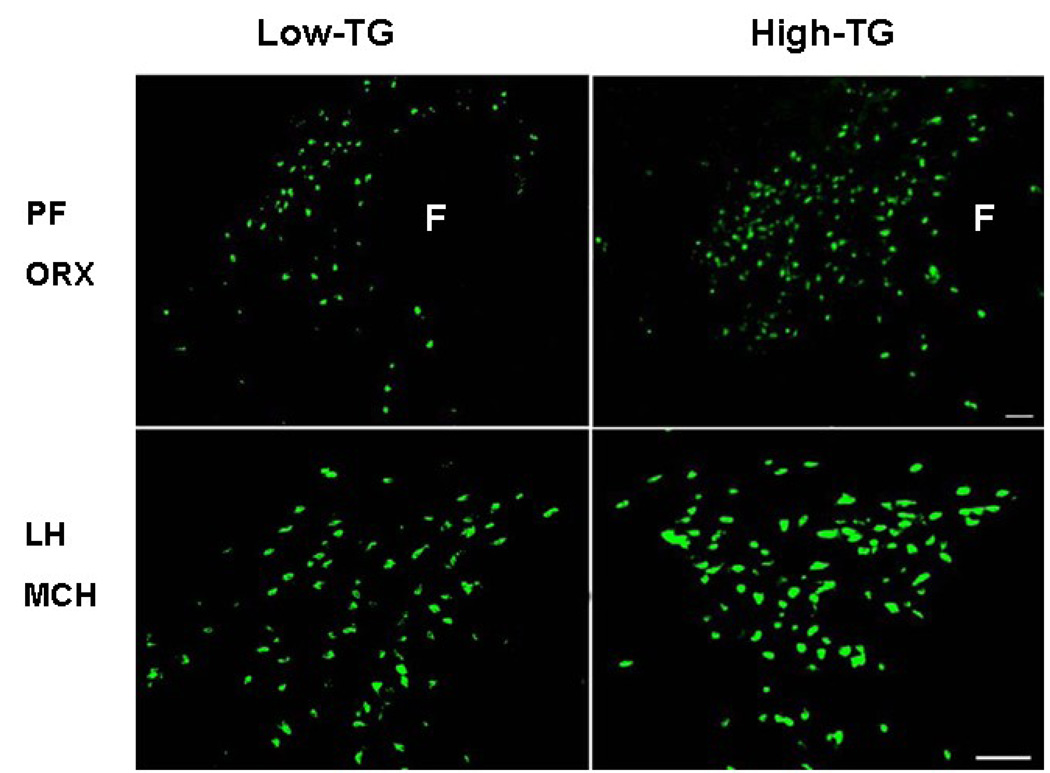
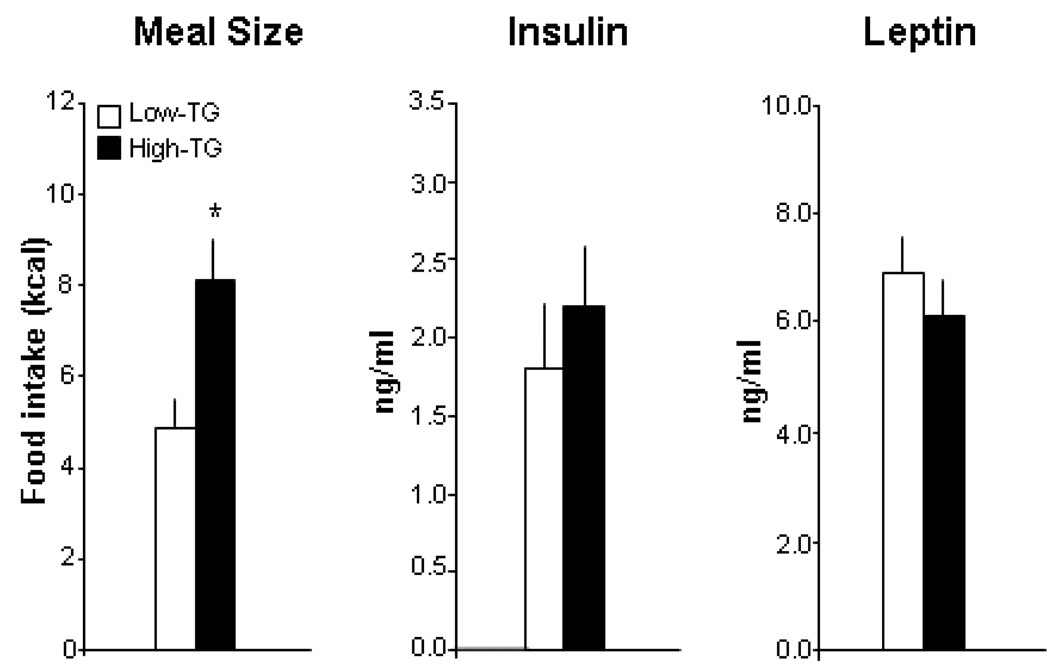
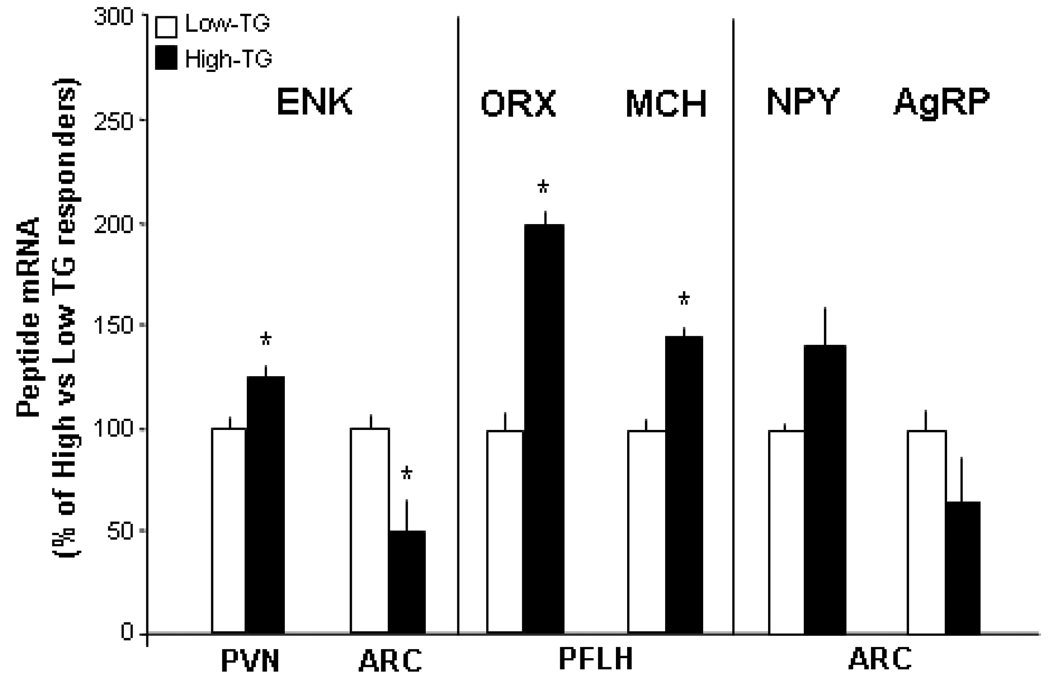
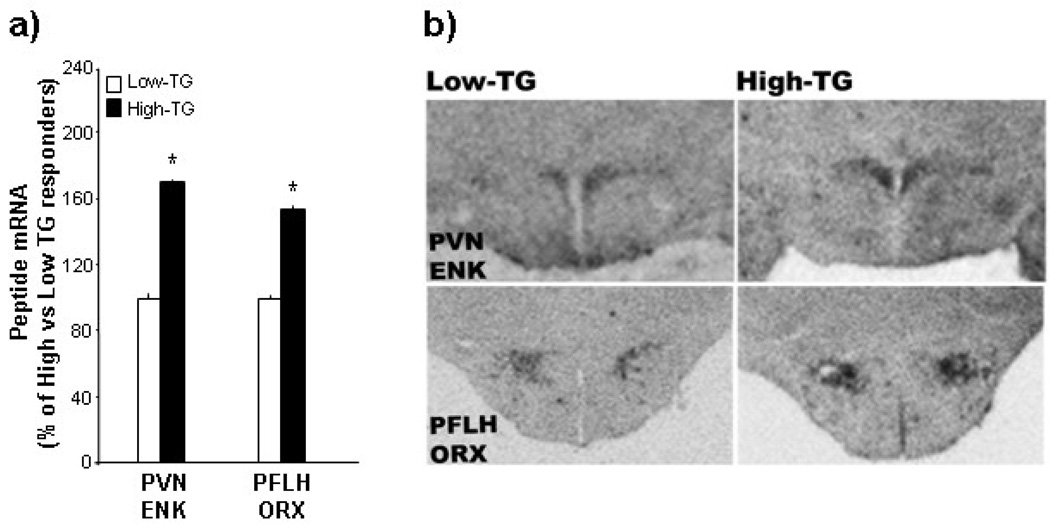
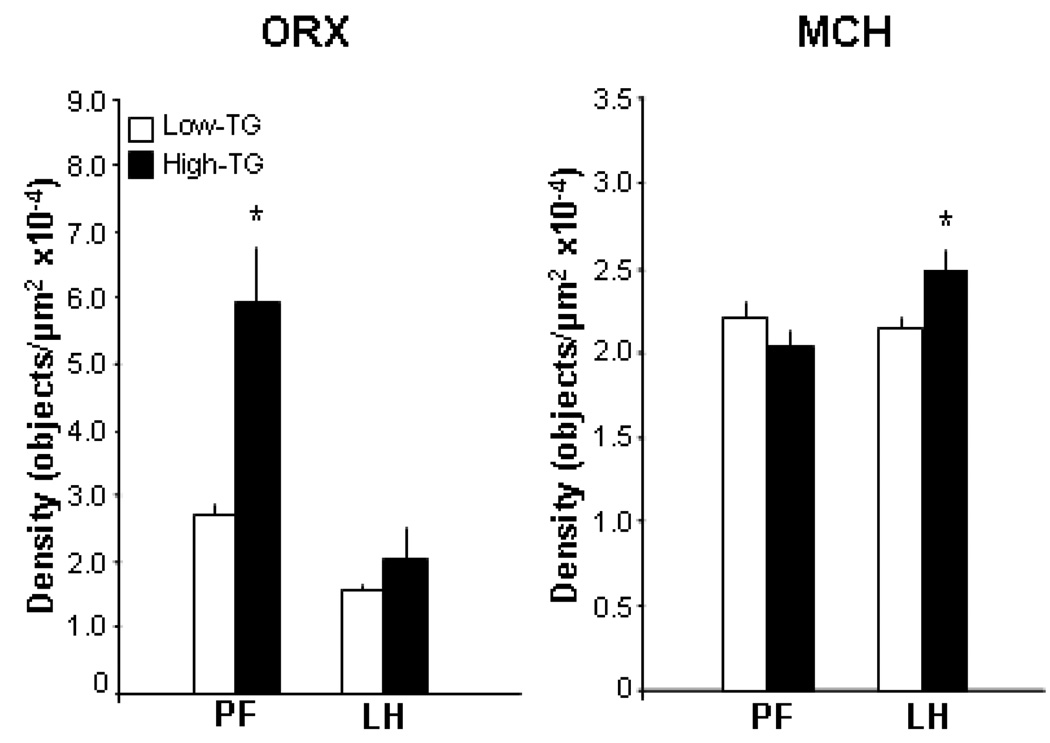
Recent studies in normal-weight rats have linked circulating triglycerides (TG), when elevated by a high-fat (HF) compared to equicaloric low-fat (LF) meal, to an increase in subsequent food intake and hypothalamic expression of orexigenic peptides. The present study tested whether natural variations between rats in their TG levels after a small HF meal can also be related to their individual patterns of eating and peptide expression. In tail vein blood collected on three separate days 60 min after a HF meal, levels of TG were found to be strongly, positively correlated within rats from day to day but were highly variable between rats (75-365 mg/dl), allowing distinct subgroups (33% lowest or highest) to be formed. Compared to "Low-TG responders" with post-meal levels averaging 109 mg/dl, "High-TG responders" with 240 mg/dl showed in two separate experiments a significant increase in caloric intake in a subsequent laboratory chow meal. Before this larger meal, these rats with elevated TG consistently exhibited higher expression levels and synthesis of the orexigenic peptides, enkephalin, orexin and melanin-concentrating hormone, as revealed using real-time quantitative PCR, radiolabeled in situ hybridization, and immunofluorescence histochemistry. Over the long-term, the High-TG responders also showed an increased propensity to overeat, gain weight and accumulate excess body fat on a chronic HF diet. This simple measure of TG levels after a HF meal may offer a useful tool for identifying subpopulations with increased risk for overeating and dietary obesity and detecting early signs of brain disturbances that may contribute to this high-risk phenotype.
最近在正常体重大鼠身上进行的研究表明,与等热量的低脂(LF)餐相比,高脂(HF)餐使循环甘油三酯(TG)升高后,会导致随后食物摄入量增加以及下丘脑促食欲肽的表达增加。本研究测试了大鼠在食用少量HF餐后TG水平的自然差异是否也与它们各自的进食模式和肽表达有关。在HF餐后60分钟的三个不同日子采集的尾静脉血中,发现大鼠体内TG水平在不同日期之间呈强正相关,但在不同大鼠之间差异很大(75 - 365毫克/分升),从而可以形成不同的亚组(最低或最高的33%)。与餐后平均水平为109毫克/分升的“低TG反应者”相比,餐后水平为240毫克/分升的“高TG反应者”在两项独立实验中,随后的实验室普通饲料餐热量摄入量显著增加。在这顿大餐之前,这些TG升高的大鼠持续表现出促食欲肽、脑啡肽、食欲素和促黑素细胞激素的表达水平和合成更高,这通过实时定量PCR、放射性标记原位杂交和免疫荧光组织化学得以揭示。长期来看,高TG反应者在慢性HF饮食中也表现出暴饮暴食、体重增加和积累过多体脂的倾向增加。HF餐后TG水平的这种简单测量方法可能为识别暴饮暴食和饮食性肥胖风险增加的亚人群以及检测可能导致这种高风险表型的脑部紊乱早期迹象提供一个有用的工具。