Institute of Environmental Health Sciences, Wayne State University, Detroit, MI 48201, USA.
PPAR Res. 2009;2009:728941. doi: 10.1155/2009/728941. Epub 2009 Aug 10.
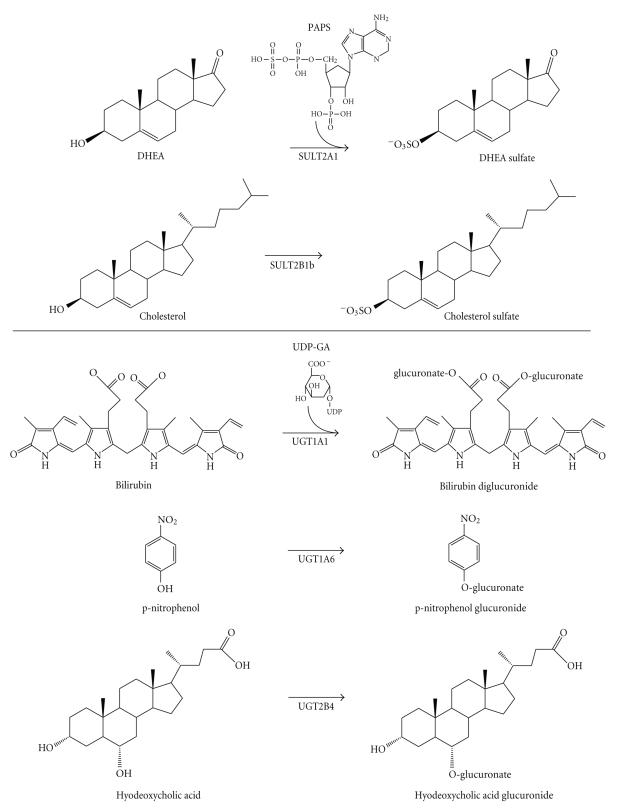
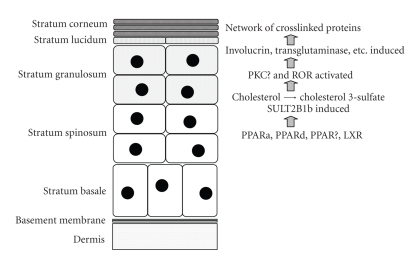
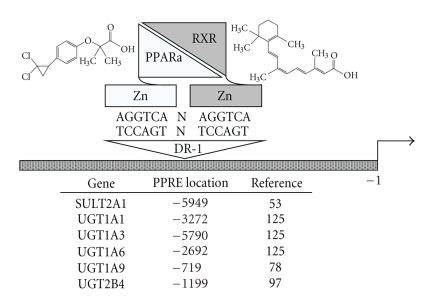
During phase II metabolism, a substrate is rendered more hydrophilic through the covalent attachment of an endogenous molecule. The cytosolic sulfotransferase (SULT) and UDP-glucuronosyltransferase (UGT) families of enzymes account for the majority of phase II metabolism in humans and animals. In general, phase II metabolism is considered to be a detoxication process, as sulfate and glucuronide conjugates are more amenable to excretion and elimination than are the parent substrates. However, certain products of phase II metabolism (e.g., unstable sulfate conjugates) are genotoxic. Members of the nuclear receptor superfamily are particularly important regulators of SULT and UGT gene transcription. In metabolically active tissues, increasing evidence supports a major role for lipid-sensing transcription factors, such as peroxisome proliferator-activated receptors (PPARs), in the regulation of rodent and human SULT and UGT gene expression. This review summarizes current information regarding the regulation of these two major classes of phase II metabolizing enzyme by PPARs.
在第二阶段代谢中,通过与内源性分子的共价结合,使底物变得更亲水。细胞溶质磺基转移酶(SULT)和 UDP-葡糖醛酸基转移酶(UGT)酶家族在人类和动物的第二阶段代谢中占大多数。一般来说,第二阶段代谢被认为是一种解毒过程,因为硫酸盐和葡糖醛酸缀合物比母体底物更容易排泄和消除。然而,第二阶段代谢的某些产物(例如,不稳定的硫酸盐缀合物)具有遗传毒性。核受体超家族的成员是 SULT 和 UGT 基因转录的特别重要的调节剂。在代谢活跃的组织中,越来越多的证据支持脂质感应转录因子(如过氧化物酶体增殖物激活受体(PPARs))在调节啮齿动物和人类 SULT 和 UGT 基因表达中的主要作用。这篇综述总结了关于这些两种主要的第二阶段代谢酶的 PPAR 调节的最新信息。