Lener Barbara, Kozieł Rafał, Pircher Haymo, Hütter Eveline, Greussing Ruth, Herndler-Brandstetter Dietmar, Hermann Martin, Unterluggauer Hermann, Jansen-Dürr Pidder
Institute for Biomedical Aging Research, Austrian Academy of Sciences, Rennweg 10, A-6020 Innsbruck, Austria.
Biochem J. 2009 Oct 12;423(3):363-74. doi: 10.1042/BJ20090666.
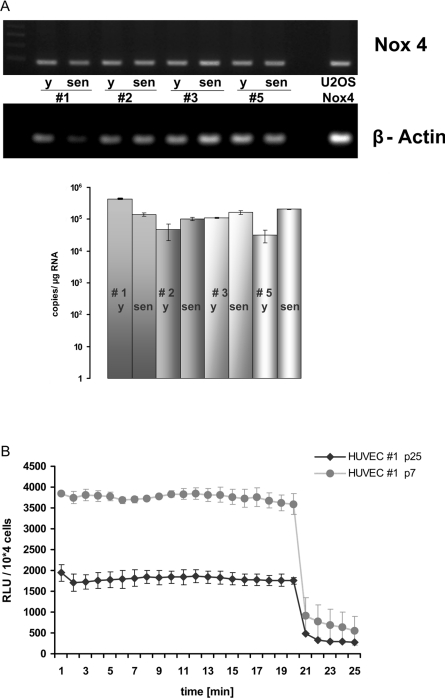
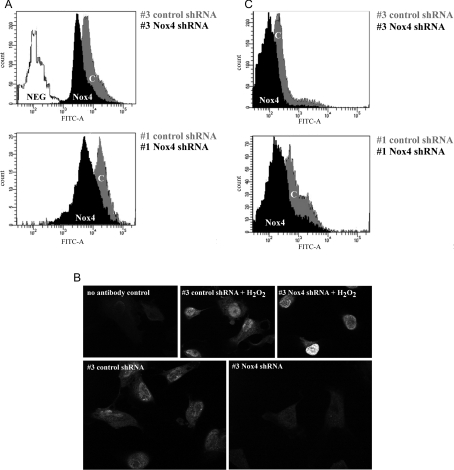
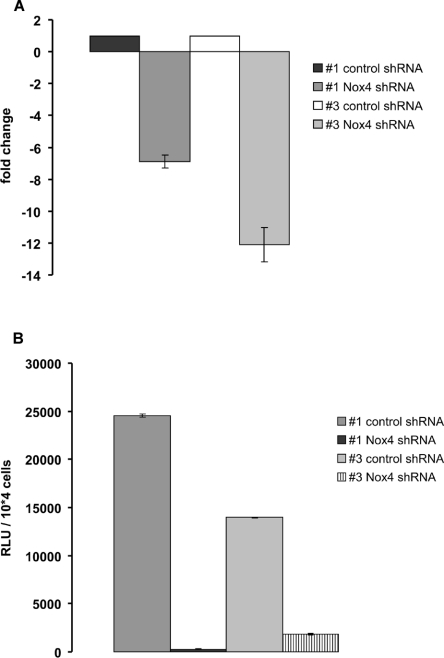
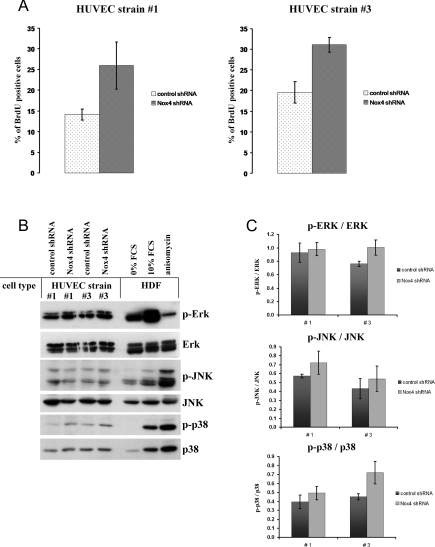
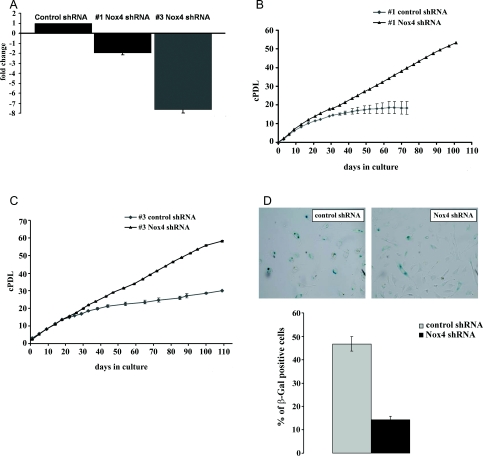
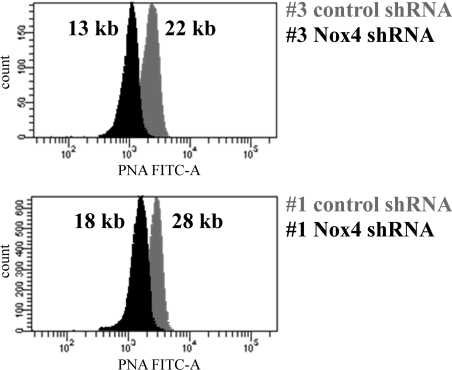
The free radical theory of aging proposes that ROS (reactive oxygen species) are major driving forces of aging, and are also critically involved in cellular senescence. Besides the mitochondrial respiratory chain, alternative sources of ROS have been described that might contribute to cellular senescence. Noxs (NADPH oxidases) are well-known sources of superoxide, which contribute to the antimicrobial capabilities of macrophages, a process involving the prototypical member of the family referred to as Nox2. However, in recent years non-phagocytic homologues of Nox2 have been identified that are involved in processes other than the host defence. Superoxide anions produced by these enzymes are believed to play a major role in signalling by MAPKs (mitogen-activated protein kinases) and stress-activated kinases, but could also contribute to cellular senescence, which is known to involve oxygen radicals. In HUVECs (human umbilical vein endothelial cells), Nox4 is predominantly expressed, but its role in replicative senescence of HUVECs remains to be elucidated. Using shRNA (small-hairpin RNA)-mediated knockdown of Nox4, implicating lentiviral vectors, we addressed the question of whether lifelong depletion of Nox4 in HUVECs would influence the senescent phenotype. We found a significant extension of the replicative lifespan of HUVECs upon knockdown of Nox4. Surprisingly, mean telomere length was significantly reduced in Nox4-depleted cells. Nox4 depletion had no discernable influence on the activity of MAPKs and stress-activated kinases, but reduced the degree of oxidative DNA damage. These results suggest that Nox4 activity increases oxidative damage in HUVECs, leading to loss of replicative potential, which is at least partly independent of telomere attrition.
衰老的自由基理论提出,活性氧(ROS)是衰老的主要驱动力,并且在细胞衰老过程中也起着关键作用。除了线粒体呼吸链外,还描述了可能导致细胞衰老的其他ROS来源。Noxs(NADPH氧化酶)是众所周知的超氧化物来源,它有助于巨噬细胞的抗菌能力,这一过程涉及该家族的典型成员Nox2。然而,近年来已鉴定出Nox2的非吞噬性同源物,它们参与宿主防御以外的过程。这些酶产生的超氧阴离子被认为在丝裂原活化蛋白激酶(MAPKs)和应激激活激酶的信号传导中起主要作用,但也可能导致细胞衰老,已知细胞衰老涉及氧自由基。在人脐静脉内皮细胞(HUVECs)中,Nox4主要表达,但其在HUVECs复制性衰老中的作用仍有待阐明。我们使用小发夹RNA(shRNA)介导的Nox4敲低(涉及慢病毒载体),探讨了HUVECs中Nox4的终身缺失是否会影响衰老表型的问题。我们发现敲低Nox4后,HUVECs的复制寿命显著延长。令人惊讶的是,Nox4缺失的细胞中平均端粒长度显著缩短。Nox4缺失对MAPKs和应激激活激酶的活性没有明显影响,但降低了氧化性DNA损伤的程度。这些结果表明,Nox4活性增加了HUVECs中的氧化损伤,导致复制潜能丧失,这至少部分独立于端粒磨损。