Penkman K E H, Kaufman D S, Maddy D, Collins M J
BioArch, Departments of Biology, Archaeology and Chemistry, Biology S Block, University of York, P.O. Box 373, York, YO10 5YW, UK.
Quat Geochronol. 2008 Feb;3(1-2):2-25. doi: 10.1016/j.quageo.2007.07.001.
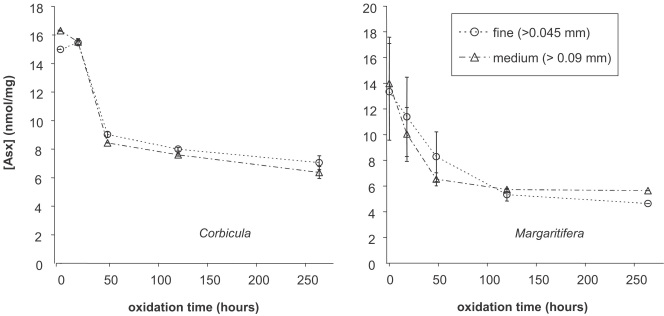
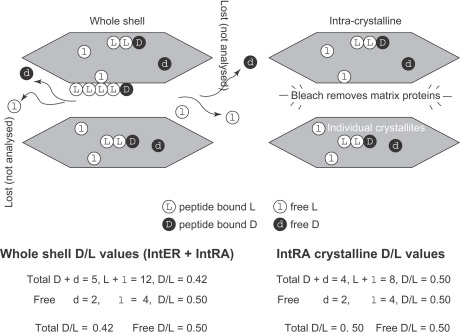
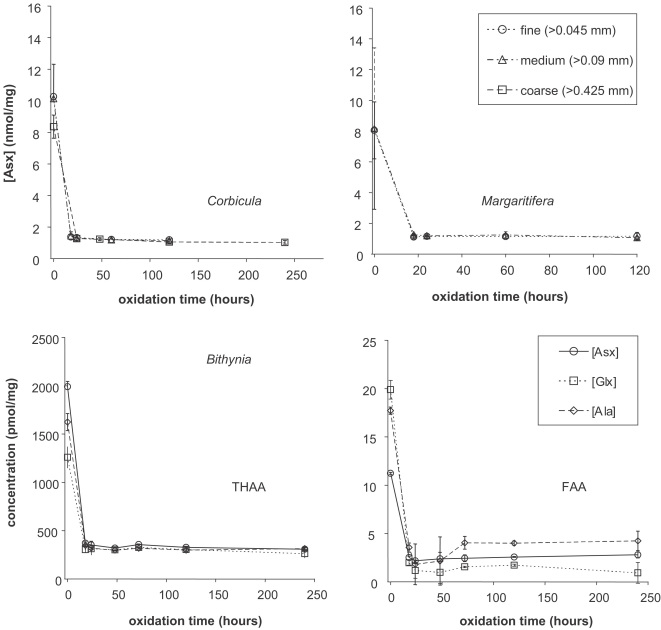
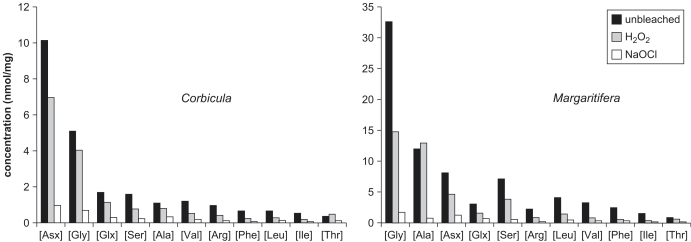
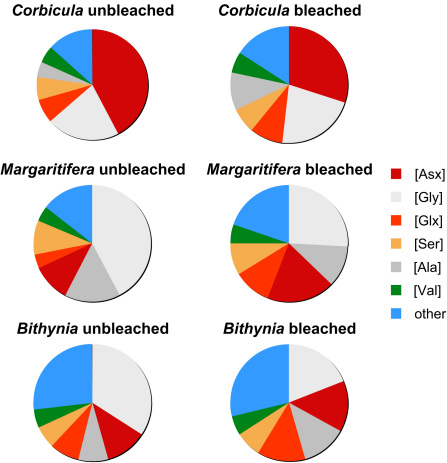
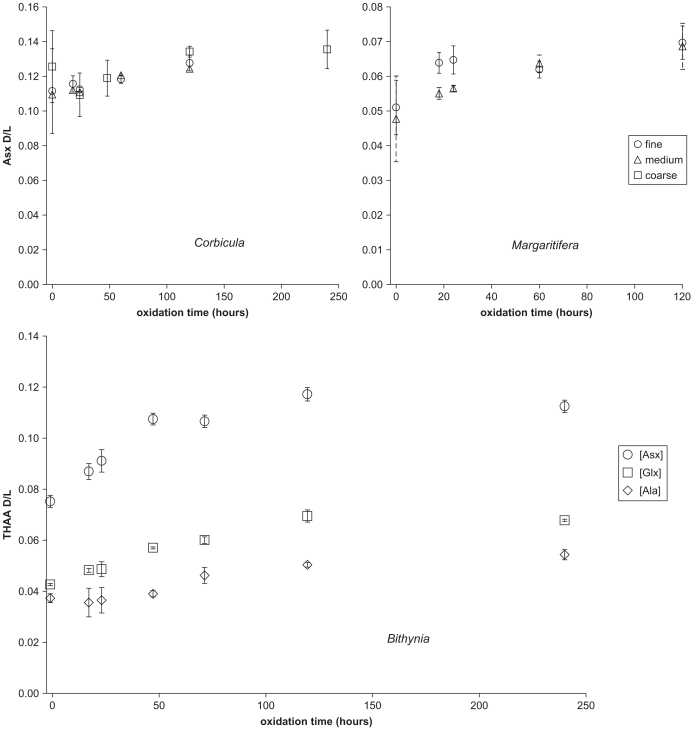
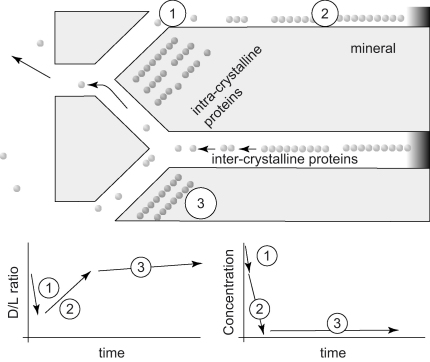
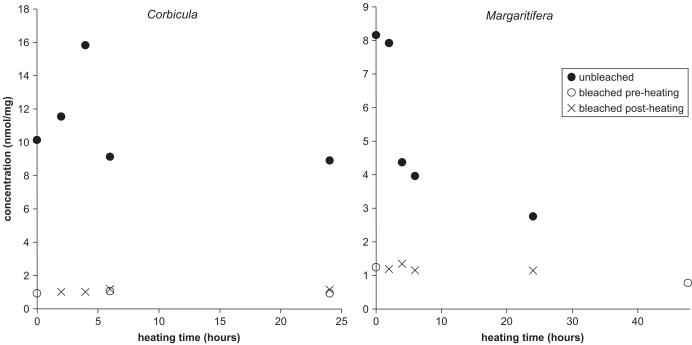
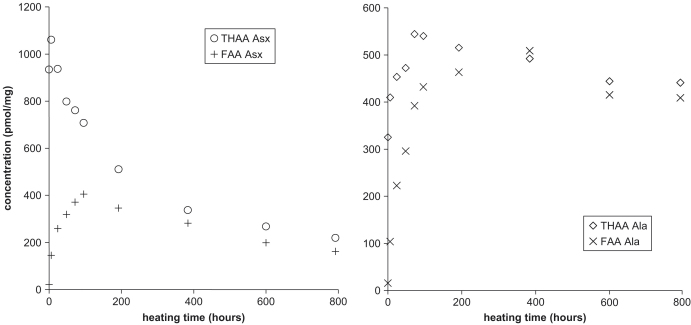
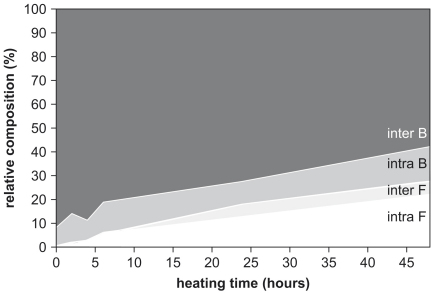
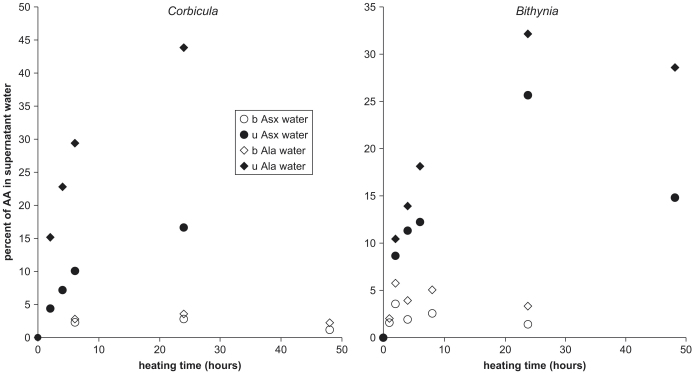
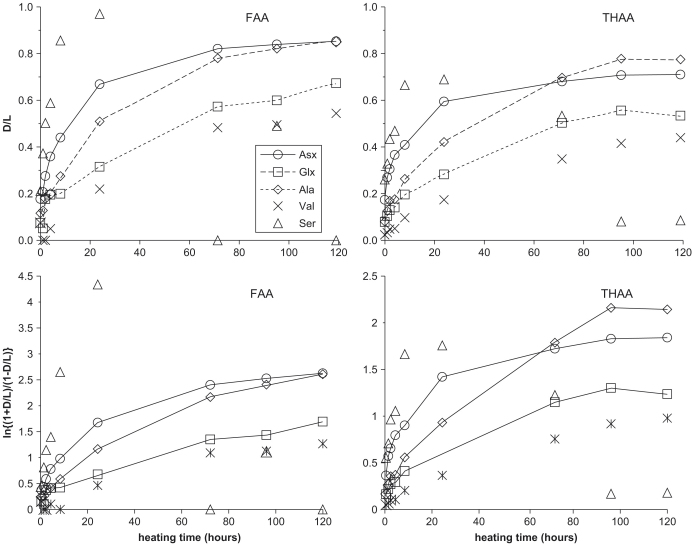
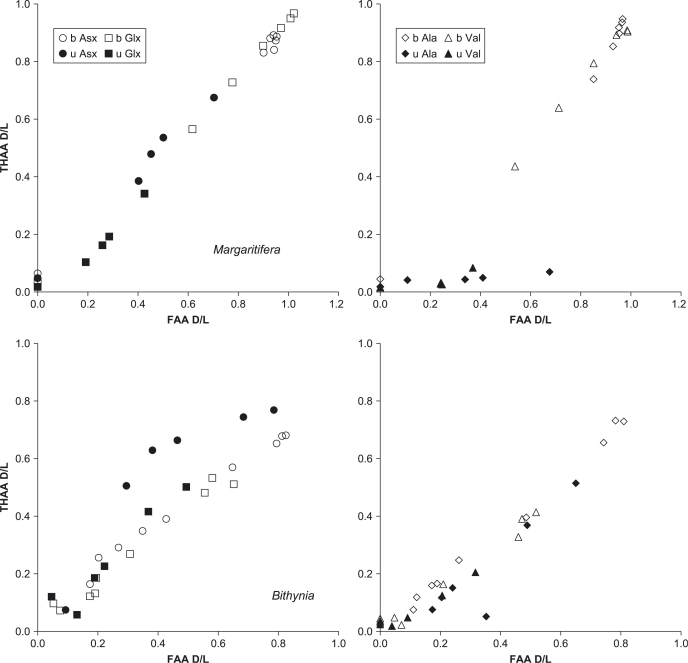
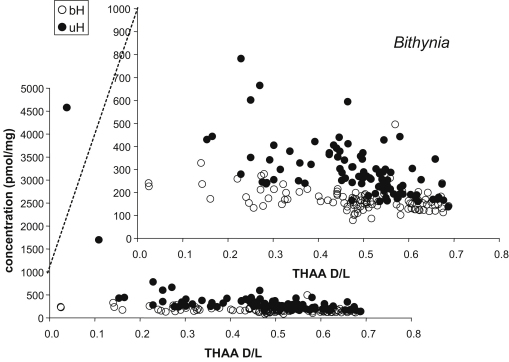
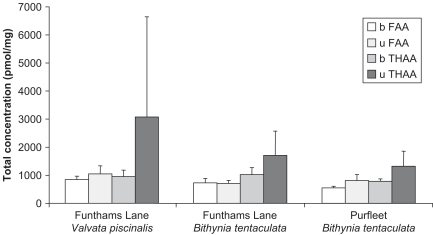
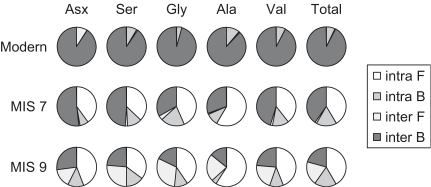
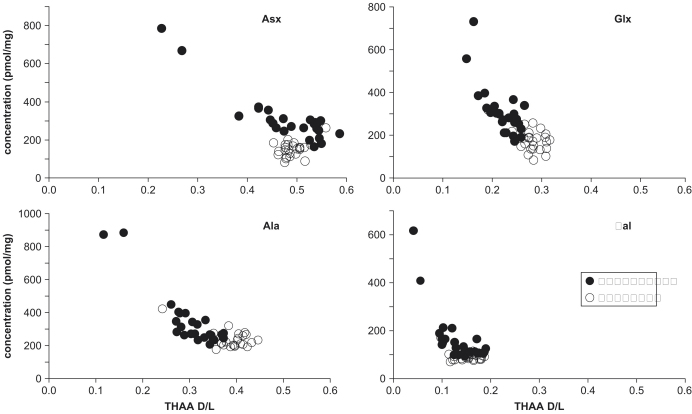
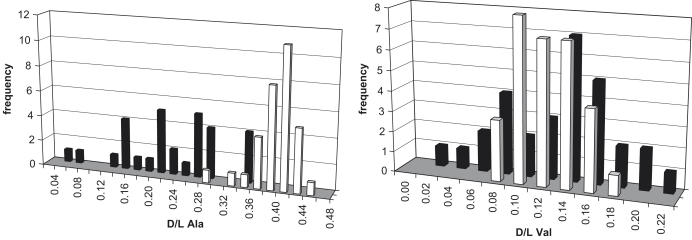
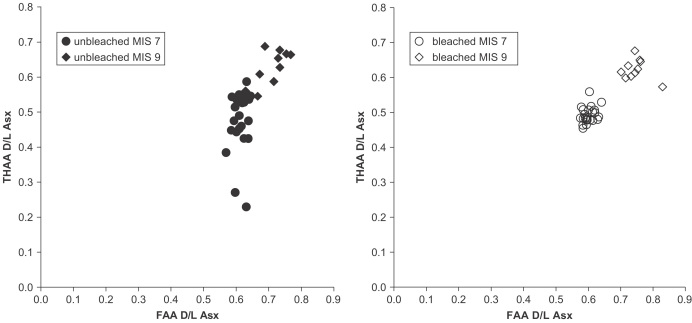
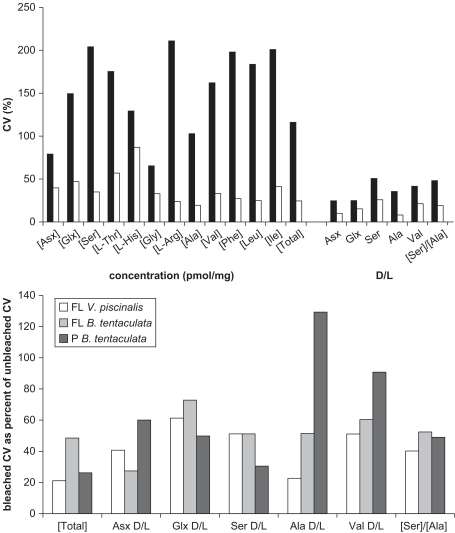
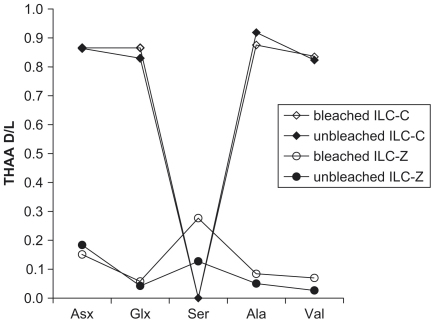
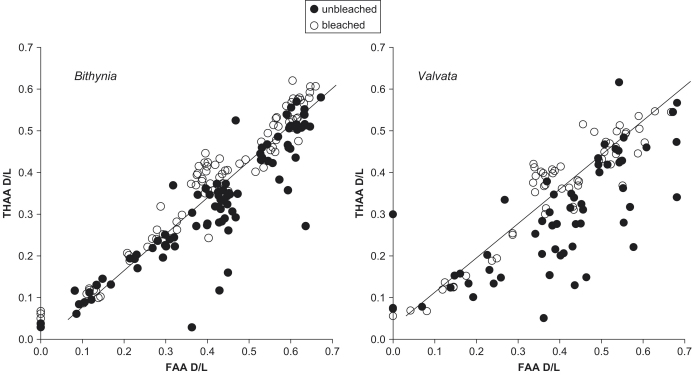
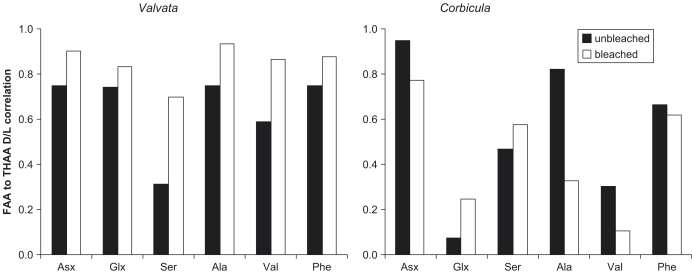
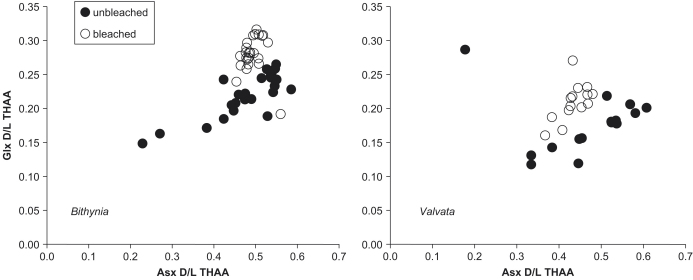
When mollusc shells are analysed conventionally for amino acid geochronology, the entire population of amino acids is included, both inter- and intra-crystalline. This study investigates the utility of removing the amino acids that are most susceptible to environmental effects by isolating the fraction of amino acids encapsulated within mineral crystals of mollusc shells (intra-crystalline fraction). Bleaching, heating and leaching (diffusive loss) experiments were undertaken on modern and fossil Corbicula fluminalis, Margaritifera falcata, Bithynia tentaculata and Valvata piscinalis shells. Exposure of powdered mollusc shells to concentrated NaOCl for 48 h effectively reduced the amino acid content of the four taxa to a residual level, assumed to represent the intra-crystalline fraction. When heated in water at 140 degrees C for 24 h, only 1% of amino acids were leached from the intra-crystalline fraction of modern shells compared with 40% from whole shell. Free amino acids were more effectively retained in the intra-crystalline fraction, comprising 55% (compared with 18%) of the whole shell after 24 h at 140 degrees C. For fossil gastropods, the inter-shell variability in D/L values for the intra-crystalline fraction of a single-age population was reduced by 50% compared with conventionally analysed shells. In contrast, analysis of the intra-crystalline fraction of C. fluminalis does not appear to improve the results for this taxon, possibly due to variability in shell ultrastructure. Nonetheless, the intra-crystalline fraction in gastropods approximates a closed system of amino acids and appears to provide a superior subset of amino acids for geochronological applications.
当按照常规方法对软体动物贝壳进行氨基酸地质年代测定分析时,所包含的氨基酸是整个群体,包括晶间和晶内的氨基酸。本研究通过分离包裹在软体动物贝壳矿物晶体中的氨基酸部分(晶内部分),来探究去除最易受环境影响的氨基酸的效用。对现代和化石淡水蚬、镰形珍珠蚌、铜锈环棱螺和椎实螺贝壳进行了漂白、加热和浸出(扩散损失)实验。将软体动物贝壳粉末暴露于浓次氯酸钠中48小时,有效地将这四个分类单元的氨基酸含量降低到残留水平,假定该残留水平代表晶内部分。当在140摄氏度的水中加热24小时时,现代贝壳晶内部分只有1%的氨基酸被浸出,而整个贝壳的浸出率为40%。游离氨基酸在晶内部分保留得更有效,在140摄氏度下24小时后,晶内部分的游离氨基酸占整个贝壳的55%(相比之下,整个贝壳为18%)。对于化石腹足类动物,与常规分析的贝壳相比,单一年龄群体晶内部分的D/L值在壳间的变异性降低了50%。相比之下,对淡水蚬晶内部分的分析似乎并没有改善该分类单元的结果,这可能是由于贝壳超微结构的变异性。尽管如此,腹足类动物的晶内部分近似于一个封闭的氨基酸系统,似乎为地质年代测定应用提供了一个更好的氨基酸子集。