Department of Microbiology and Immunology, University of Texas Medical Branch, Galveston, TX 77555, USA.
Free Radic Biol Med. 2009 Nov 15;47(10):1414-21. doi: 10.1016/j.freeradbiomed.2009.08.008. Epub 2009 Aug 14.
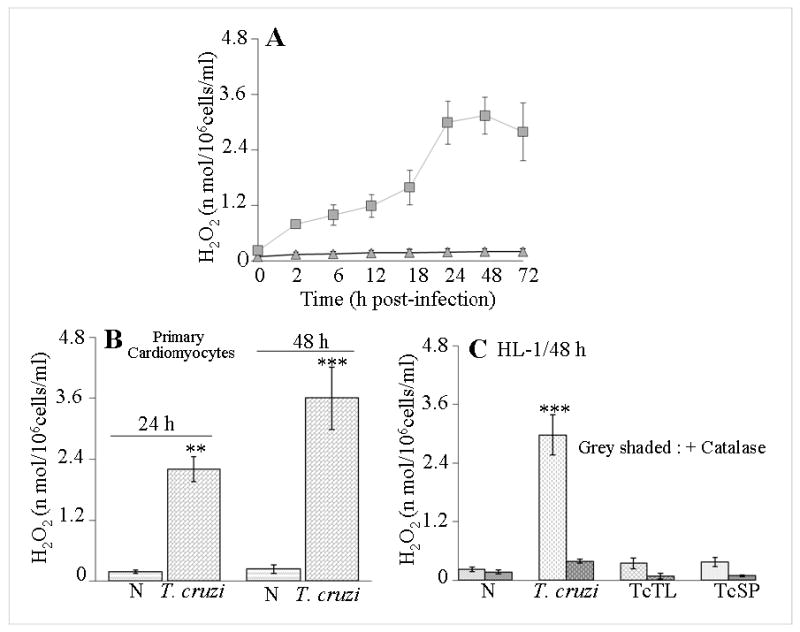
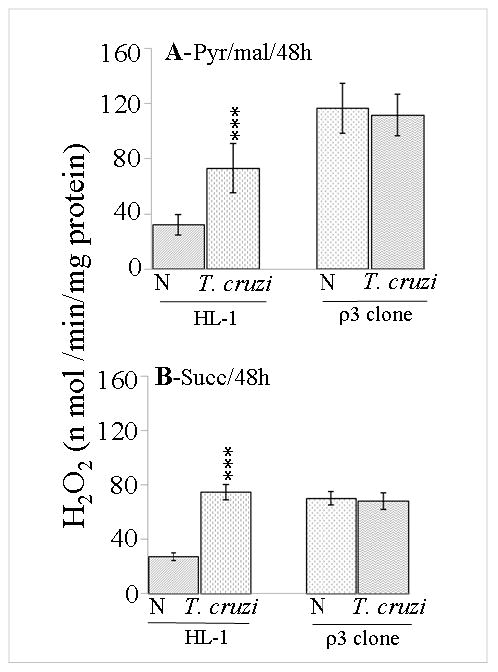
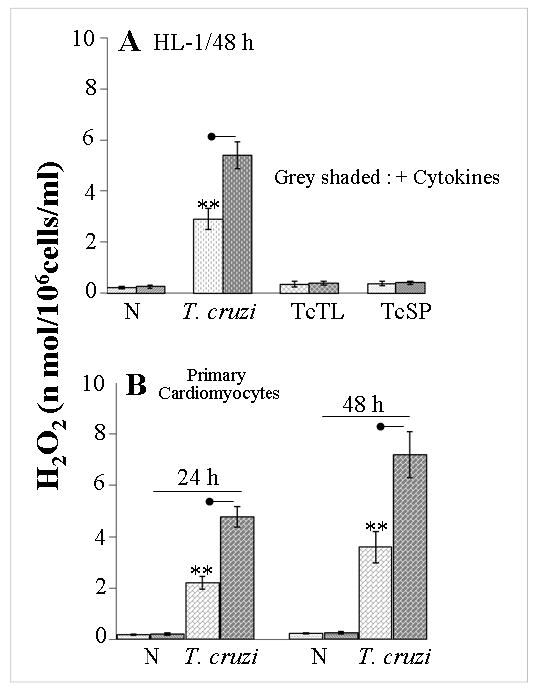
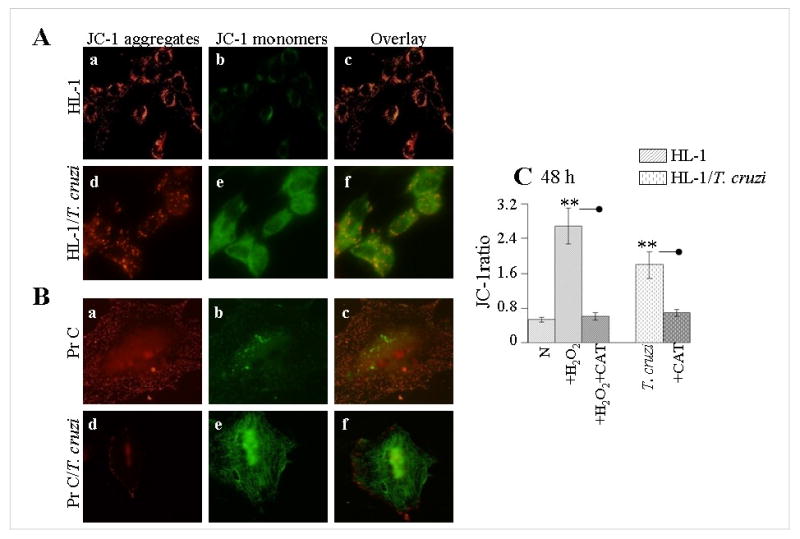
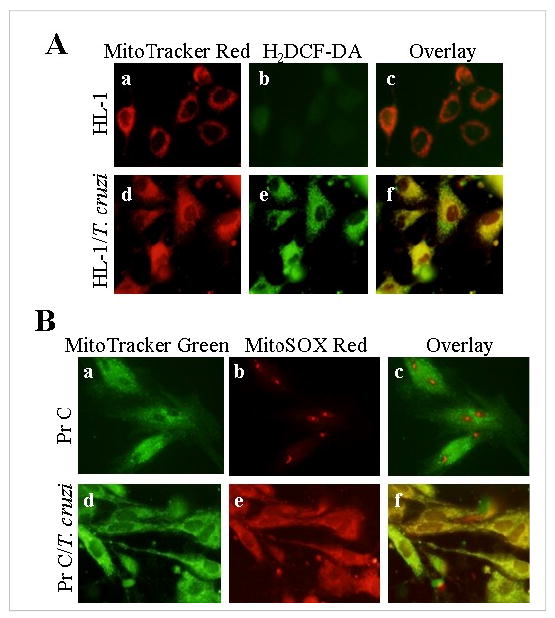
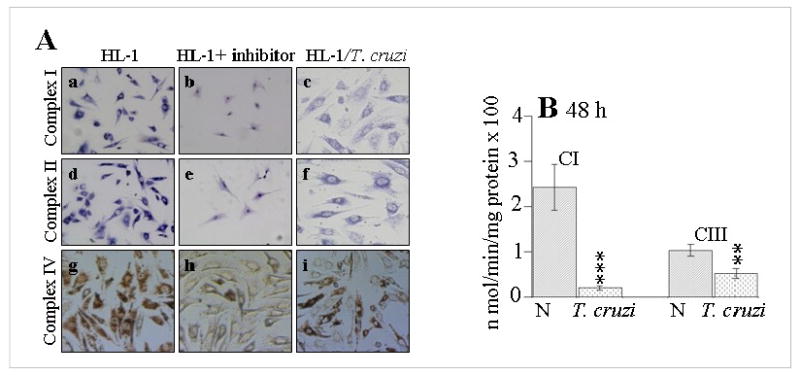
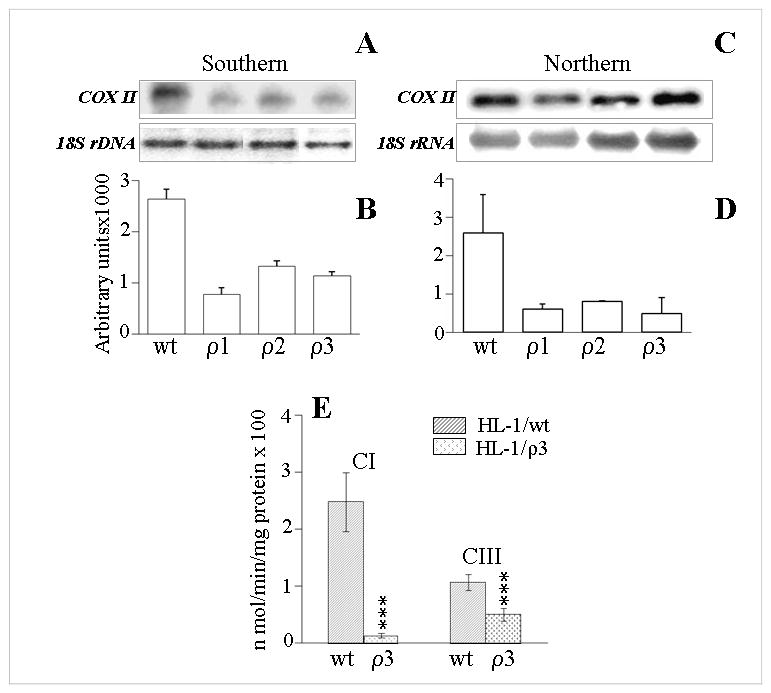
In this study, we investigated the role of Trypanosoma cruzi invasion and inflammatory processes in reactive oxygen species (ROS) production in a mouse atrial cardiomyocyte line (HL-1) and primary adult rat ventricular cardiomyocytes. Cardiomyocytes were incubated with T. cruzi (Tc) trypomastigotes, Tc lysate (TcTL), or Tc secreted proteins (TcSP) for 0-72 h, and ROS were measured by amplex red assay. Cardiomyocytes infected by T. cruzi (but not those incubated with TcTL or TcSP) exhibited a linear increase in ROS production for 2-48 h postinfection (max 18-fold increase), which was further enhanced by recombinant cytokines (IL-1beta, TNF-alpha, and IFN-gamma). We observed no increase in NADPH oxidase, xanthine oxidase, or myeloperoxidase activity, and specific inhibitors of these enzymes did not block the increased rate of ROS production in infected cardiomyocytes. Instead, the mitochondrial membrane potential was perturbed and resulted in inefficient electron transport chain (ETC) activity and enhanced electron leakage and ROS formation in infected cardiomyocytes. HL-1 rho (rho) cardiomyocytes lacked a functional ETC and exhibited no increase in ROS formation in response to T. cruzi. Together, these results demonstrate that invasion by T. cruzi and an inflammatory milieu affect mitochondrial integrity and contribute to electron transport chain inefficiency and ROS production in cardiomyocytes.
在这项研究中,我们研究了克氏锥虫(Trypanosoma cruzi)入侵和炎症过程在小鼠心房心肌细胞系(HL-1)和原代成年大鼠心室心肌细胞中活性氧(ROS)产生中的作用。将心肌细胞与克氏锥虫(Tc)锥虫体、Tc 裂解物(TcTL)或 Tc 分泌蛋白(TcSP)孵育 0-72 小时,并用 Amplex Red 测定法测量 ROS。被克氏锥虫感染的心肌细胞(而不是与 TcTL 或 TcSP 孵育的心肌细胞)在感染后 2-48 小时内表现出 ROS 产生的线性增加(最大增加 18 倍),重组细胞因子(IL-1β、TNF-α和 IFN-γ)进一步增强了这种增加。我们没有观察到 NADPH 氧化酶、黄嘌呤氧化酶或髓过氧化物酶活性的增加,并且这些酶的特异性抑制剂不能阻断感染心肌细胞中 ROS 产生的增加速度。相反,线粒体膜电位受到干扰,导致感染心肌细胞中电子传递链(ETC)活性降低,电子泄漏和 ROS 形成增加。HL-1 rho(rho)心肌细胞缺乏功能性 ETC,并且对 T. cruzi 的反应没有增加 ROS 的形成。综上所述,这些结果表明,克氏锥虫的入侵和炎症环境会影响线粒体的完整性,并导致电子传递链效率降低和心肌细胞中 ROS 的产生。