Center for the Future of Surgery, Department of Surgery, University of California, San Diego Medical Center, San Diego, CA, USA.
Surg Endosc. 2010 Mar;24(3):531-5. doi: 10.1007/s00464-009-0636-7. Epub 2009 Aug 18.
Risk of gastric spillage during transgastric surgery is a potential complication of NOTES procedures. The aim of this study was to determine risk outcomes from gastric spillage in a rat survival model by measuring local and systemic inflammatory markers, adhesive disease, and morbidity.
We performed a minilaparotomy with needle aspiration of 2 ml of gastric contents mixed with 2 ml of sterile saline (study group, SG) or 4 ml of sterile saline (control group, CG) injected into the peritoneal cavity of 60 male rats. Inflammatory markers (TNFalpha, IL-6, and IL-10) were analyzed at 1, 3, 6, and 24 h postoperatively by obtaining plasma levels and peritoneal washings. At necropsy, the peritoneal cavity was examined grossly for adhesions.
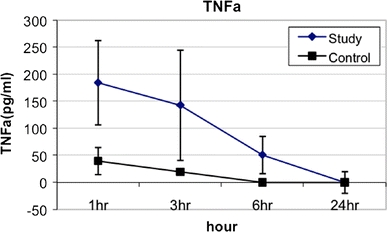
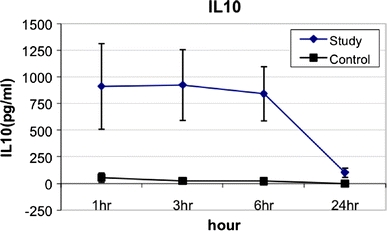
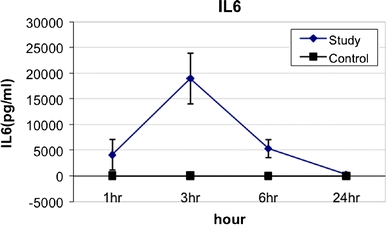
Adhesions were seen more frequently in the SG versus the CG (100% vs. 33.3%, p < 0.014). There was a significant difference in the peritoneal TNFalpha levels in the SG compared with the CG, which peaked 1 h after surgery (p < 0.02). Both peritoneal IL-6 and IL-10 levels were higher in the SG versus the CG, which peaked 3 h after surgery (p < 0.005 and p < 0.001, respectively). All peritoneal inflammatory markers returned to undetectable levels at 24 h for both groups. Plasma cytokines were undetectable at all time intervals.
The inflammatory response was found to be a localized and not systemic event, with plasma cytokine levels remaining normal while peritoneal washings revealed a brisk, short-lived localized inflammatory response. There was a significantly higher rate of adhesive disease in the SG compared with the CG; this, however did not translate into a difference in apparent clinical outcome. We conclude that gastric leakage in this NOTES rodent model induces a localized inflammatory response, followed by mild to moderate adhesive disease. This may be important in human NOTES.
经胃NOTES 手术过程中胃内容物外溢是一种潜在的并发症。本研究旨在通过测量局部和全身炎症标志物、粘连性疾病和发病率来确定大鼠生存模型中胃内容物外溢的风险结果。
我们对 60 只雄性大鼠进行小开腹术,用针头抽吸 2 ml 胃内容物与 2 ml 无菌生理盐水(研究组,SG)或 4 ml 无菌生理盐水(对照组,CG)混合后注入腹腔。在术后 1、3、6 和 24 小时通过获取血浆水平和腹腔冲洗液来分析炎症标志物(TNFalpha、IL-6 和 IL-10)。在解剖时,肉眼观察腹腔内有无粘连。
SG 组比 CG 组更常出现粘连(100%比 33.3%,p < 0.014)。SG 组与 CG 组相比,腹腔 TNFalpha 水平在手术后 1 小时有显著差异(p < 0.02)。SG 组的腹腔 IL-6 和 IL-10 水平均高于 CG 组,术后 3 小时达到峰值(p < 0.005 和 p < 0.001)。两组的所有腹腔炎症标志物在 24 小时时均降至不可检测水平。所有时间间隔的血浆细胞因子均无法检测到。
研究发现炎症反应是局部而非全身性事件,血浆细胞因子水平保持正常,而腹腔冲洗液显示出短暂的局部炎症反应。SG 组与 CG 组相比,粘连性疾病的发生率显著更高;然而,这并没有转化为明显的临床结果差异。我们得出结论,在这种 NOTES 啮齿动物模型中,胃泄漏会引起局部炎症反应,随后发生轻度至中度粘连性疾病。这在人类NOTES 中可能很重要。