Martinez-Fernandez Almudena, Nelson Timothy J, Yamada Satsuki, Reyes Santiago, Alekseev Alexey E, Perez-Terzic Carmen, Ikeda Yasuhiro, Terzic Andre
Marriott Heart Disease Research Program, Division of Cardiovascular Diseases, Departments of Medicine, Molecular Pharmacology and Experimental Therapeutics, and Medical Genetics, Mayo Clinic, Rochester, Minn. 55905, USA.
Circ Res. 2009 Sep 25;105(7):648-56. doi: 10.1161/CIRCRESAHA.109.203109. Epub 2009 Aug 20.
Induced pluripotent stem cells (iPS) allow derivation of pluripotent progenitors from somatic sources. Originally, iPS were induced by a stemness-related gene set that included the c-MYC oncogene.
Here, we determined from embryo to adult the cardiogenic proficiency of iPS programmed without c-MYC, a cardiogenicity-associated transcription factor.
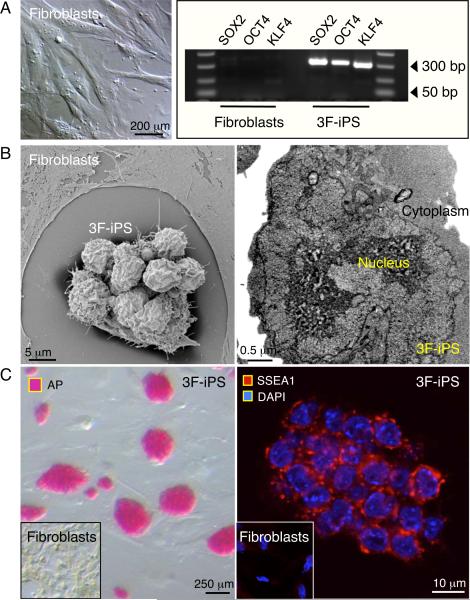
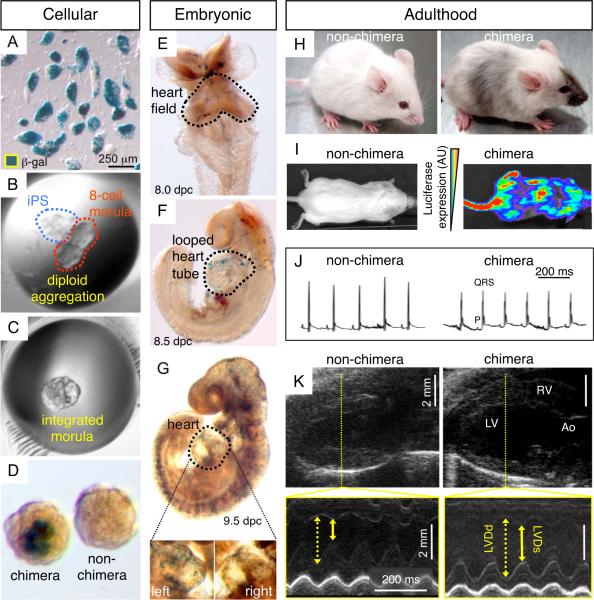
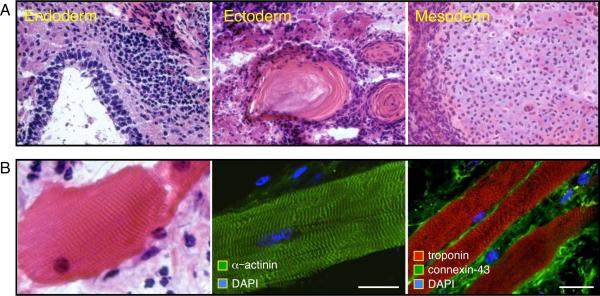
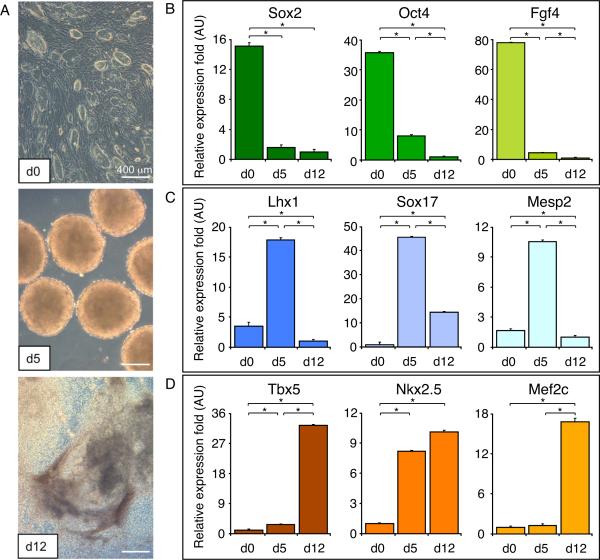
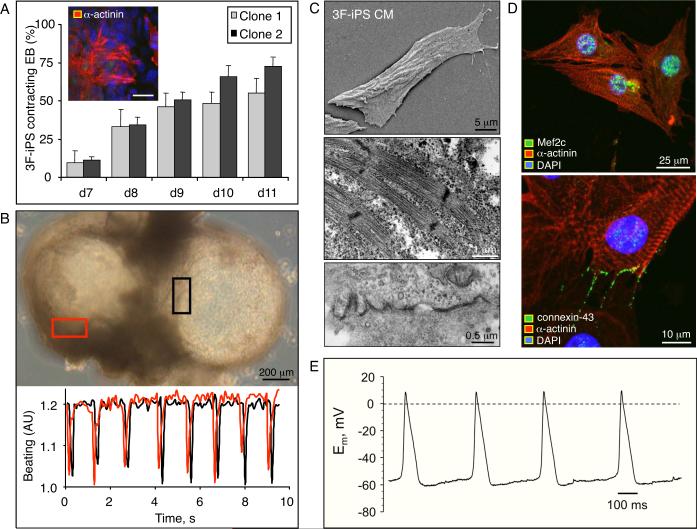
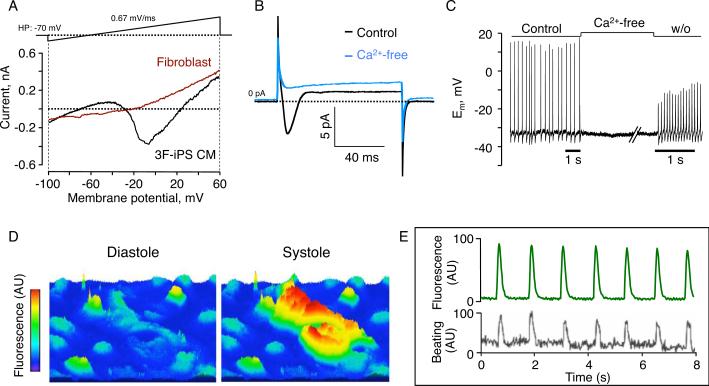
Transgenic expression of 3 human stemness factors SOX2, OCT4, and KLF4 here reset murine fibroblasts to the pluripotent ground state. Transduction without c-MYC reversed cellular ultrastructure into a primitive archetype and induced stem cell markers generating 3-germ layers, all qualifiers of acquired pluripotency. Three-factor induced iPS (3F-iPS) clones reproducibly demonstrated cardiac differentiation properties characterized by vigorous beating activity of embryoid bodies and robust expression of cardiac Mef2c, alpha-actinin, connexin43, MLC2a, and troponin I. In vitro isolated iPS-derived cardiomyocytes demonstrated functional excitation-contraction coupling. Chimerism with 3F-iPS derived by morula-stage diploid aggregation was sustained during prenatal heart organogenesis and contributed in vivo to normal cardiac structure and overall performance in adult tumor-free offspring.
Thus, 3F-iPS bioengineered without c-MYC achieve highest stringency criteria for bona fide cardiogenesis enabling reprogrammed fibroblasts to yield de novo heart tissue compatible with native counterpart throughout embryological development and into adulthood.
诱导多能干细胞(iPS)可从体细胞来源获得多能祖细胞。最初,iPS是由包括c-MYC癌基因在内的一组与干性相关的基因诱导产生的。
在此,我们确定了在没有c-MYC(一种与心脏发生相关的转录因子)的情况下编程的iPS从胚胎到成体的心脏发生能力。
3种人类干性因子SOX2、OCT4和KLF4的转基因表达将小鼠成纤维细胞重编程回到多能基态。无c-MYC的转导使细胞超微结构逆转为原始原型,并诱导产生干细胞标志物,形成三胚层,这些都是获得性多能性的所有特征。三因子诱导的iPS(3F-iPS)克隆可重复性地表现出心脏分化特性,其特征为胚状体的强烈跳动活性以及心脏Mef2c、α-肌动蛋白、连接蛋白43、MLC2a和肌钙蛋白I的强烈表达。体外分离的iPS来源的心肌细胞表现出功能性兴奋-收缩偶联。通过桑椹胚期二倍体聚集获得的3F-iPS的嵌合现象在产前心脏器官发生过程中持续存在,并在体内对成年无瘤后代的正常心脏结构和整体性能有贡献。
因此,无c-MYC生物工程改造的3F-iPS达到了真正心脏发生的最高严格标准,使重编程的成纤维细胞能够在整个胚胎发育直至成年期产生与天然对应物兼容的新生心脏组织。