Negro Roberto
Department of Endocrinology, "V. Fazzi" Hospital, Lecce, Italy.
Biologics. 2008 Jun;2(2):265-73. doi: 10.2147/btt.s2746.
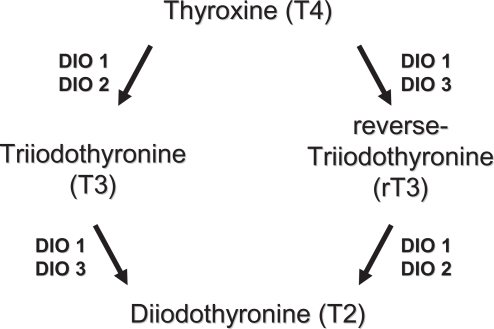
The trace element selenium (Se) occurs in the form of the amino acid selenocysteine in selenoproteins. Selenoproteins exerts multiple physiological effects in human health, many of which are related with regulation of reduction-oxidation processes. In fact, the selenoenzyme families of glutathione peroxidase (GPx) and thioredoxin reductase (TRx) display the ability to act as antioxidants, protecting cells from oxidative damage. Furthermore, another class of selenoproteins are the iodothyronine deiodinase enzymes (DIO), which catalyze the conversion of thyroxine (T4) in triiodothyronine (T3), then exerting a fine tuned control on thyroid hormones metabolism. Several studies have investigated the potential positive effects of Se supplementation in thyroid diseases, characterized by increased levels of hydrogen peroxide and free radicals, like autoimmune chronic thyroiditis. These studies have supplied evidences indicating that Se supplementation, maximizing the antioxidant enzymes activity, may reduce the thyroid inflammatory status. Then, it may be postulated that Se could play a therapeutical role in thyroid autoimmune diseases. Despite the fact that recent studies seem to be concordant about Se beneficial effects in decreasing thyroid peroxidase antibodies (TPOAb) titers and ameliorating the ultrasound echogenicity pattern, several doubts have to be still clarified, before advising Se supplementation in chronic autoimmune thyroiditis.
微量元素硒(Se)在硒蛋白中以氨基酸硒代半胱氨酸的形式存在。硒蛋白在人体健康中发挥多种生理作用,其中许多与氧化还原过程的调节有关。事实上,谷胱甘肽过氧化物酶(GPx)和硫氧还蛋白还原酶(TRx)的硒酶家族具有抗氧化作用,可保护细胞免受氧化损伤。此外,另一类硒蛋白是碘甲状腺原氨酸脱碘酶(DIO),它催化甲状腺素(T4)转化为三碘甲状腺原氨酸(T3),从而对甲状腺激素代谢进行精确调控。多项研究调查了补充硒在甲状腺疾病中的潜在积极作用,这类疾病的特征是过氧化氢和自由基水平升高,如自身免疫性慢性甲状腺炎。这些研究提供的证据表明,补充硒可使抗氧化酶活性最大化,可能减轻甲状腺炎症状态。因此,可以推测硒可能在甲状腺自身免疫性疾病中发挥治疗作用。尽管最近的研究似乎在硒对降低甲状腺过氧化物酶抗体(TPOAb)滴度和改善超声回声模式的有益作用上达成了一致,但在建议对慢性自身免疫性甲状腺炎补充硒之前,仍有一些疑问需要澄清。