Department of Anesthesiology, Centre Hospitalier Universitaire Vaudois (CHUV), Lausanne, Switzerland.
Scand J Trauma Resusc Emerg Med. 2009 Sep 1;17:39. doi: 10.1186/1757-7241-17-39.
To assess the theoretical and practical knowledge of the Glasgow Coma Scale (GCS) by trained Air-rescue physicians in Switzerland.
Prospective anonymous observational study with a specially designed questionnaire. General knowledge of the GCS and its use in a clinical case were assessed.
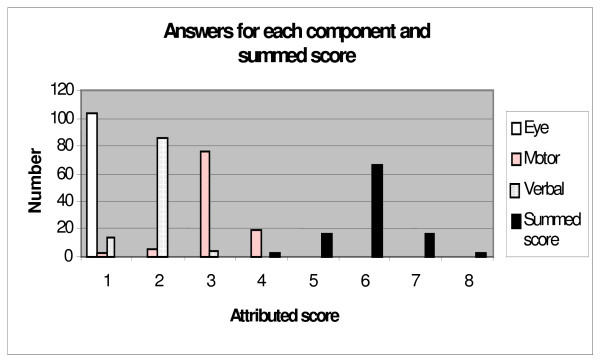
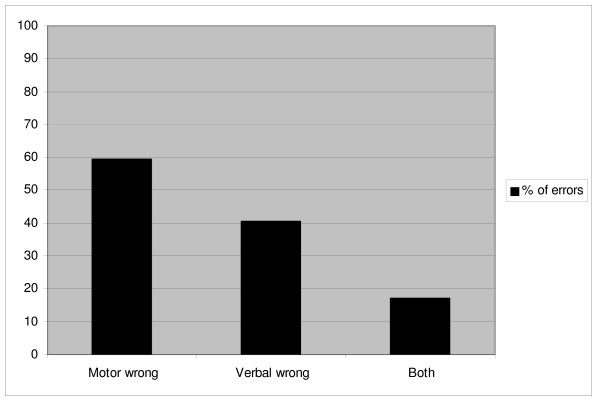
From 130 questionnaires send out, 103 were returned (response rate of 79.2%) and analyzed. Theoretical knowledge of the GCS was consistent for registrars, fellows, consultants and private practitioners active in physician-staffed helicopters. The clinical case was wrongly scored by 38 participants (36.9%). Wrong evaluation of the motor component occurred in 28 questionnaires (27.2%), and 19 errors were made for the verbal score (18.5%). Errors were made most frequently by registrars (47.5%, p = 0.09), followed by fellows (31.6%, p = 0.67) and private practitioners (18.4%, p = 1.00). Consultants made significantly less errors than the rest of the participating physicians (0%, p < 0.05). No statistically significant differences were shown between anesthetists, general practitioners, internal medicine trainees or others.
Although the theoretical knowledge of the GCS by out-of-hospital physicians is correct, significant errors were made in scoring a clinical case. Less experienced physicians had a higher rate of errors. Further emphasis on teaching the GCS is mandatory.
评估瑞士受过训练的空中救援医师对格拉斯哥昏迷量表(GCS)的理论和实践知识。
采用专门设计的问卷进行前瞻性匿名观察研究。评估 GCS 的一般知识及其在临床病例中的应用。
在发出的 130 份问卷中,有 103 份(回收率为 79.2%)被退回并进行了分析。注册医师、研究员、顾问和私人执业者在医生配备的直升机中对 GCS 的理论知识一致。38 名参与者(36.9%)错误地评分了临床病例。28 份问卷(27.2%)对运动成分的评估错误,19 份问卷(18.5%)对言语评分错误。错误最常发生在注册医师(47.5%,p=0.09),其次是研究员(31.6%,p=0.67)和私人执业者(18.4%,p=1.00)。顾问比参与的其他医生犯的错误明显少(0%,p<0.05)。麻醉师、全科医生、内科医生和其他医生之间没有显示出统计学上的显著差异。
尽管院外医生对 GCS 的理论知识是正确的,但在对临床病例进行评分时却出现了重大错误。经验较少的医生错误率更高。必须进一步强调 GCS 的教学。