Seibel Christian, Gremel Gabriela, do Nascimento Silva Roberto, Schuster André, Kubicek Christian P, Schmoll Monika
Research Area Gene Technology and Applied Biochemistry, Institute of Chemical Engineering, Vienna University of Technology, Wien, Austria.
BMC Biol. 2009 Sep 3;7:58. doi: 10.1186/1741-7007-7-58.
The filamentous ascomycete Hypocrea jecorina (anamorph Trichoderma reesei) is primarily known for its efficient enzymatic machinery that it utilizes to decompose cellulosic substrates. Nevertheless, the nature and transmission of the signals initiating and modulating this machinery are largely unknown. Heterotrimeric G-protein signaling represents one of the best studied signal transduction pathways in fungi.
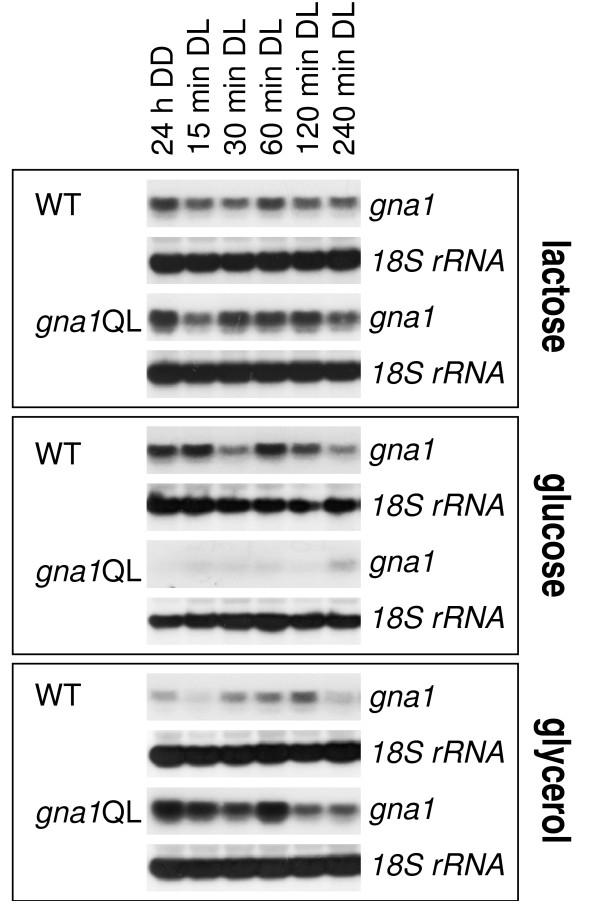
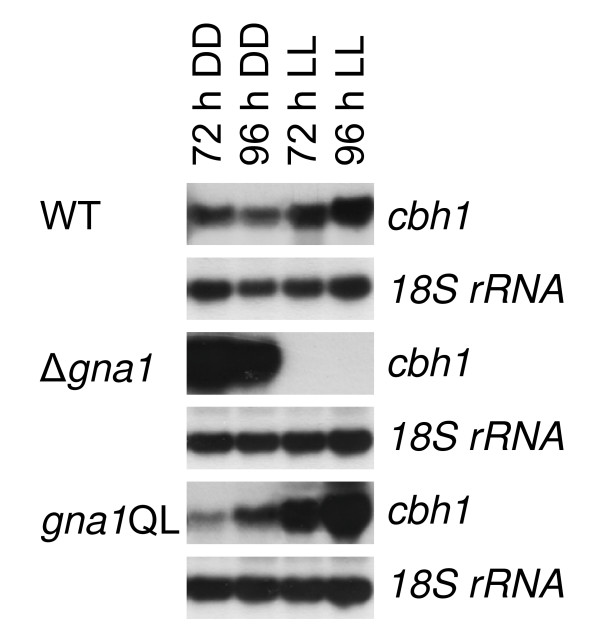
Analysis of the regulatory targets of the G-protein alpha subunit GNA1 in H. jecorina revealed a carbon source and light-dependent role in signal transduction. Deletion of gna1 led to significantly decreased biomass formation in darkness in submersed culture but had only minor effects on morphology and hyphal apical extension rates on solid medium. Cellulase gene transcription was abolished in Deltagna1 on cellulose in light and enhanced in darkness. However, analysis of strains expressing a constitutively activated GNA1 revealed that GNA1 does not transmit the essential inducing signal. Instead, it relates a modulating signal with light-dependent significance, since induction still required the presence of an inducer. We show that regulation of transcription and activity of GNA1 involves a carbon source-dependent feedback cycle. Additionally we found a function of GNA1 in hydrophobin regulation as well as effects on conidiation and tolerance of osmotic and oxidative stress.
We conclude that GNA1 transmits a signal the physiological relevance of which is dependent on both the carbon source as well as the light status. The widespread consequences of mutations in GNA1 indicate a broad function of this Galpha subunit in appropriation of intracellular resources to environmental (especially nutritional) conditions.
丝状子囊菌里氏木霉(无性型为里氏木霉)主要因其用于分解纤维素底物的高效酶机制而闻名。然而,启动和调节该机制的信号的性质和传递在很大程度上尚不清楚。异源三聚体G蛋白信号传导是真菌中研究得最为深入的信号转导途径之一。
对里氏木霉中G蛋白α亚基GNA1的调控靶点分析表明,其在信号转导中具有碳源和光依赖性作用。gna1的缺失导致深层培养黑暗条件下生物量形成显著减少,但对固体培养基上的形态和菌丝顶端延伸速率影响较小。在光照条件下,纤维素酶基因转录在Deltagna1中被消除,而在黑暗中增强。然而,对表达组成型激活GNA1的菌株的分析表明,GNA1不传递必需的诱导信号。相反,它传递一个具有光依赖性意义的调节信号,因为诱导仍然需要诱导剂的存在。我们表明,GNA1转录和活性的调节涉及一个碳源依赖性反馈循环。此外,我们发现GNA1在疏水蛋白调节中具有功能,以及对分生孢子形成、渗透和氧化应激耐受性的影响。
我们得出结论,GNA1传递一种信号,其生理相关性取决于碳源和光照状态。GNA1突变的广泛影响表明,该Gα亚基在将细胞内资源分配到环境(尤其是营养)条件方面具有广泛功能。