Department Internal Medicine III, Jena University Hospital, Erlanger Allee 101, Jena, 07740, Germany.
Arthritis Res Ther. 2009;11(5):R136. doi: 10.1186/ar2807. Epub 2009 Sep 7.
Advanced glycation end products (AGEs) have been introduced to be involved in the pathogenesis of osteoarthritis (OA). The influence of AGEs on osteoarthritic fibroblast-like synovial cells (FLS) has been incompletely understood as yet. The present study investigates a potential influence of AGE-modified bovine serum albumin (AGE-BSA) on cell growth, and on the expression of proinflammatory and osteoclastogenic markers in cultured FLS.
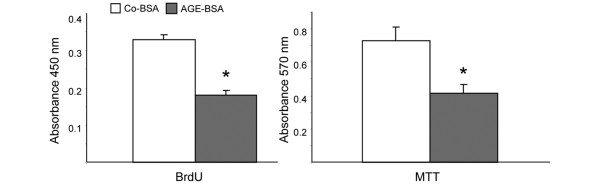
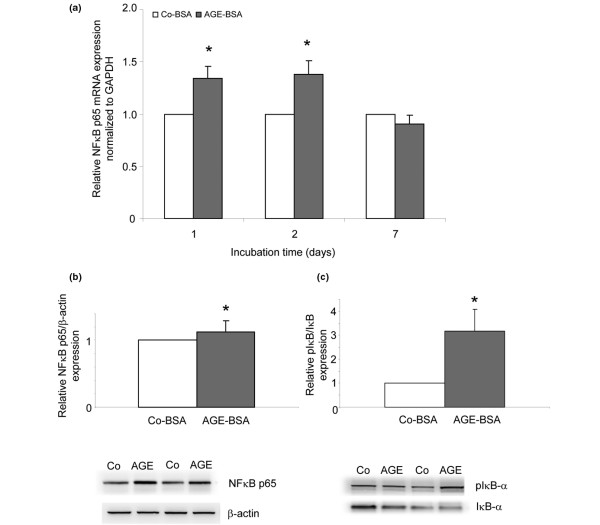
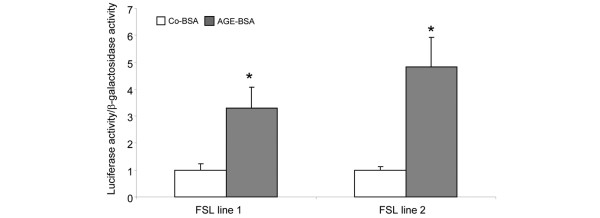
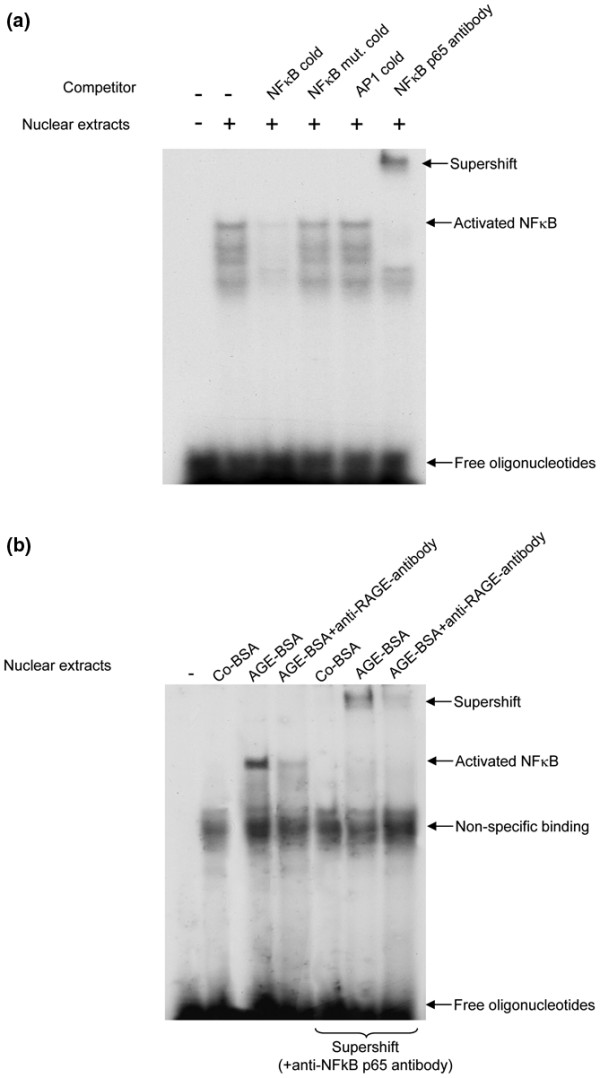
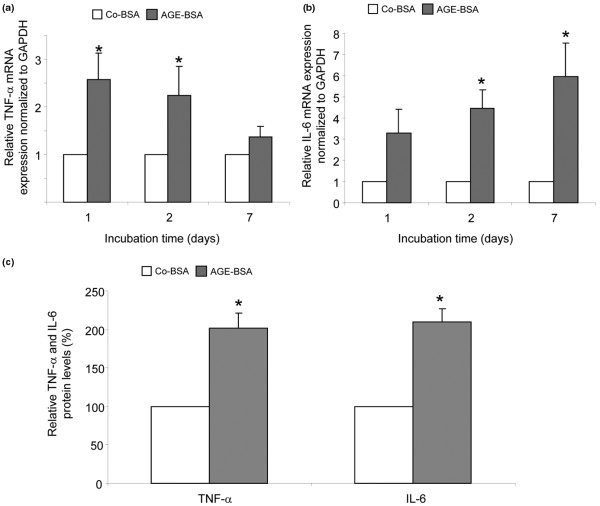
FLS were established from OA joints and stimulated with AGE-BSA. The mRNA expression of p27Kip1, RAGE (receptor for AGEs), nuclear factor kappa B subunit p65 (NFkappaB p65), tumor necrosis factor alpha (TNF-alpha, interleukin-6 (IL-6), receptor activator of NFkappaB ligand (RANKL) and osteoprotegerin was measured by real-time PCR. The respective protein expression was evaluated by western blot analysis or ELISA. NFkappaB activation was investigated by luciferase assay and electrophoretic mobility shift assay (EMSA). Cell cycle analysis, cell proliferation and markers of necrosis and early apoptosis were assessed. The specificity of the response was tested in the presence of an anti-RAGE antibody.
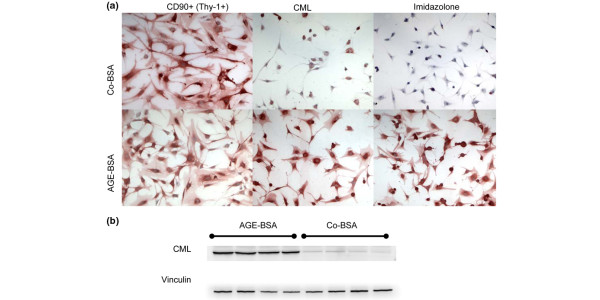
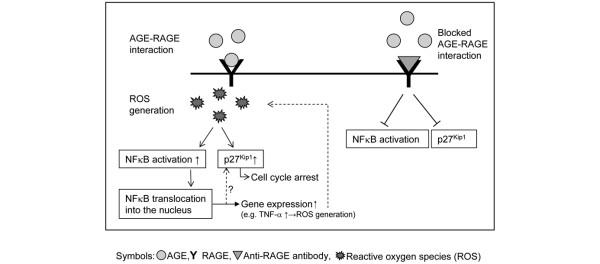
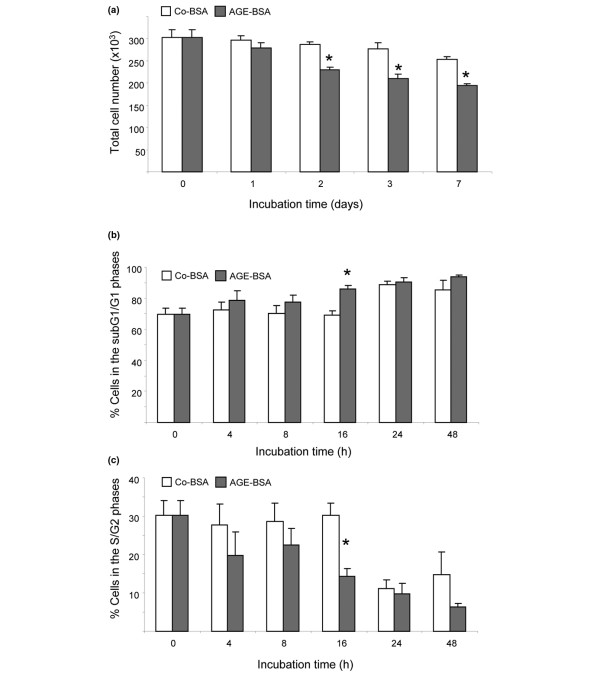
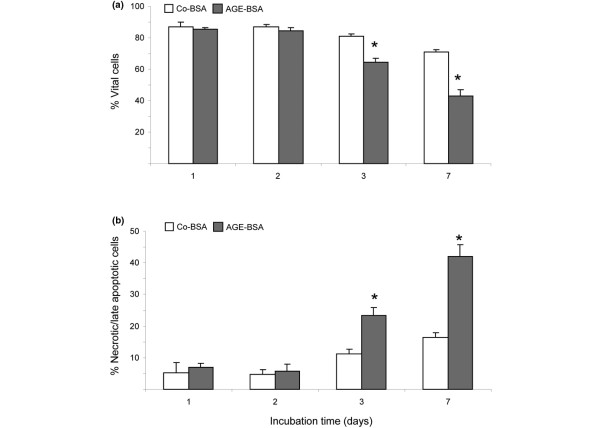
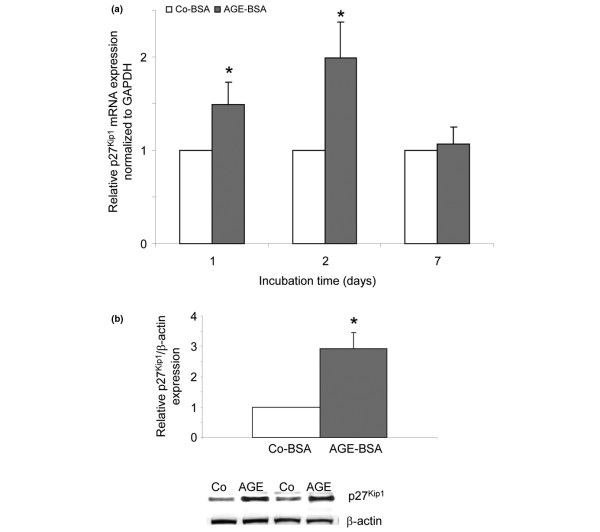
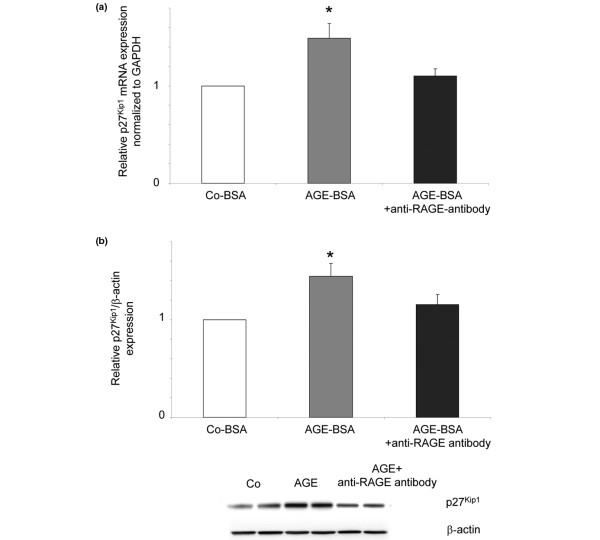
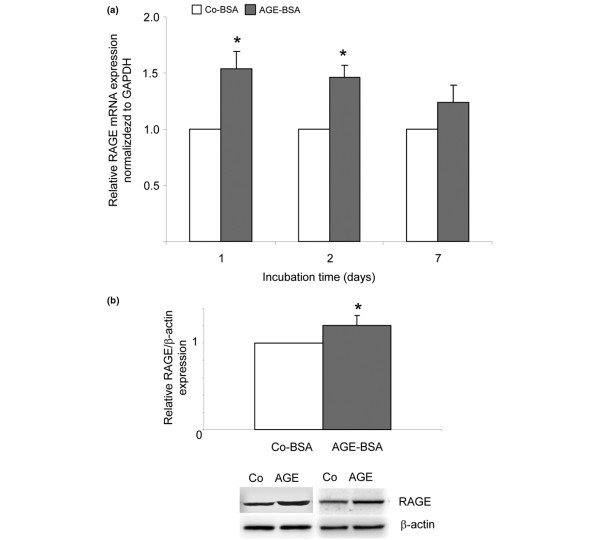
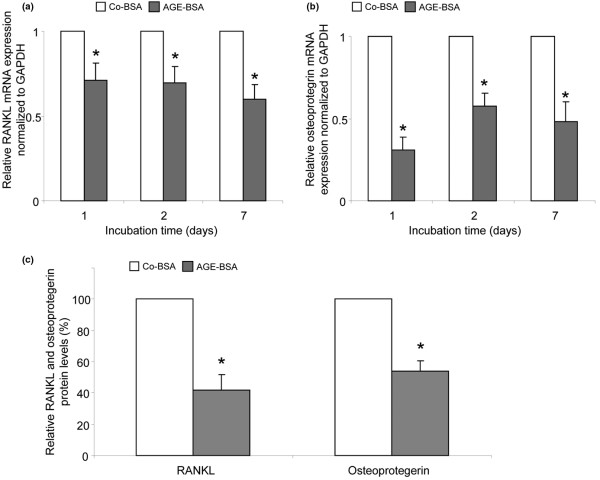
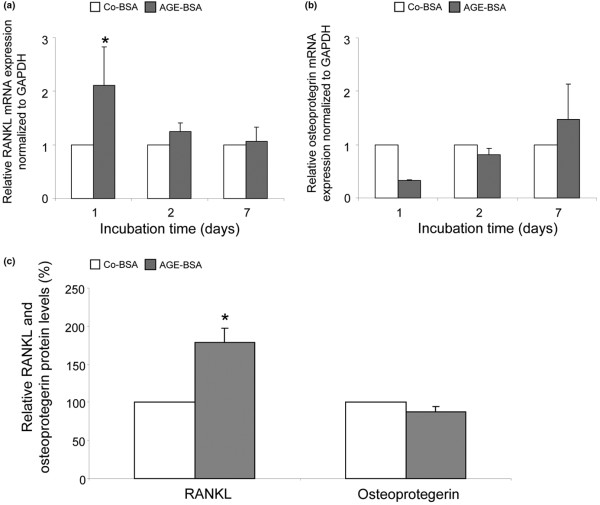
AGE-BSA was actively taken up into the cells as determined by immunohistochemistry and western blots. AGE-induced p27Kip1 mRNA and protein expression was associated with cell cycle arrest and an increase in necrotic, but not apoptotic cells. NFkappaB activation was confirmed by EMSAs including supershift experiments. Anti-RAGE antibodies attenuated all AGE-BSA induced responses. The increased expression of RAGE, IL-6 and TNF-alpha together with NFkappaB activation indicates AGE-mediated inflammation. The decreased expression of RANKL and osteoprotegerin may reflect a diminished osteoclastogenic potential.
The present study demonstrates that AGEs modulate growth and expression of genes involved in the pathophysiological process of OA. This may lead to functional and structural impairment of the joints.
糖基化终产物(AGEs)已被认为参与了骨关节炎(OA)的发病机制。AGEs 对 OA 成纤维样滑膜细胞(FLS)的影响尚未完全了解。本研究探讨了 AGE 修饰牛血清白蛋白(AGE-BSA)对培养的 FLS 细胞生长和促炎及破骨细胞生成标志物表达的潜在影响。
从 OA 关节中建立 FLS 细胞,并用 AGE-BSA 刺激。通过实时 PCR 测量 p27Kip1、AGE 受体(RAGE)、核因子 kappa B 亚单位 p65(NFkappaB p65)、肿瘤坏死因子 alpha(TNF-alpha)、白细胞介素 6(IL-6)、核因子 kappa B 受体激活剂配体(RANKL)和骨保护素的 mRNA 表达。通过 Western blot 分析或 ELISA 评估相应的蛋白表达。通过荧光素酶测定和电泳迁移率变动分析(EMSA)研究 NFkappaB 激活。评估细胞周期分析、细胞增殖以及坏死和早期凋亡的标志物。通过抗 RAGE 抗体检测反应的特异性。
通过免疫组织化学和 Western blot 确定 AGE-BSA 被细胞主动摄取。AGE 诱导的 p27Kip1 mRNA 和蛋白表达与细胞周期停滞以及坏死细胞增加有关,但与凋亡细胞无关。通过包括超迁移实验的 EMSAs 证实了 NFkappaB 的激活。抗 RAGE 抗体减弱了所有 AGE-BSA 诱导的反应。RAGE、IL-6 和 TNF-alpha 的表达增加以及 NFkappaB 的激活表明 AGE 介导的炎症。RANKL 和骨保护素表达的降低可能反映了破骨细胞生成潜力的降低。
本研究表明,AGEs 调节参与 OA 病理生理过程的基因的生长和表达。这可能导致关节的功能和结构损伤。