The Rheumatism Research Center, Catholic Research Institute of Medical Science, The Catholic University of Korea, Seoul, 505 Banpo-dong, Seocho-gu, Seoul 137-040, South Korea.
Arthritis Res Ther. 2011 Jul 12;13(4):R113. doi: 10.1186/ar3398.
The receptor for advanced glycation end-products (RAGE) has been implicated in the pathogenesis of arthritis. We conducted this study to determine the effect of interleukin (IL)-17 on the expression and production of RAGE in fibroblast-like synoviocytes (FLS) from patients with rheumatoid arthritis (RA). The role of nuclear factor-κB (NF-κB) activator 1 (Act1) in IL-17-induced RAGE expression in RA-FLS was also evaluated.
RAGE expression in synovial tissues was assessed by immunohistochemical staining. RAGE mRNA production was determined by real-time polymerase chain reaction. Act-1 short hairpin RNA (shRNA) was produced and treated to evaluate the role of Act-1 on RAGE production.
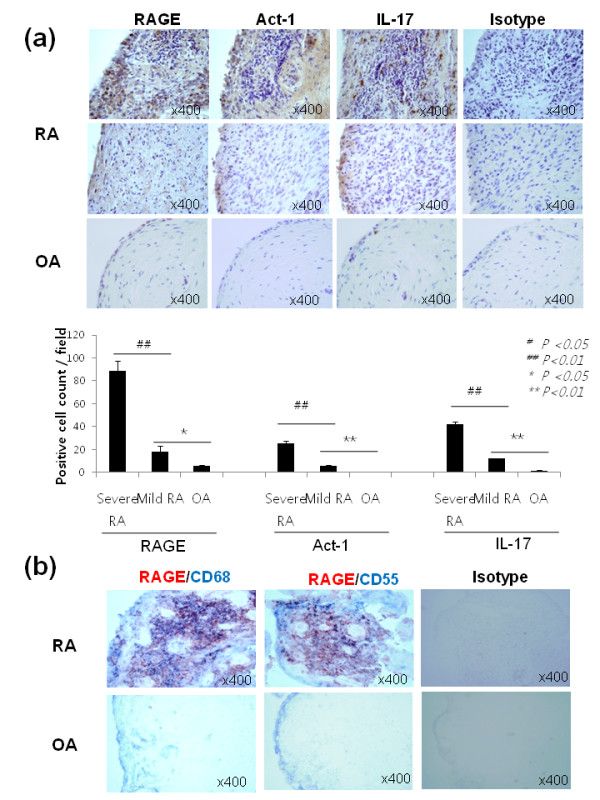
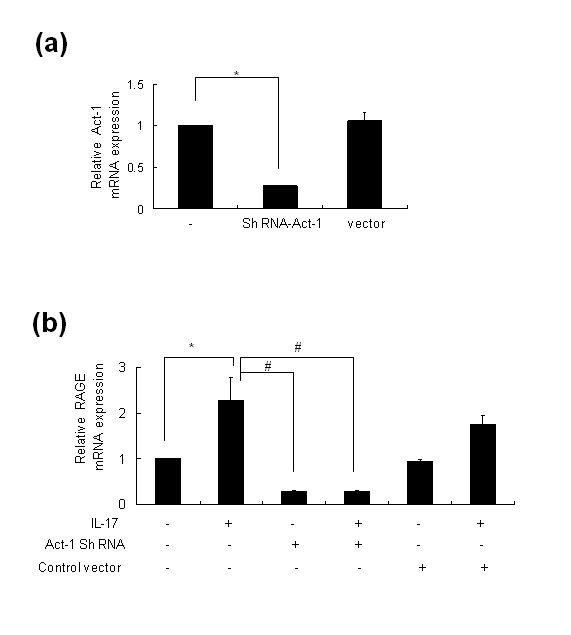
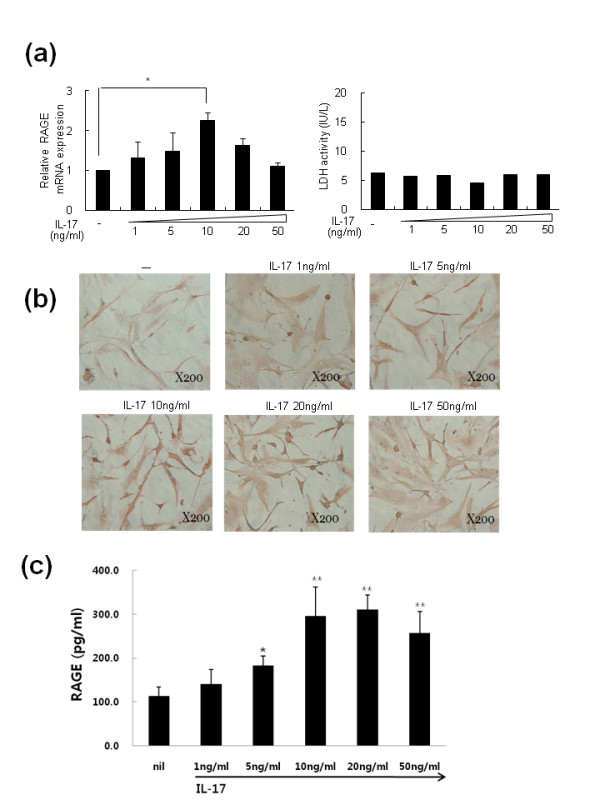
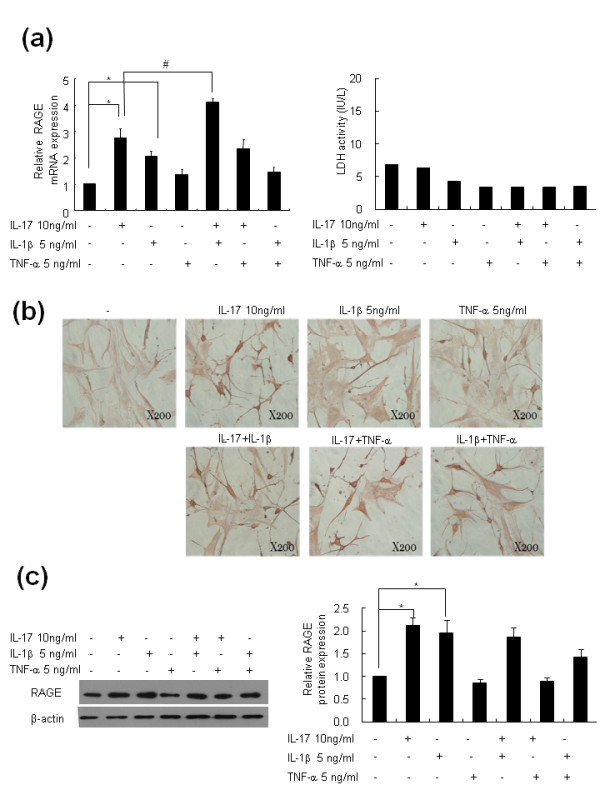
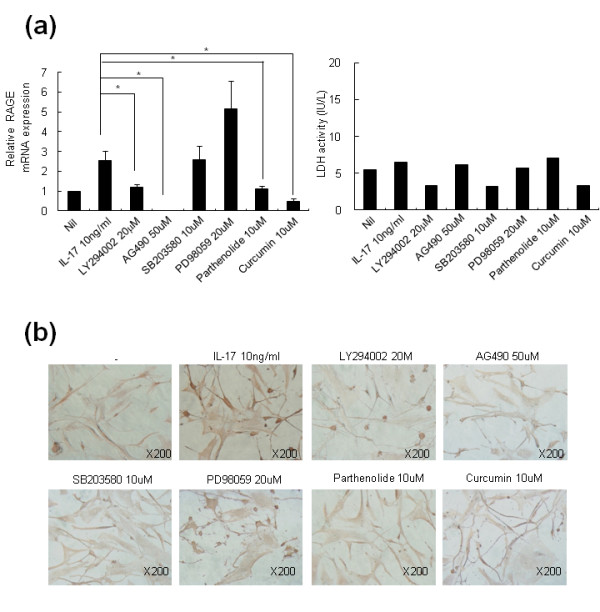
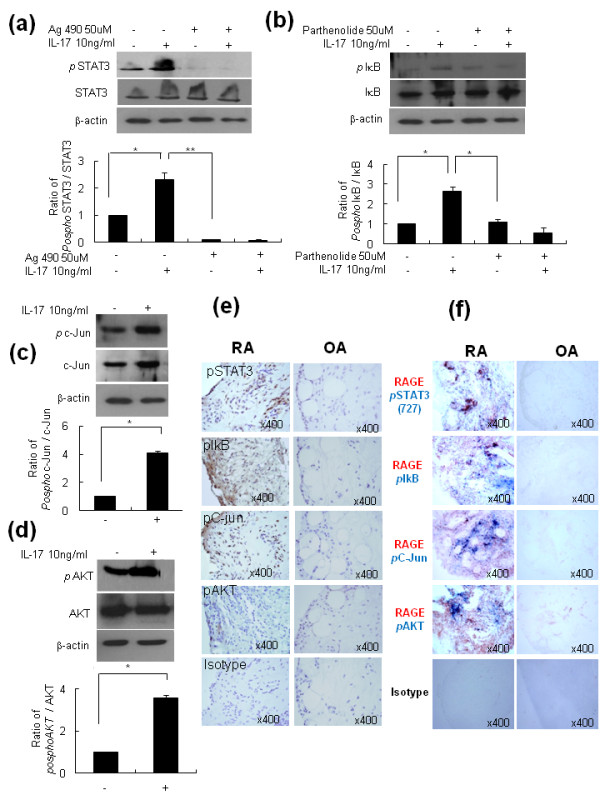
RAGE, IL-17, and Act-1 expression increased in RA synovium compared to osteoarthritis synovium. RAGE expression and production increased by IL-17 and IL-1β (*P <0.05 vs. untreated cells) treatment but not by tumor necrosis factor (TNF)-α in RA-FLS. The combined stimuli of both IL-17 and IL-1β significantly increased RAGE production compared to a single stimulus with IL-17 or IL-1β alone (P <0.05 vs. 10 ng/ml IL-17). Act-1 shRNA added to the RA-FLS culture supernatant completely suppressed the enhanced production of RAGE induced by IL-17.
RAGE was overexpressed in RA synovial tissues, and RAGE production was stimulated by IL-17 and IL-1β. Act-1 contributed to the stimulatory effect of IL-17 on RAGE production, suggesting a possible inhibitory target for RA treatment.
晚期糖基化终产物受体(RAGE)已被认为与关节炎的发病机制有关。我们进行了这项研究,以确定白细胞介素(IL)-17 对类风湿关节炎(RA)成纤维样滑膜细胞(FLS)中 RAGE 的表达和产生的影响。还评估了核因子-κB(NF-κB)激活物 1(Act1)在 RA-FLS 中 IL-17 诱导的 RAGE 表达中的作用。
通过免疫组织化学染色评估滑膜组织中 RAGE 的表达。通过实时聚合酶链反应确定 RAGE mRNA 的产生。产生 Act1 短发夹 RNA(shRNA)并进行处理,以评估 Act1 在 RAGE 产生中的作用。
与骨关节炎滑膜相比,RA 滑膜中 RAGE、IL-17 和 Act1 的表达增加。IL-17 和 IL-1β(*P <0.05 与未处理细胞相比)处理可增加 RA-FLS 中的 RAGE 表达和产生,但 TNF-α 则不能。与单独使用 IL-17 或 IL-1β 相比,IL-17 和 IL-1β 的联合刺激可显著增加 RAGE 的产生(P <0.05 与 10 ng/ml IL-17 相比)。将 Act1 shRNA 添加到 RA-FLS 培养上清液中可完全抑制由 IL-17 诱导的 RAGE 产生的增强。
RAGE 在 RA 滑膜组织中过度表达,IL-17 和 IL-1β 刺激 RAGE 的产生。Act1 有助于 IL-17 对 RAGE 产生的刺激作用,这表明 RA 治疗的一个可能的抑制靶标。