Bielefeld Eric C, Tanaka Chiemi, Chen Guang-di, Henderson Donald
Center for Hearing and Deafness, Department of Communicative Disorders and Sciences, State University of New York at Buffalo, 137 Cary Hall, 3435 Main Street, Buffalo, NY 14214, USA.
Hear Res. 2010 Jun 1;264(1-2):98-107. doi: 10.1016/j.heares.2009.09.001. Epub 2009 Sep 6.
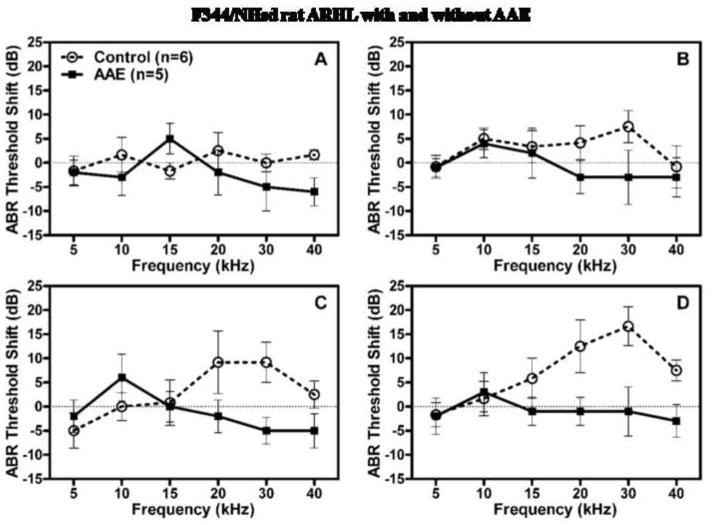
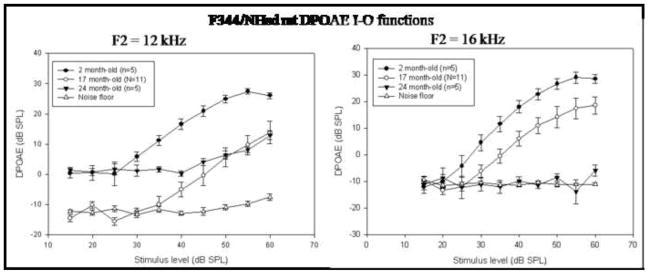
Numerous techniques have been tested to attempt to prevent the onset or progression of age-related hearing loss (ARHL): raising the animals in an augmented acoustic environment (used successfully in mouse and rat models), enhancing the antioxidant defenses with exogenous antioxidant treatments (used with mixed results in mouse and rat models), raising the animals with a calorie restricted diet (used successfully in mouse and rat models), restoring lost endocochlear potential voltage with exogenous electrical stimulation (used successfully in the Mongolian gerbil model), and hypothetical enhancement of outer hair cell electromotility with salicylate therapy. Studies of human ARHL have revealed a set of unique hearing loss configurations with unique underlying pathologies. Animal research has developed models for the different forms of age-related peripheral pathology. Using the animal models, different techniques for prevention of ARHL have been developed and tested. The current review discusses ARHL patterns in humans and animal models, followed by discussions of the different prevention techniques.
人们已经测试了许多技术,试图预防年龄相关性听力损失(ARHL)的发生或进展:在增强声学环境中饲养动物(已成功应用于小鼠和大鼠模型),通过外源性抗氧化剂治疗增强抗氧化防御(在小鼠和大鼠模型中的结果不一),用热量限制饮食饲养动物(已成功应用于小鼠和大鼠模型),通过外源性电刺激恢复丧失的内耳蜗电位(已成功应用于蒙古沙鼠模型),以及用水杨酸盐疗法假设性地增强外毛细胞电运动性。对人类ARHL的研究揭示了一组具有独特潜在病理的独特听力损失模式。动物研究已经开发出针对不同形式的年龄相关性外周病理的模型。利用这些动物模型,已经开发并测试了预防ARHL的不同技术。本综述讨论了人类和动物模型中的ARHL模式,随后讨论了不同的预防技术。