Department of Psychology, University of Wisconsin, 1202 West Johnson Street, Madison, WI 53706, USA.
Brain Res. 2010 Feb 16;1314:91-102. doi: 10.1016/j.brainres.2009.09.019. Epub 2009 Sep 11.
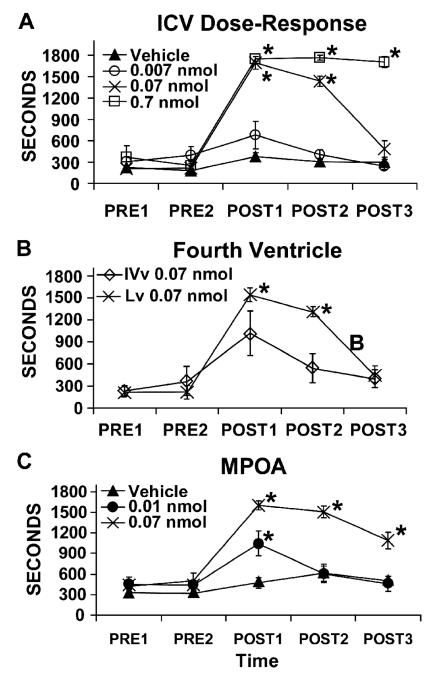
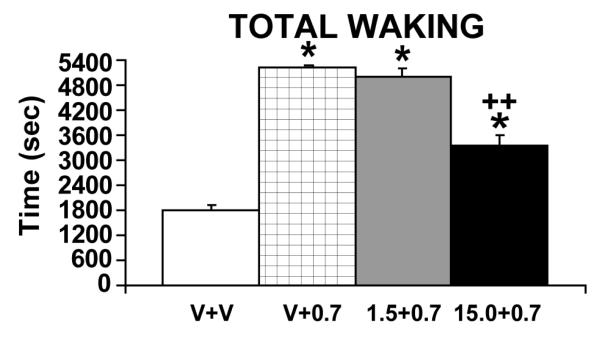
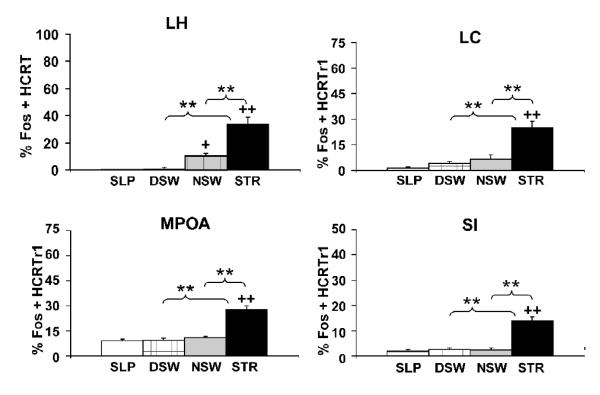
Multiple lines of evidence indicate that hypocretin/orexin (HCRT) participates in the regulation of arousal and arousal-related process. For example, HCRT axons and receptors are found within a variety of arousal-related systems. Moreover, when administered centrally, HCRT exerts robust wake-promoting actions. Finally, a dysregulation of HCRT neurotransmission is associated with the sleep/arousal disorder, narcolepsy. Combined, these observations suggested that HCRT might be a key transmitter system in the regulation of waking. Nonetheless, subsequent evidence indicates that HCRT may not play a prominent role in the initiation of normal waking. Instead HCRT may participate in a variety of processes such as consolidation of waking and/or coupling metabolic state with behavioral state. Additionally, substantial evidence suggests a potential involvement of HCRT in high-arousal conditions, including stress. Thus, HCRT neurotransmission is closely linked to high-arousal conditions, including stress, and HCRT administration exerts a variety of stress-like physiological and behavioral effects that are superimposed on HCRT-induced increases in arousal. Combined, this evidence suggests the hypothesis that HCRT may participate in behavioral responding under high-arousal aversive conditions. Importantly, these actions of HCRT may not be limited to stress. Like stress, appetitive conditions are associated with elevated arousal levels and a stress-like activation of various physiological systems. These and other observations suggest that HCRT may, at least in part, exert affectively neutral actions that are important under high-arousal conditions associated with elevated motivation and/or need for action.
多种证据表明,食欲肽/下丘脑分泌素(HCRT)参与觉醒和觉醒相关过程的调节。例如,HCRT 轴突和受体存在于各种觉醒相关系统中。此外,当中央给药时,HCRT 发挥出强烈的促觉醒作用。最后,HCRT 神经传递的失调与睡眠/觉醒障碍、发作性睡病有关。综合这些观察结果表明,HCRT 可能是调节觉醒的关键递质系统。然而,随后的证据表明,HCRT 可能在正常觉醒的启动中不起主要作用。相反,HCRT 可能参与各种过程,如觉醒的巩固和/或代谢状态与行为状态的耦合。此外,大量证据表明 HCRT 可能参与高唤醒状态,包括应激。因此,HCRT 神经传递与高唤醒状态密切相关,包括应激,HCRT 给药会产生各种应激样的生理和行为效应,这些效应叠加在 HCRT 诱导的觉醒增加上。综合这些证据表明,HCRT 可能参与高唤醒厌恶条件下的行为反应的假说。重要的是,HCRT 的这些作用可能不仅限于应激。与应激一样,食欲条件与升高的觉醒水平以及各种生理系统的应激样激活有关。这些和其他观察结果表明,HCRT 至少在一定程度上发挥着与高唤醒条件相关的、与动机和/或行动需求升高有关的、中性影响的作用。