Hushmendy Shazaan, Jayakumar Lalithapriya, Hahn Amy B, Bhoiwala Devang, Bhoiwala Dipti L, Crawford Dana R
Center for Immunology and Microbial Disease MC-151, The Albany Medical College, Albany, NY 12208, USA.
Nutr Res. 2009 Aug;29(8):568-78. doi: 10.1016/j.nutres.2009.08.003.
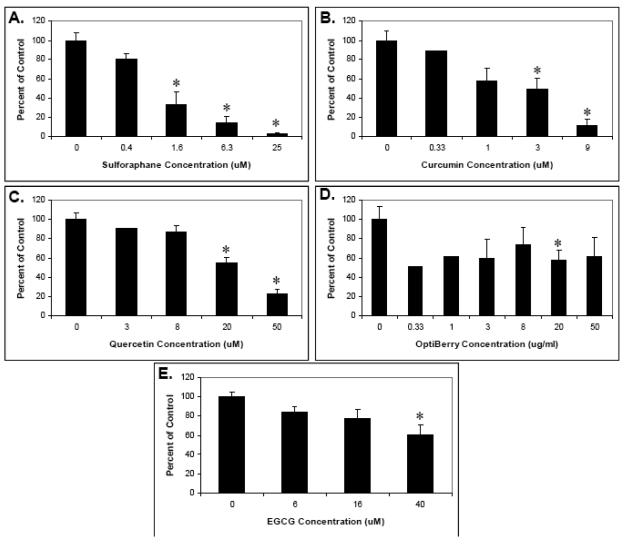
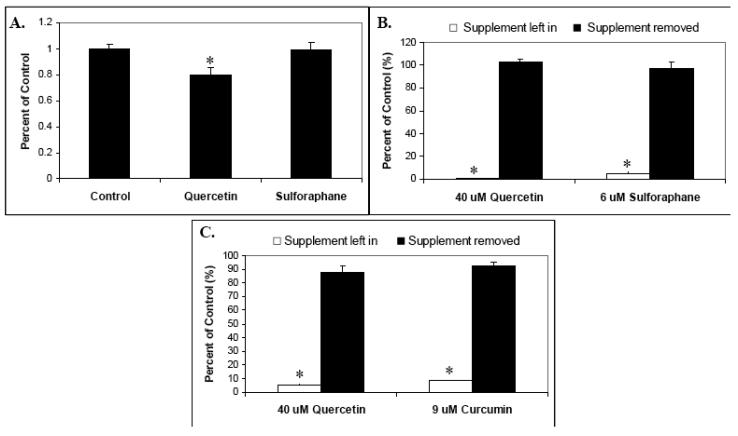
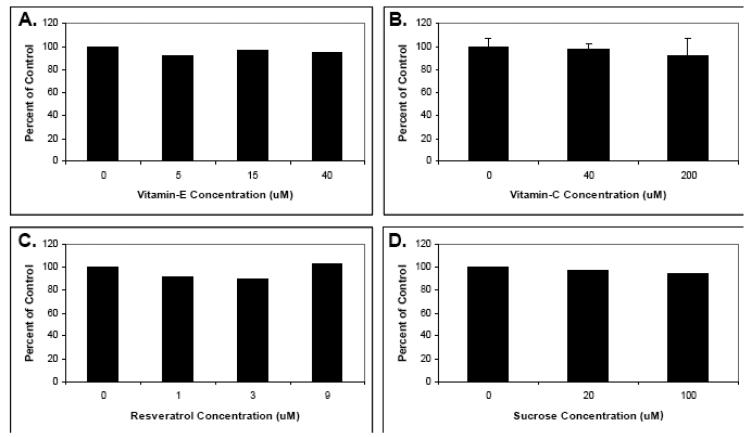
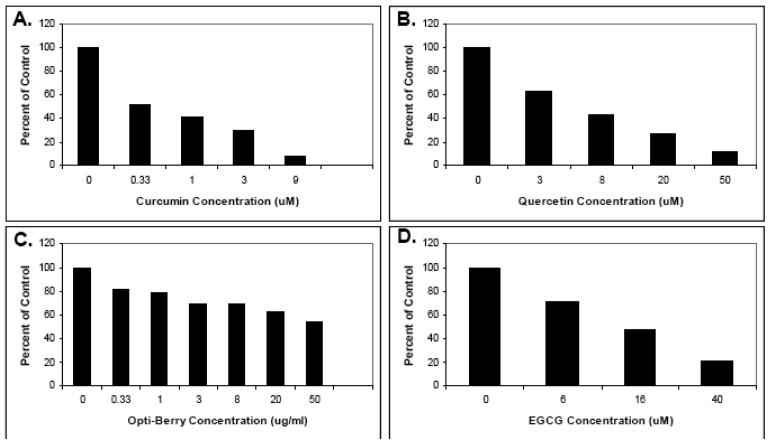
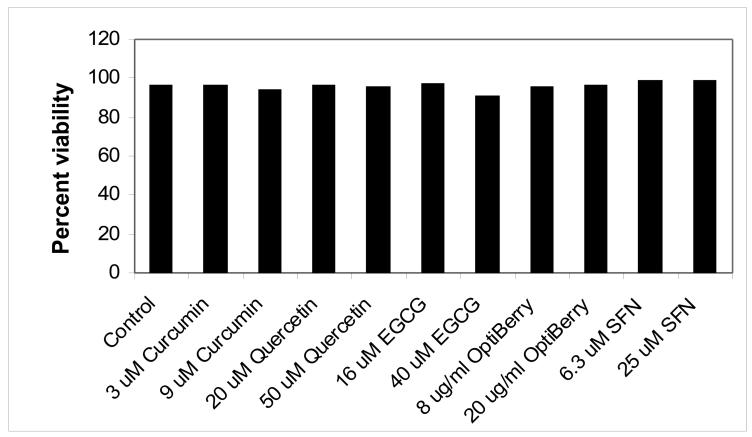
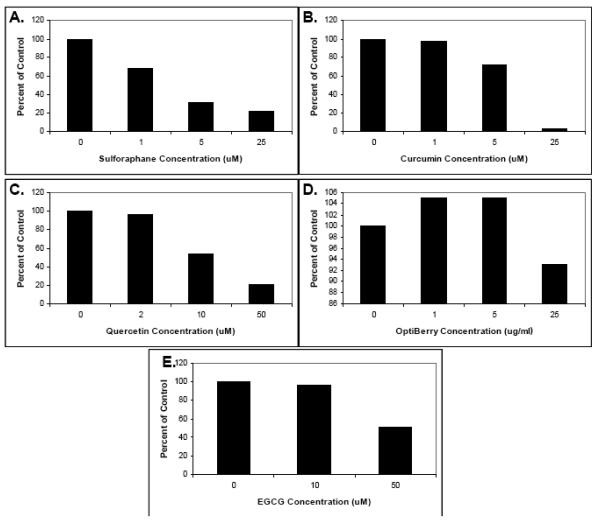
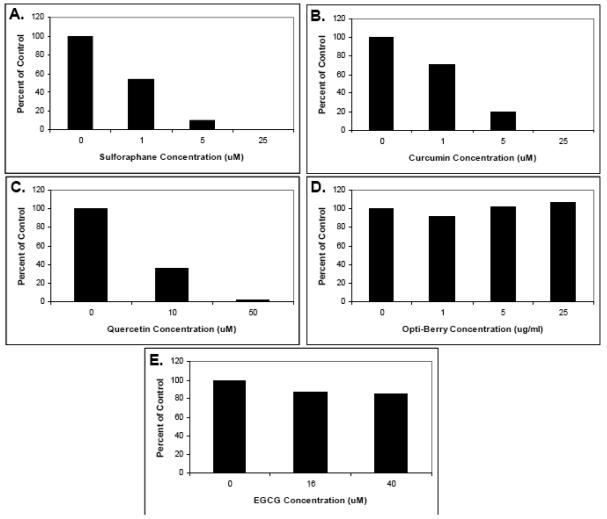
We have considered a novel "rational" gene targeting approach for treating pathologies whose genetic bases are defined using select phytochemicals. We reason that one such potential application of this approach would be conditions requiring immunosuppression such as autoimmune disease and transplantation, where the genetic target is clearly defined; i.e., interleukin-2 and associated T-cell activation. Therefore, we hypothesized that select phytochemicals can suppress T-lymphocyte proliferation both in vitro and in vivo. The immunosuppressive effects of berry extract, curcumin, quercetin, sulforaphane, epigallocatechin gallate (EGCG), resveratrol, alpha-tocopherol, vitamin C and sucrose were tested on anti-CD3 plus anti-CD28-activated primary human T-lymphocytes in culture. Curcumin, sulforaphane, quercetin, berry extract and EGCG all significantly inhibited T-cell proliferation, and this effect was not due to toxicity. IL-2 production was also reduced by these agents, implicating this important T-cell cytokine in proliferation suppression. Except for berry extract, these same agents also inhibited mouse splenic T-cell proliferation and IL-2 production. Subsequent in vivo studies revealed that quercetin (but not sulforaphane) modestly suppressed mouse splenocyte proliferation following supplementation of BALB/c mice diets. This effect was especially prominent if corrected for the loss of supplement "recall" as observed in cultured T-cells. These results suggest the potential use of these select phytochemicals for treating autoimmune and transplant patients, and support our strategy of using select phytochemicals to treat genetically-defined pathologies, an approach that we believe is simple, healthy, and cost-effective.
我们考虑了一种新型的“理性”基因靶向方法,用于治疗那些遗传基础已通过特定植物化学物质明确界定的病症。我们推断,这种方法的一种潜在应用可能是针对需要免疫抑制的病症,例如自身免疫性疾病和移植手术,在这些情况下,遗传靶点是明确的;即白细胞介素-2及相关的T细胞激活。因此,我们假设特定的植物化学物质能够在体外和体内抑制T淋巴细胞增殖。我们测试了浆果提取物、姜黄素、槲皮素、萝卜硫素、表没食子儿茶素没食子酸酯(EGCG)、白藜芦醇、α-生育酚、维生素C和蔗糖对培养中的抗CD3加抗CD28激活的原代人T淋巴细胞的免疫抑制作用。姜黄素、萝卜硫素、槲皮素、浆果提取物和EGCG均显著抑制T细胞增殖,且这种作用并非由毒性引起。这些药物还降低了白细胞介素-2的产生,表明这种重要的T细胞细胞因子参与了增殖抑制。除浆果提取物外,这些相同的药物还抑制小鼠脾脏T细胞增殖和白细胞介素-2的产生。随后的体内研究表明,在给BALB/c小鼠饮食中补充槲皮素(而非萝卜硫素)后,可适度抑制小鼠脾细胞增殖。如果校正培养的T细胞中观察到的补充剂“召回”损失,这种作用尤为显著。这些结果表明这些特定植物化学物质在治疗自身免疫性疾病和移植患者方面具有潜在用途,并支持我们使用特定植物化学物质治疗遗传定义病症的策略,我们认为这种方法简单、健康且具有成本效益。