Jansen R, Ledley F D
Howard Hughes Medical Institute, Department of Cell Biology and Pediatrics, Baylor College of Medicine, Houston, TX 77030.
Nucleic Acids Res. 1990 Sep 11;18(17):5153-6. doi: 10.1093/nar/18.17.5153.
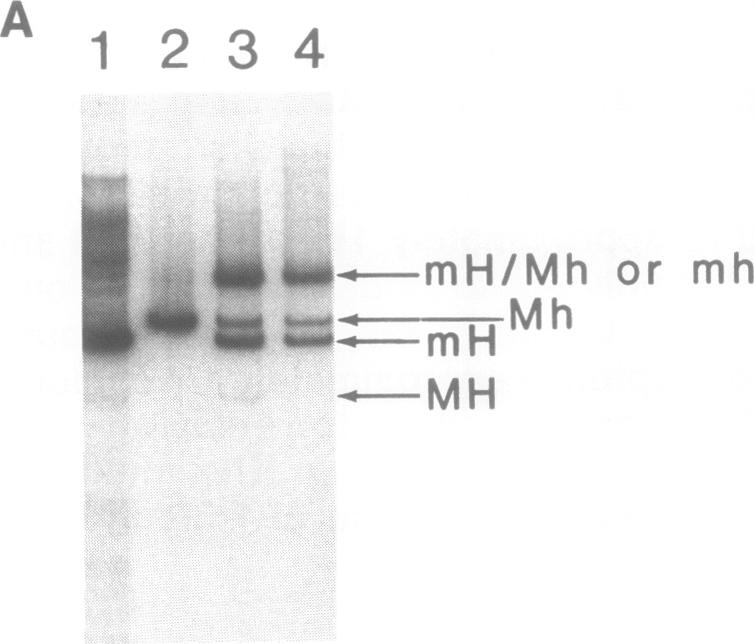
PCR amplification of genomic DNA or cDNA has become a standard tool for identification of mutations underlying genetic disease. There are inherent limitations in the application of this method in compound heterozygotes. One problem which is encountered is the disruption of phase (linkage) between heterozygous polymorphisms represented on heterologous alleles. A test system was used to demonstrate and quantitate the disruption of phase between two polymorphic restriction sites. Phase is disrupted in approximately 1% of the PCR amplified material, possibly due to incomplete chain elongations and subsequent priming on the heterologous allele. Phase is disrupted in approximately 1/4 of cloned PCR fragments, possibly due to excision repair of heteroduplexes during cloning. The implications of these disruptions for the use of PCR in identifying mutations are discussed.
基因组DNA或cDNA的聚合酶链反应(PCR)扩增已成为鉴定遗传疾病潜在突变的标准工具。该方法在复合杂合子中的应用存在固有局限性。遇到的一个问题是异源等位基因上代表的杂合多态性之间的相位(连锁)破坏。使用一个测试系统来证明和定量两个多态性限制性位点之间的相位破坏。在大约1%的PCR扩增材料中相位被破坏,这可能是由于链延伸不完全以及随后在异源等位基因上的引物结合。在大约四分之一的克隆PCR片段中相位被破坏,这可能是由于克隆过程中异源双链体的切除修复。讨论了这些破坏对使用PCR鉴定突变的影响。