Garelli F M, Espinosa M O, Weinberg D, Coto H D, Gaspe M S, Gürtler R E
Laboratorio de Eco-Epidemiología, Facultad de Ciencias Exactas y Naturales, Universidad de Buenos Aires.
J Med Entomol. 2009 Sep;46(5):1176-86. doi: 10.1603/033.046.0528.
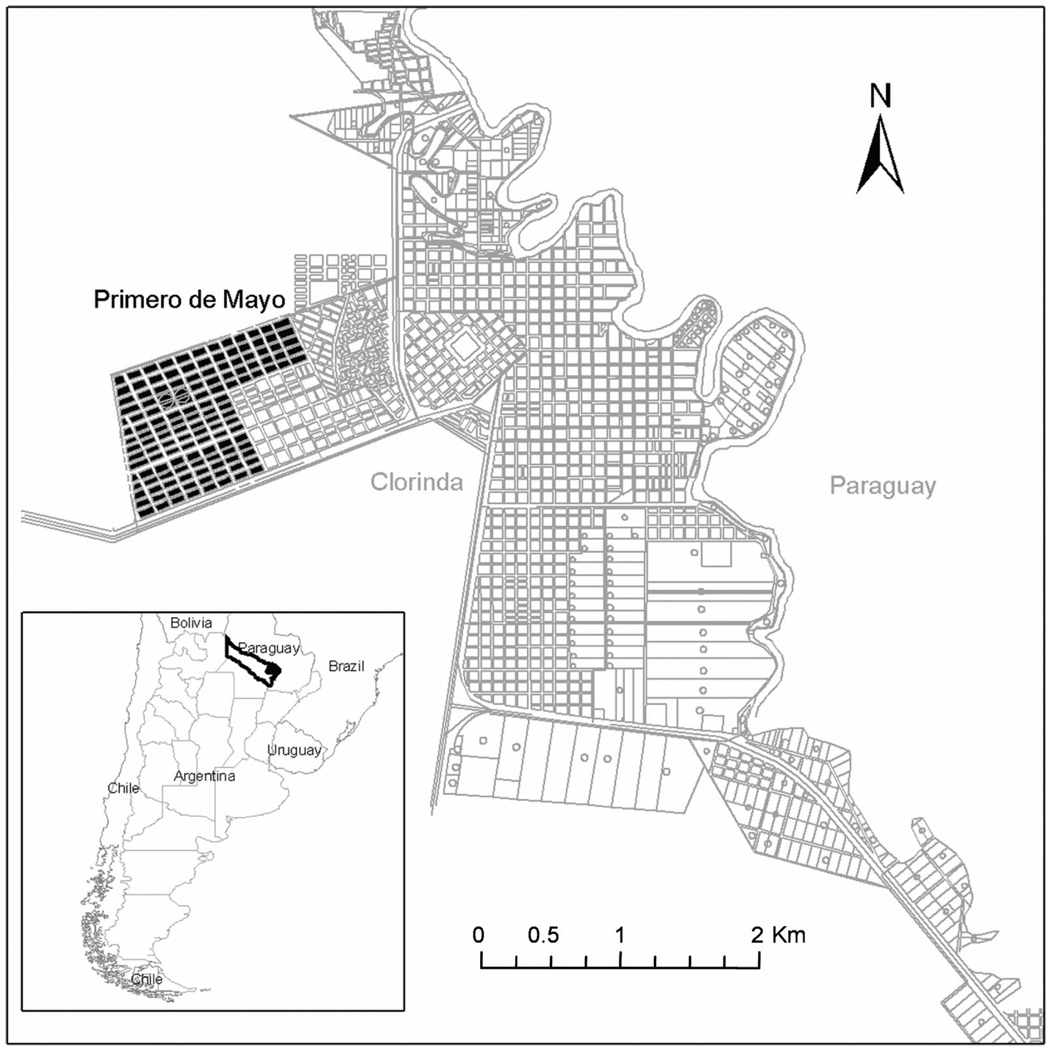
A citywide control program of Aedes aegypti (L.) (Diptera: Culicidae) mainly based on the use of larvicides reduced infestations but failed to achieve the desired target levels in Clorinda, northeastern Argentina, over 5 yr of interventions. To understand the underlying causes of persistent infestations and to develop new control tactics adapted to the local context, we conducted two pupal surveys in a large neighborhood with approximately 2,500 houses and recorded several variables for every container inspected in fall and spring 2007. In total, 4,076 lots and 4,267 containers were inspected over both surveys, and 8,391 Ae. aegypti pupae were collected. Large tanks used for potable water storage were the most abundant and the most productive type of container, accounting for 65-84% of all the pupae collected. Therefore, large tanks were key containers and candidates for improved targeted interventions. Multivariate analysis showed that containers located in the yard, at low sun exposure, unlidded, filled with rain water, and holding polluted water were all more likely to be infested by larvae or pupae. When only infested containers were considered, productivity of pupae was most closely associated with large tanks and rain water. A stochastic simulation model was developed to calculate the expected correlations between pupal and Stegomyia indices according to the characteristics of the distribution of larvae and pupae per container and the spatial scale at which the indices were computed. The correlation between pupal and Stegomyia indices is expected to increase as infestation levels decline.
在阿根廷东北部的科连达市,一项主要基于使用杀幼虫剂的全市埃及伊蚊(双翅目:蚊科)控制计划在5年的干预期内减少了蚊虫侵扰,但未达到预期的目标水平。为了解持续侵扰的潜在原因并制定适合当地情况的新控制策略,我们在一个拥有约2500户家庭的大型社区进行了两次蛹调查,并记录了2007年秋季和春季检查的每个容器的几个变量。在两次调查中,总共检查了4076个地段和4267个容器,收集了8391只埃及伊蚊蛹。用于储存饮用水的大型水箱是最常见且繁殖力最强的容器类型,占所有收集到的蛹的65%-84%。因此,大型水箱是关键容器,也是改进目标干预措施的候选对象。多变量分析表明,位于院子里、阳光照射少、无盖、装有雨水且水体受污染的容器更有可能被幼虫或蛹侵扰。仅考虑受侵扰的容器时,蛹的繁殖力与大型水箱和雨水的关联最为紧密。我们开发了一个随机模拟模型,根据每个容器中幼虫和蛹的分布特征以及计算指数的空间尺度,计算蛹指数和埃及伊蚊指数之间的预期相关性。随着侵扰水平的下降,蛹指数和埃及伊蚊指数之间的相关性预计会增加。