Yeligar Samantha, Tsukamoto Hidekazu, Kalra Vijay K
Department of Biochemistry and Molecular Biology, The Southern California Research Center for ALPD and Cirrhosis, Keck School of Medicine, University of Southern California, Los Angeles, CA 90033, USA.
J Immunol. 2009 Oct 15;183(8):5232-43. doi: 10.4049/jimmunol.0901084. Epub 2009 Sep 25.
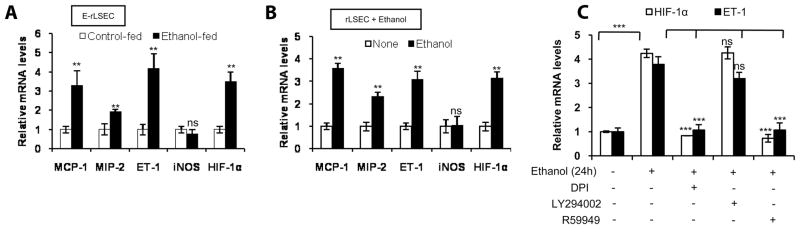
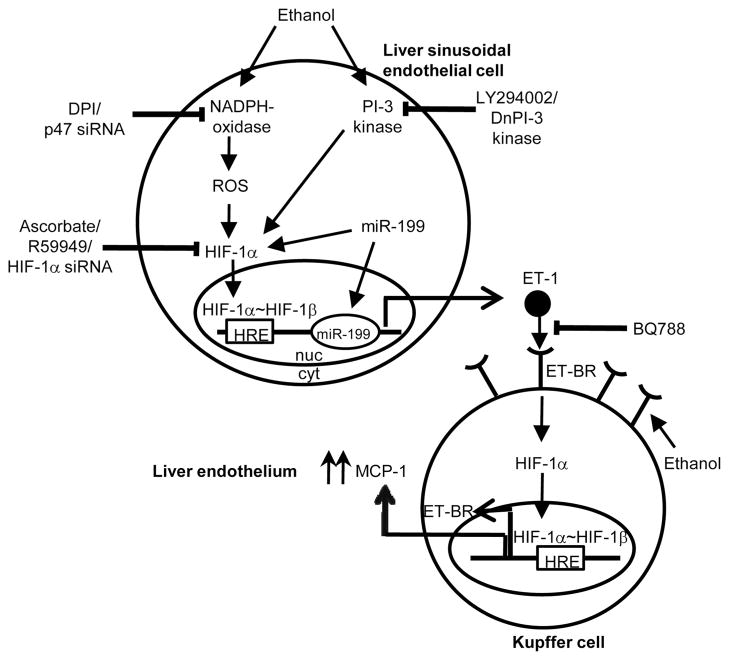
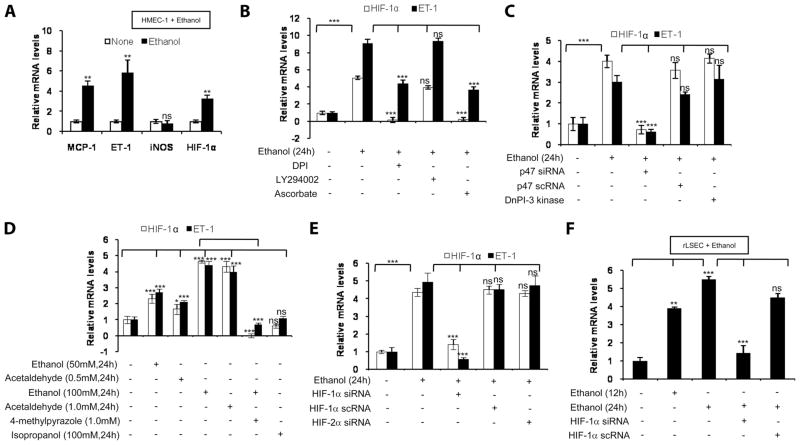
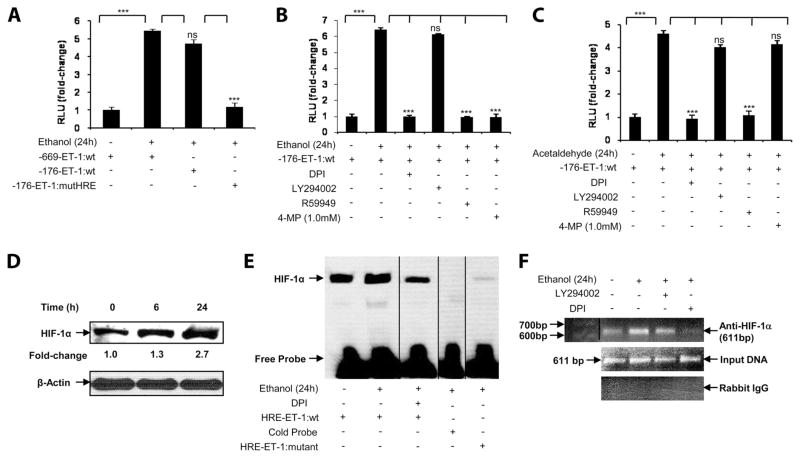
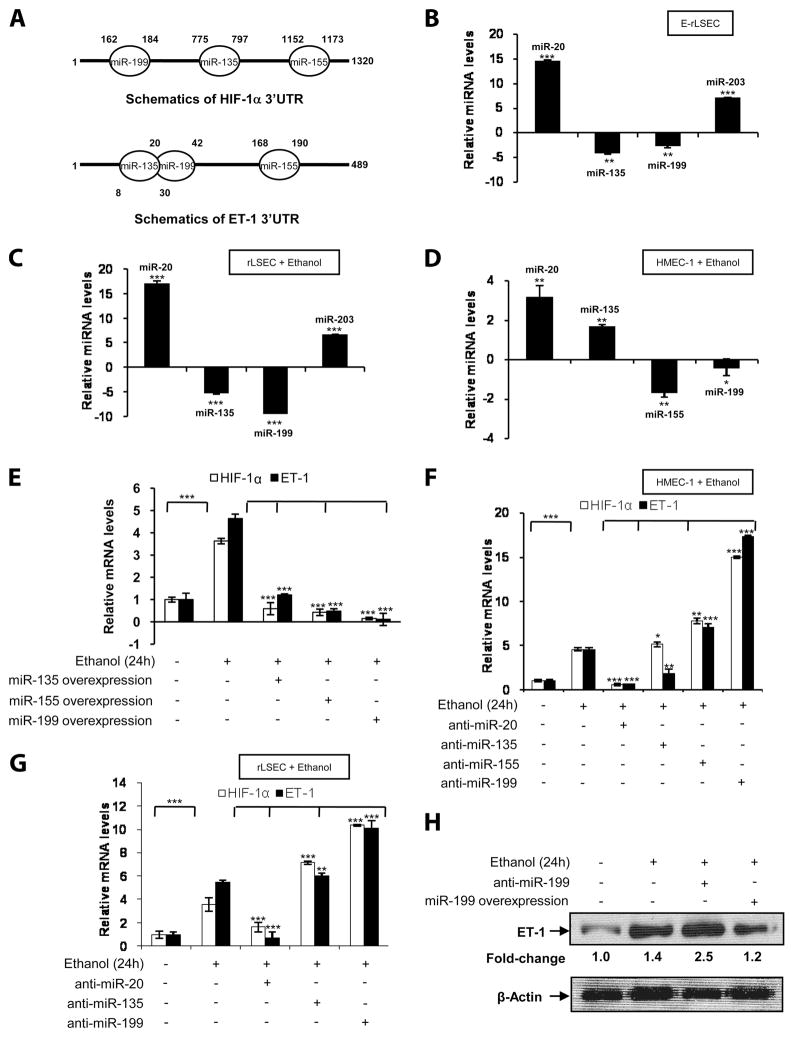
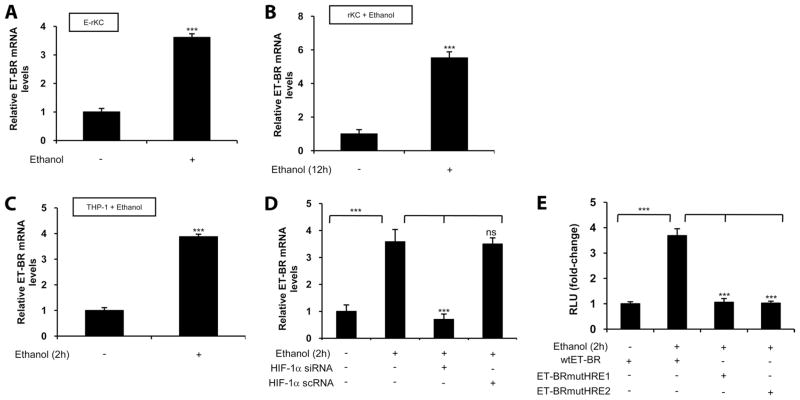
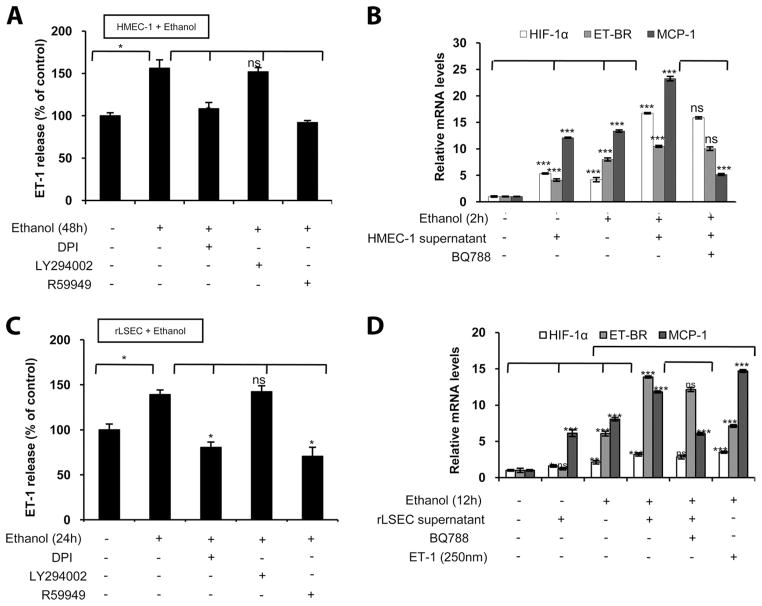
Chronic alcohol consumption leads to inflammation and cirrhosis of the liver. In this study, we observed that liver sinusoidal endothelial cells (LSEC) derived from ethanol-fed rats showed several fold increases in the mRNA expression of endothelin-1 (ET-1), hypoxia-inducible factor-1alpha (HIF-1alpha), and inflammatory cytochemokines compared with control rat LSEC. We also observed the same results in acute ethanol-treated LSEC from control rats and human dermal microvascular endothelial cells. Ethanol-mediated ET-1 expression involved NADPH oxidase and HIF-1alpha activation. Furthermore, ethanol increased the expression of the ET-1 cognate receptor ET-BR in Kupffer cells and THP-1 monocytic cells, which also involved HIF-1alpha activation. Promoter analysis and chromatin immunoprecipitation showed that hypoxia response element sites in the proximal promoter of ET-1 and ET-BR were required for the binding of HIF-1alpha to up-regulate their expression. We showed that microRNAs, miR-199 among several microRNAs, attenuated HIF-1alpha and ET-1 expression, while anti-miR-199 reversed the effects, suggesting that ethanol-induced miR-199 down-regulation may contribute to augmented HIF-1alpha and ET-1 expression. Our studies, for the first time to our knowledge, show that ethanol-mediated ET-1 and ET-BR expression involve HIF-1alpha, independent of hypoxia. Additionally, ethanol-induced ET-1 expression in rat LSEC is regulated by miR-199, while in human endothelial cells, ET-1 expression is regulated by miR-199 and miR-155, indicating that these microRNAs may function as novel negative regulators to control ET-1 transcription and, thus, homeostatic levels of ET-1 to maintain microcirculatory tone.
长期饮酒会导致肝脏炎症和肝硬化。在本研究中,我们观察到,与对照大鼠的肝窦内皮细胞(LSEC)相比,源自乙醇喂养大鼠的LSEC中内皮素-1(ET-1)、缺氧诱导因子-1α(HIF-1α)和炎性细胞因子的mRNA表达增加了数倍。我们在对照大鼠的急性乙醇处理的LSEC和人真皮微血管内皮细胞中也观察到了相同的结果。乙醇介导的ET-1表达涉及NADPH氧化酶和HIF-1α激活。此外,乙醇增加了库普弗细胞和THP-1单核细胞中ET-1同源受体ET-BR的表达,这也涉及HIF-1α激活。启动子分析和染色质免疫沉淀表明,ET-1和ET-BR近端启动子中的缺氧反应元件位点是HIF-1α结合以上调其表达所必需的。我们发现,几种微小RNA中的miR-199可减弱HIF-1α和ET-1的表达,而抗miR-199可逆转这些作用,这表明乙醇诱导的miR-199下调可能有助于增强HIF-1α和ET-1的表达。据我们所知,我们的研究首次表明,乙醇介导的ET-1和ET-BR表达涉及HIF-1α,且与缺氧无关。此外,乙醇诱导的大鼠LSEC中ET-1的表达受miR-199调控,而在人内皮细胞中,ET-1的表达受miR-199和miR-155调控,这表明这些微小RNA可能作为新的负调控因子来控制ET-1的转录,从而维持ET-1的稳态水平以保持微循环张力。