Araki Manabu, Chung Denise, Liu Sue, Rainbow Daniel B, Chamberlain Giselle, Garner Valerie, Hunter Kara M D, Vijayakrishnan Lalitha, Peterson Laurence B, Oukka Mohamed, Sharpe Arlene H, Sobel Raymond, Kuchroo Vijay K, Wicker Linda S
Department of Pathology, Brigham and Women's Hospital and Harvard Medical School, Center for Neurologic Diseases, Boston, MA 02115, USA.
J Immunol. 2009 Oct 15;183(8):5146-57. doi: 10.4049/jimmunol.0802610. Epub 2009 Sep 25.
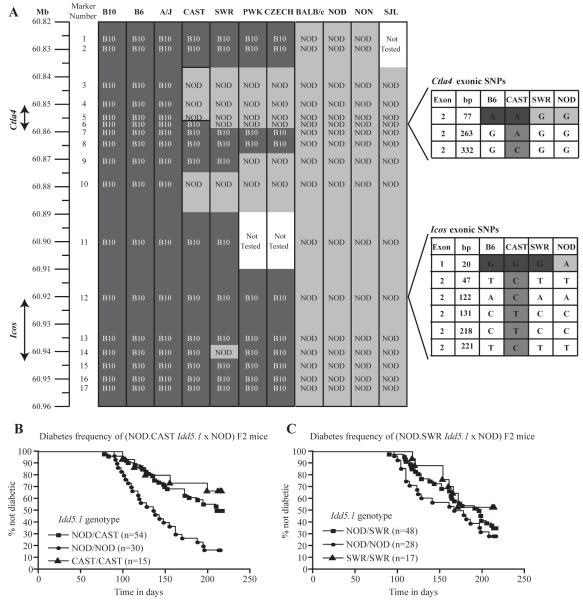
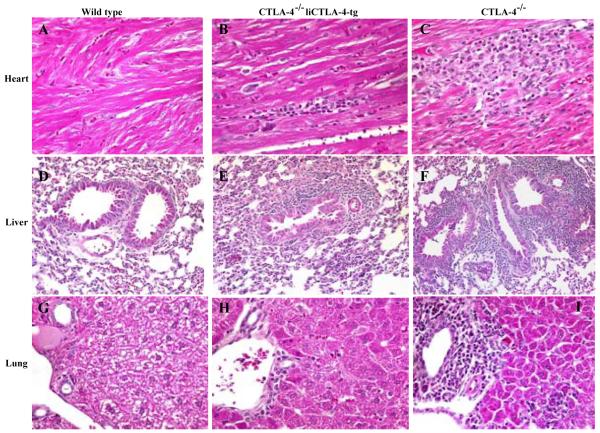
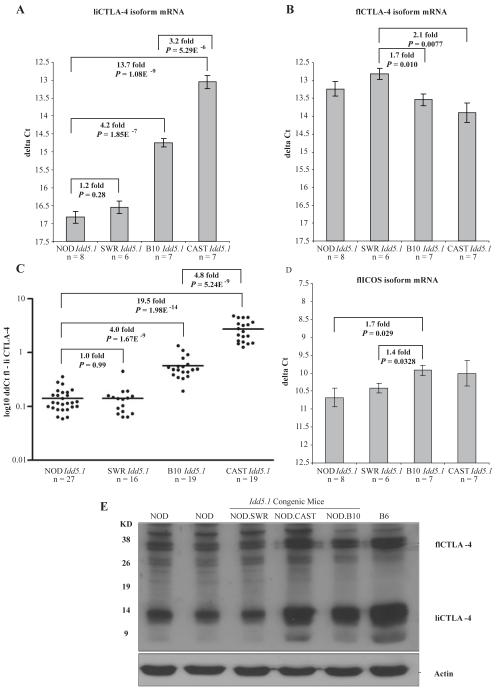
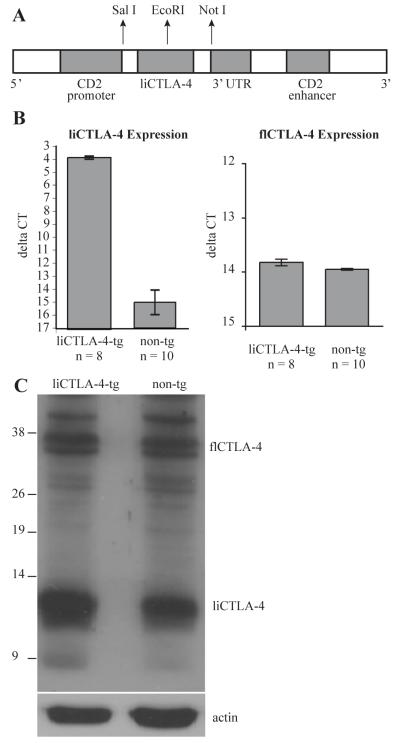
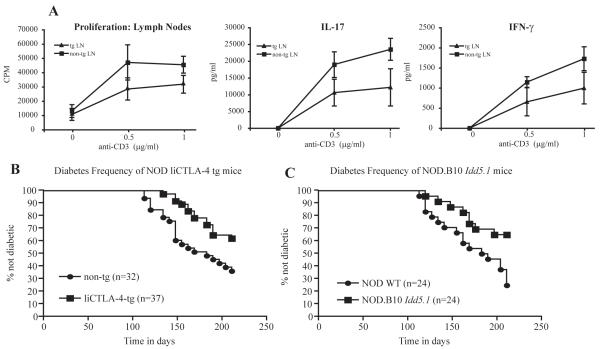
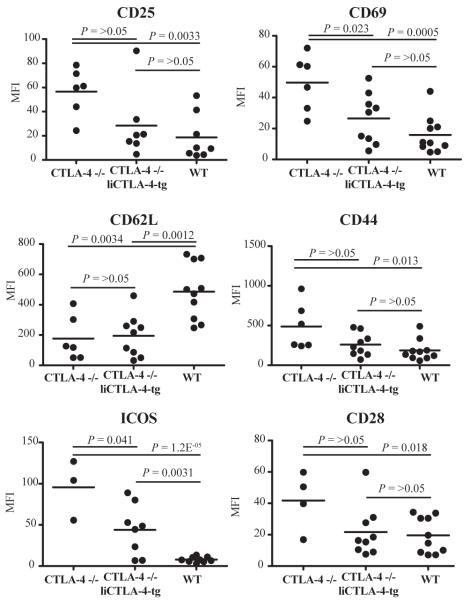
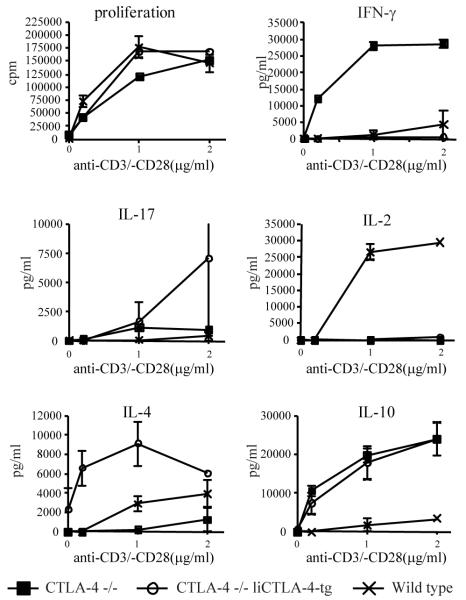
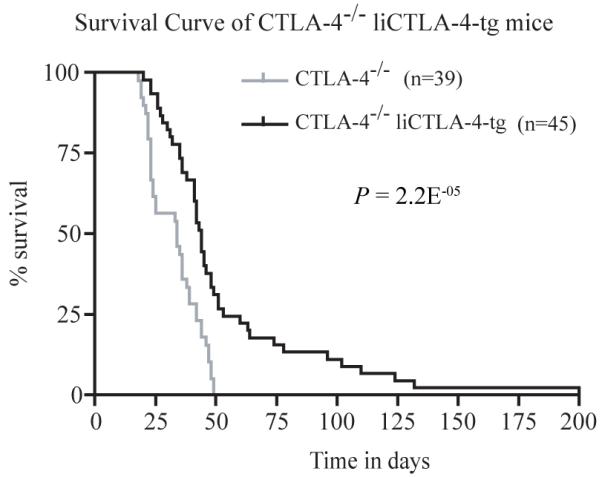
Idd5.1 regulates T1D susceptibility in nonobese diabetic (NOD) mice and has two notable candidate genes, Ctla4 and Icos. Reduced expression of one of the four CTLA-4 isoforms, ligand-independent CTLA-4 (liCTLA-4), which inhibits in vitro T cell activation and cytokine production similarly to full-length CTLA-4 (flCTLA-4), has been hypothesized to increase type 1 diabetes (T1D) susceptibility. However, further support of this hypothesis is required since the Idd5.1 haplotypes of the diabetes-susceptible NOD and the resistant B10 strains differ throughout Ctla4 and Icos. Using haplotype analysis and the generation of novel Idd5.1-congenic strains that differ at the disease-associated Ctla4 exon 2 single-nucleotide polymorphism, we demonstrate that increased expression of liCTLA-4 correlates with reduced T1D susceptibility. To directly assess the ability of liCTLA-4 to modulate T1D, we generated liCTLA-4-transgenic NOD mice and compared their diabetes susceptibility to nontransgenic littermates. NOD liCTLA-4-transgenic mice were protected from T1D to the same extent as NOD.B10 Idd5.1-congenic mice, demonstrating that increased liCTLA-4 expression alone can account for disease protection. To further investigate the in vivo function of liCTLA-4, specifically whether liCTLA-4 can functionally replace flCTLA-4 in vivo, we expressed the liCTLA-4 transgene in CTLA-4(-/-) B6 mice. CTLA-4(-/-) mice expressing liCTLA-4 accumulated fewer activated effector/memory CD4(+) T cells than CTLA-4(-/-) mice and the transgenic mice were partially rescued from the multiorgan inflammation and early lethality caused by the disruption of Ctla4. These results suggest that liCTLA-4 can partially replace some functions of flCTLA-4 in vivo and that this isoform evolved to reinforce the function of flCTLA-4.
Idd5.1调控非肥胖糖尿病(NOD)小鼠的1型糖尿病易感性,且有两个值得注意的候选基因,即Ctla4和Icos。四种CTLA - 4亚型之一的配体非依赖性CTLA - 4(liCTLA - 4)表达降低,其与全长CTLA - 4(flCTLA - 4)类似,能在体外抑制T细胞活化和细胞因子产生,据推测这会增加1型糖尿病(T1D)易感性。然而,由于糖尿病易感的NOD和抗性B10品系的Idd5.1单倍型在整个Ctla4和Icos中存在差异,该假说需要进一步支持。通过单倍型分析以及构建在疾病相关的Ctla4外显子2单核苷酸多态性上存在差异的新型Idd5.1同源基因品系,我们证明liCTLA - 4表达增加与T1D易感性降低相关。为直接评估liCTLA - 4调节T1D的能力,我们构建了liCTLA - 4转基因NOD小鼠,并将其糖尿病易感性与非转基因同窝小鼠进行比较。NOD liCTLA - 4转基因小鼠对T1D的抵抗力与NOD.B10 Idd5.1同源基因小鼠相同,表明单独增加liCTLA - 4表达即可实现疾病保护。为进一步研究liCTLA - 4在体内的功能,特别是liCTLA - 4在体内是否能在功能上替代flCTLA - 4,我们在CTLA - 4(-/-) B6小鼠中表达liCTLA - 4转基因。与CTLA - 4(-/-)小鼠相比,表达liCTLA - 4的CTLA - 4(-/-)小鼠积累的活化效应/记忆CD(+) T细胞更少,且转基因小鼠因Ctla4缺失导致的多器官炎症和早期致死性得到部分缓解。这些结果表明,liCTLA - 4在体内可部分替代flCTLA - 4的某些功能,且该亚型的进化是为了增强flCTLA - 4的功能。