Kitano Jun, Ross Joseph A, Mori Seiichi, Kume Manabu, Jones Felicity C, Chan Yingguang F, Absher Devin M, Grimwood Jane, Schmutz Jeremy, Myers Richard M, Kingsley David M, Peichel Catherine L
Division of Human Biology, Fred Hutchinson Cancer Research Center, 1100 Fairview Avenue North, Seattle, Washington 98109, USA.
Nature. 2009 Oct 22;461(7267):1079-83. doi: 10.1038/nature08441. Epub 2009 Sep 27.
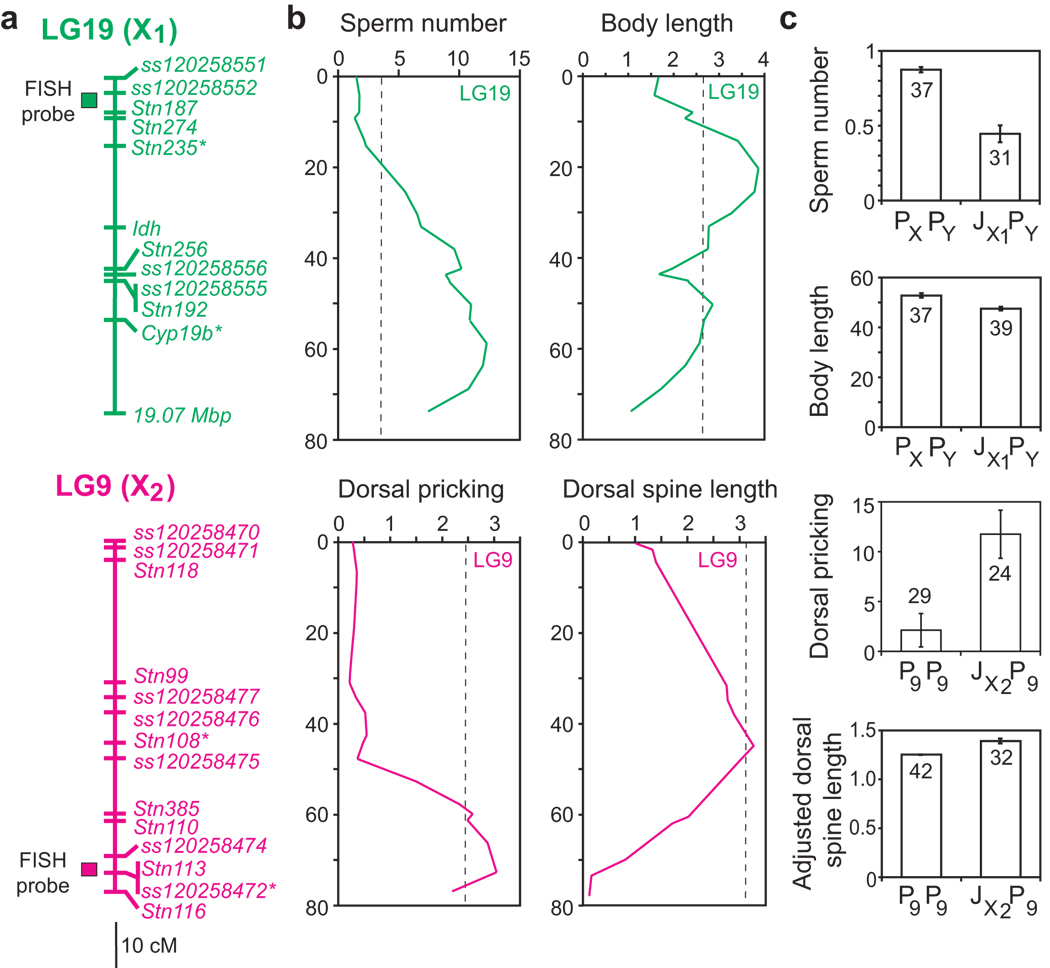
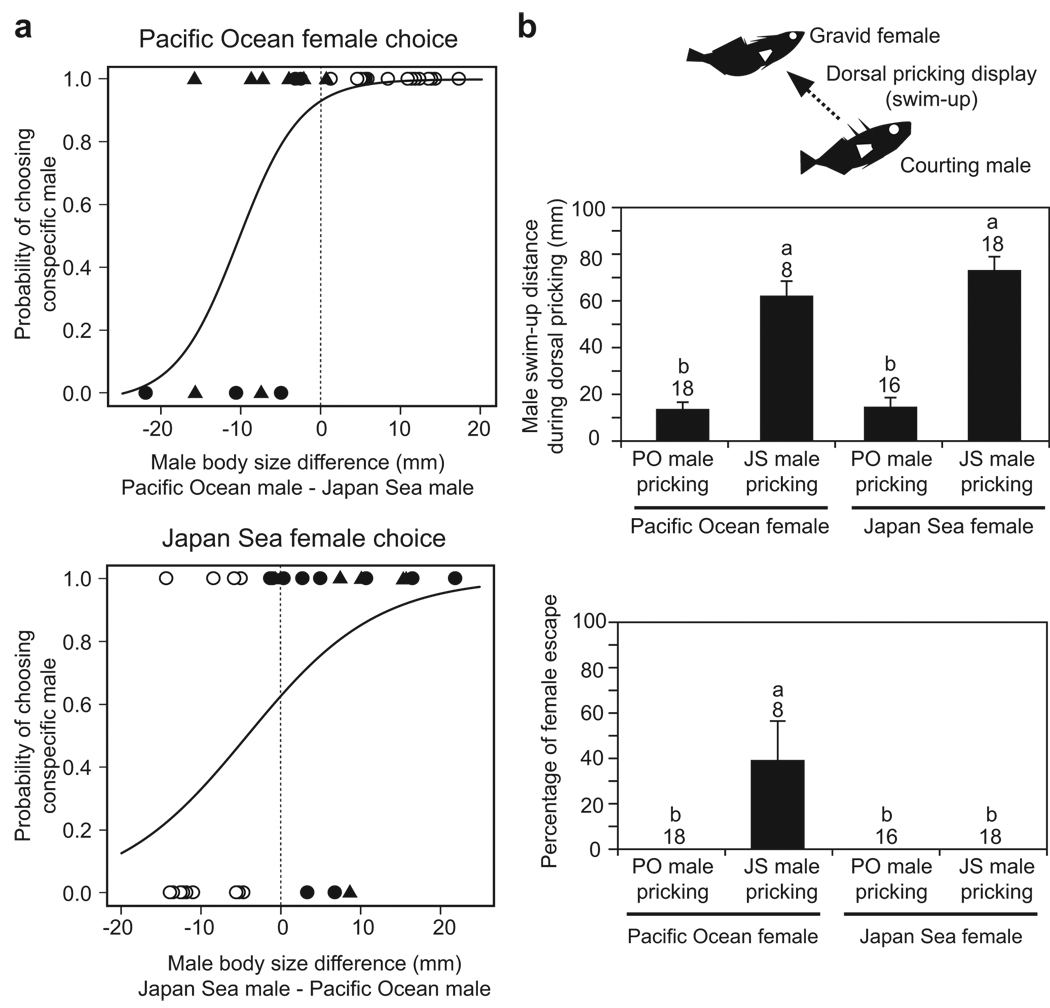
Sexual antagonism, or conflict between the sexes, has been proposed as a driving force in both sex-chromosome turnover and speciation. Although closely related species often have different sex-chromosome systems, it is unknown whether sex-chromosome turnover contributes to the evolution of reproductive isolation between species. Here we show that a newly evolved sex chromosome contains genes that contribute to speciation in threespine stickleback fish (Gasterosteus aculeatus). We first identified a neo-sex chromosome system found only in one member of a sympatric species pair in Japan. We then performed genetic linkage mapping of male-specific traits important for reproductive isolation between the Japanese species pair. The neo-X chromosome contains loci for male courtship display traits that contribute to behavioural isolation, whereas the ancestral X chromosome contains loci for both behavioural isolation and hybrid male sterility. Our work not only provides strong evidence for a large X-effect on reproductive isolation in a vertebrate system, but also provides direct evidence that a young neo-X chromosome contributes to reproductive isolation between closely related species. Our data indicate that sex-chromosome turnover might have a greater role in speciation than was previously appreciated.
性拮抗,即两性之间的冲突,被认为是性染色体更替和物种形成的驱动力。尽管亲缘关系密切的物种通常具有不同的性染色体系统,但性染色体更替是否有助于物种间生殖隔离的进化尚不清楚。在这里,我们表明,一条新进化的性染色体包含有助于三刺鱼(Gasterosteus aculeatus)物种形成的基因。我们首先在日本一个同域物种对的一个成员中发现了一个新性染色体系统。然后,我们对日本物种对之间生殖隔离重要的雄性特异性性状进行了遗传连锁图谱分析。新X染色体包含有助于行为隔离的雄性求偶展示性状的基因座,而祖先X染色体包含行为隔离和杂种雄性不育的基因座。我们的工作不仅为脊椎动物系统中X染色体对生殖隔离有重大影响提供了有力证据,也为年轻的新X染色体有助于亲缘关系密切的物种间生殖隔离提供了直接证据。我们的数据表明,性染色体更替在物种形成中可能比之前认为的发挥更大的作用。