Zoology, Karl-Franzens-University, 8010 Graz, Austria.
Front Zool. 2009 Sep 28;6:22. doi: 10.1186/1742-9994-6-22.
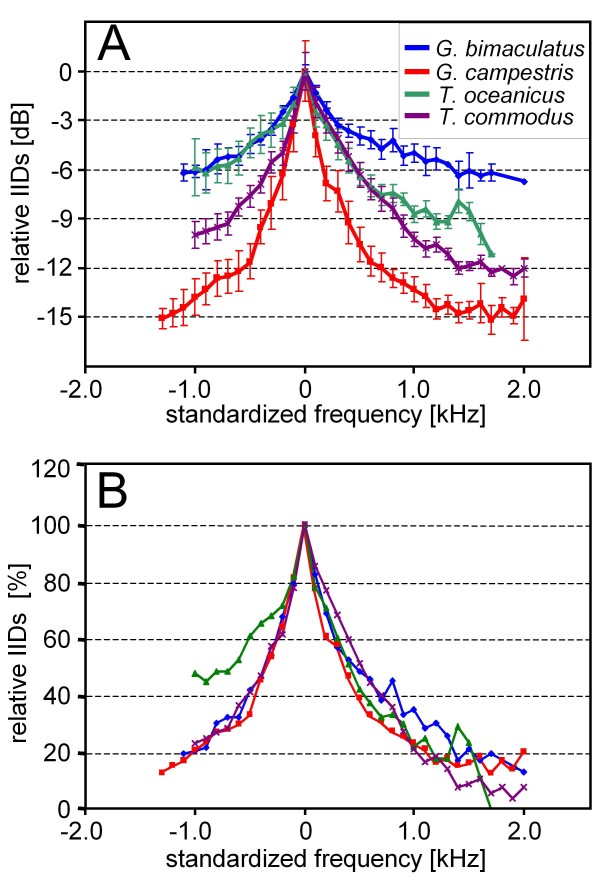
Male field crickets produce pure-tone calling songs to attract females. Receivers are expected to have evolved a "matched filter" in the form of a tuned sensitivity for this frequency. In addition, the peripheral directionality of field crickets is sharply tuned as a result of a pressure difference receiver. We studied both forms of tuning in the same individuals of four species of cricket, where Gryllus bimaculatus and G. campestris are largely allopatric, whereas Teleogryllus oceanicus and T. commodus occur also sympatrically.
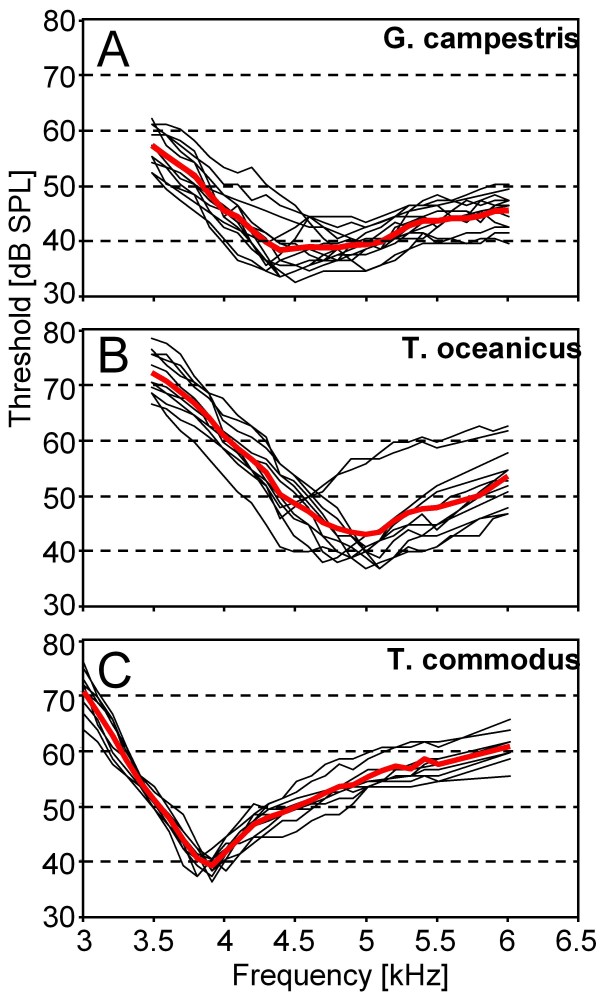
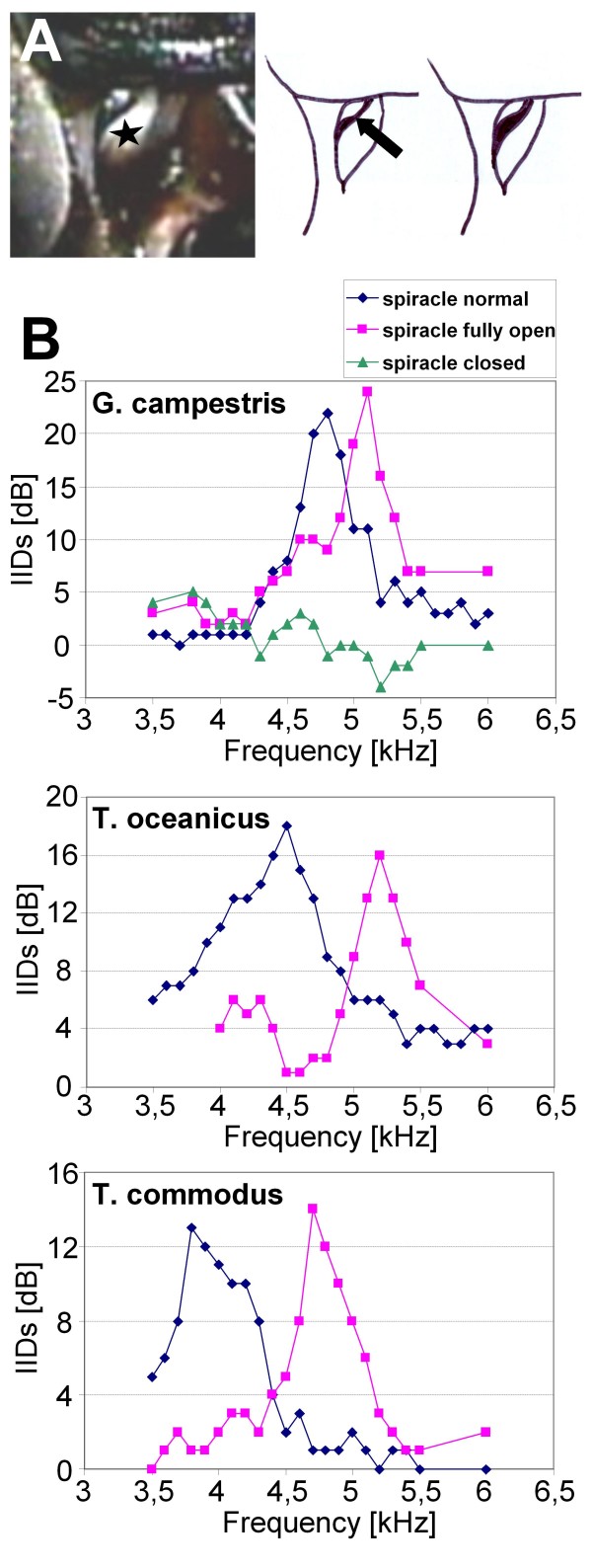
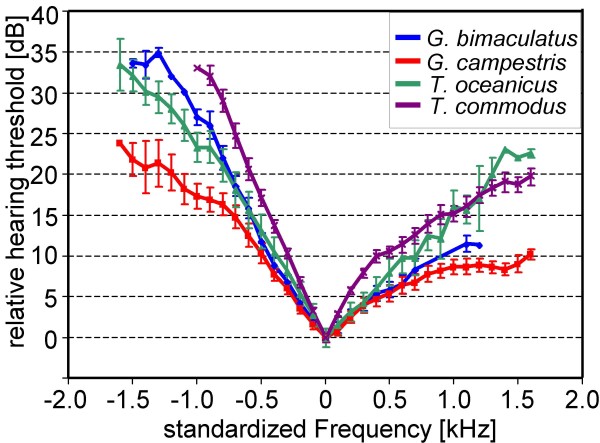
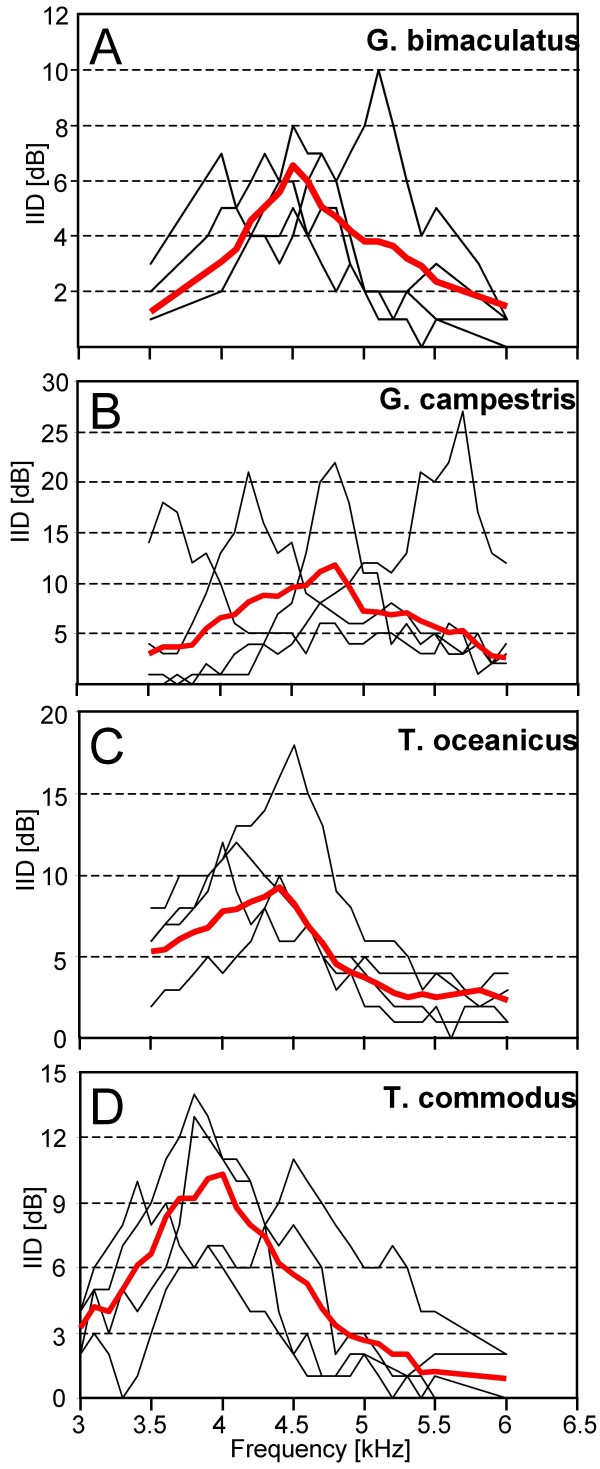
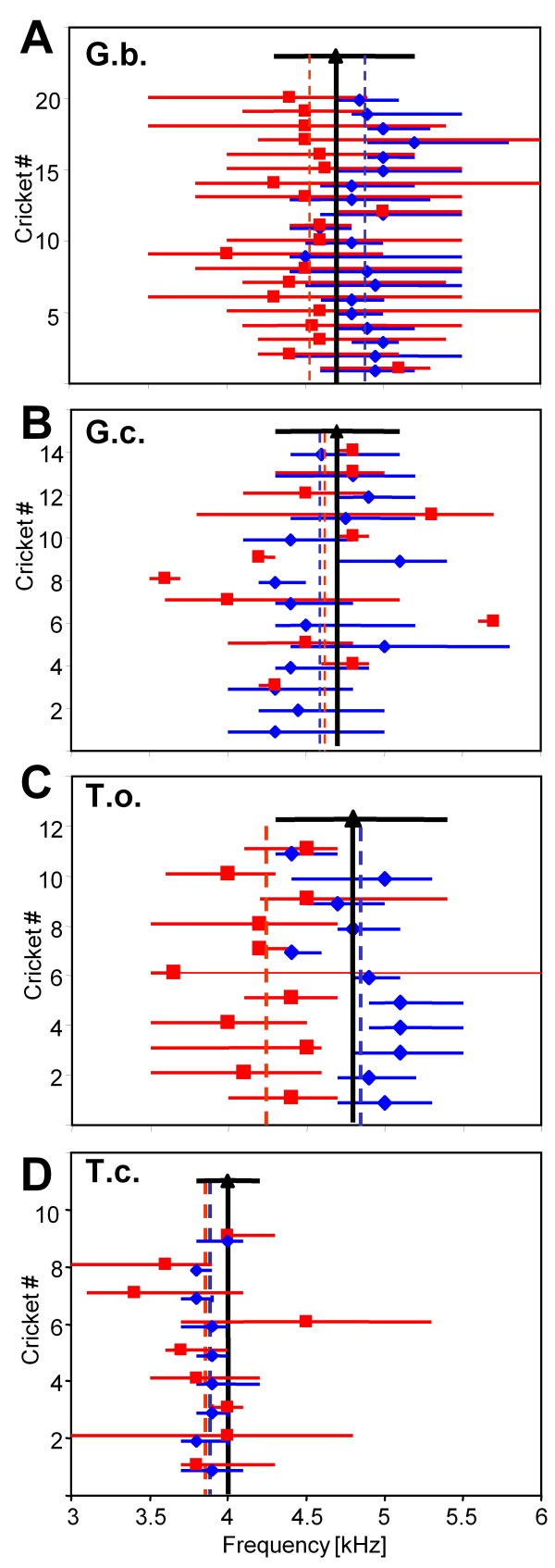
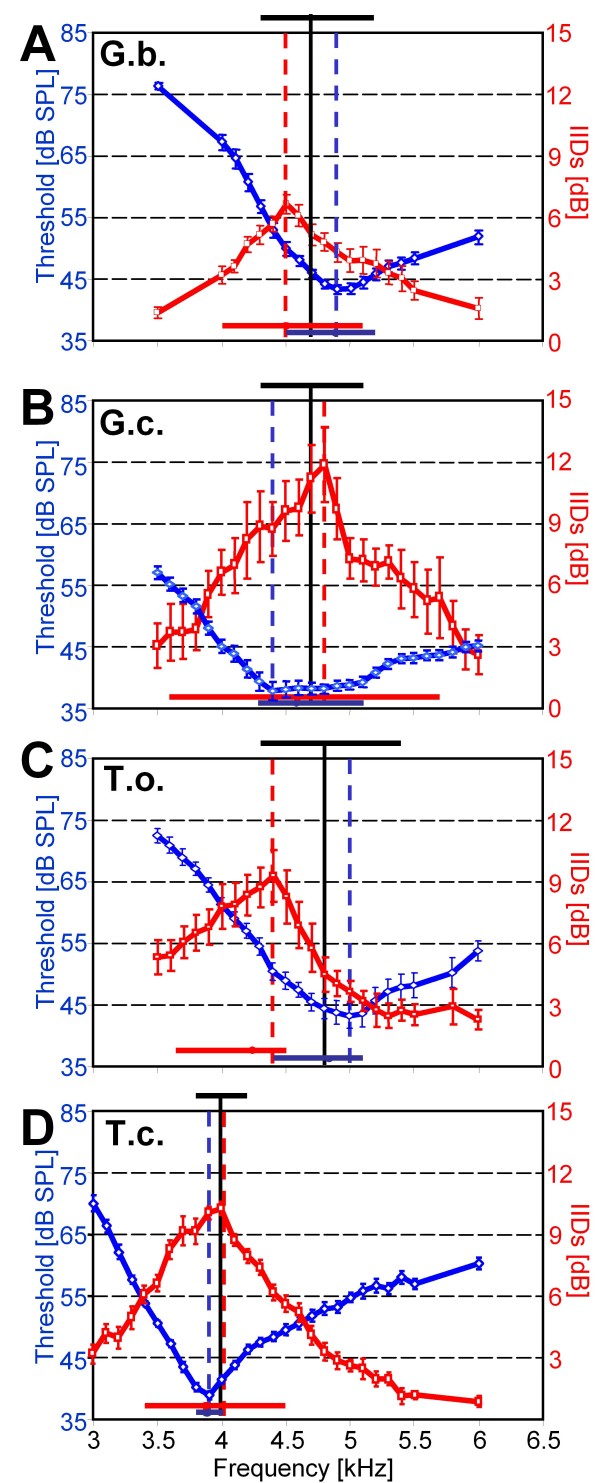
The sharpness of the sensitivity filter is highest for T. commodus, which also exhibits low interindividual variability. Individual receivers may also vary strongly in the best frequency for directional hearing. In G. campestris, such best frequencies occur even at frequencies outside the range of carrier frequencies of males. Contrary to the predictions from the "matched filter hypothesis", in three of the four species the frequency optima of the two involved filters are not matched to each other, and the mismatch can amount to 1.2 kHz. The mean carrier frequency of the male population is between the frequency optima of both filters in three species. Only in T. commodus we found a match between both filters and the male carrier frequency.
Our results show that a mismatch between the sensitivity and directionality tuning is not uncommon in crickets, and an observed match (T. commodus) appears to be the exception rather than the rule. The data suggests that independent variation of both filters is possible. During evolution each sensory task may have been driven by independent constraints, and may have evolved towards its own respective optimum.
雄性蟋蟀会发出纯音鸣叫以吸引雌性。接收者有望进化出一种调谐灵敏度的“匹配滤波器”来接收这种频率。此外,蟋蟀的外围指向性由于压力差接收器而被调谐得非常尖锐。我们在四个蟋蟀物种的同一个体中研究了这两种调谐形式,其中 Gryl lus bimaculatus 和 G. campestris 基本上是地理上的隔离种,而 Teleogryllus oceanicus 和 T. commodus 则同时存在。
T. commodus 的灵敏度滤波器的锐度最高,个体间的可变性也最低。个体接收器在定向听觉的最佳频率上也可能有很大的变化。在 G. campestris 中,这种最佳频率甚至出现在雄性载频范围之外的频率。与“匹配滤波器假说”的预测相反,在四个物种中的三个中,两个涉及的滤波器的频率最优值不相互匹配,并且不匹配量可达 1.2 kHz。三个物种中雄性群体的平均载波频率处于两个滤波器的频率最优值之间。只有在 T. commodus 中,我们发现两个滤波器与雄性载波频率相匹配。
我们的研究结果表明,蟋蟀中灵敏度和方向性调谐之间的不匹配并不罕见,而观察到的匹配(T. commodus)似乎是例外而不是规则。数据表明,两个滤波器的独立变化是可能的。在进化过程中,每个感官任务可能受到独立的限制,并且可能朝着自己各自的最优方向进化。