Department of Biological Sciences, University of Wisconsin-Milwaukee, Milwaukee, Wisconsin, United States of America.
PLoS One. 2009 Sep 29;4(9):e7194. doi: 10.1371/journal.pone.0007194.
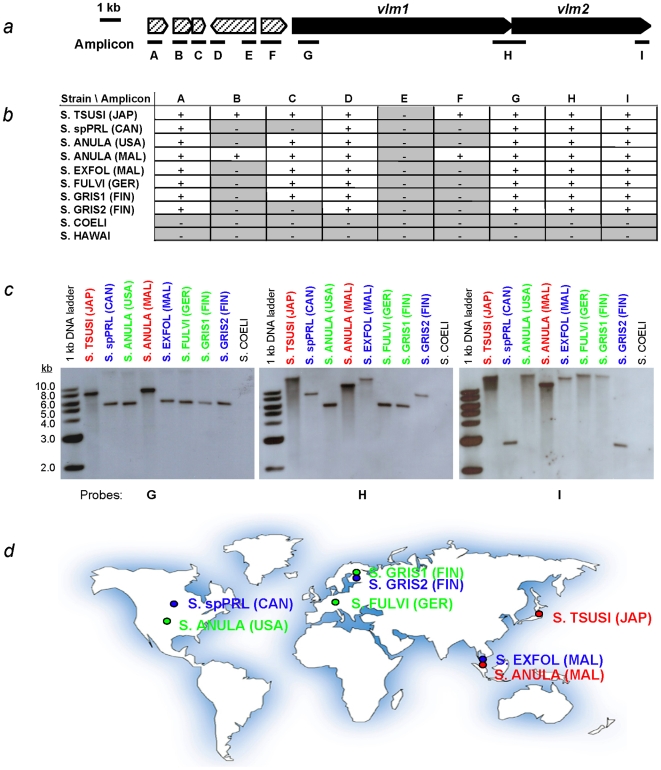
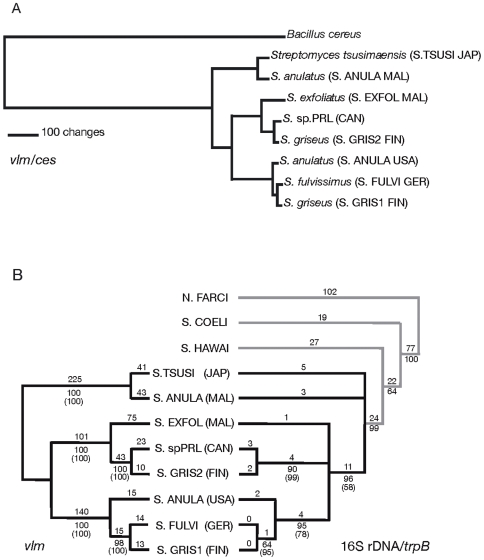
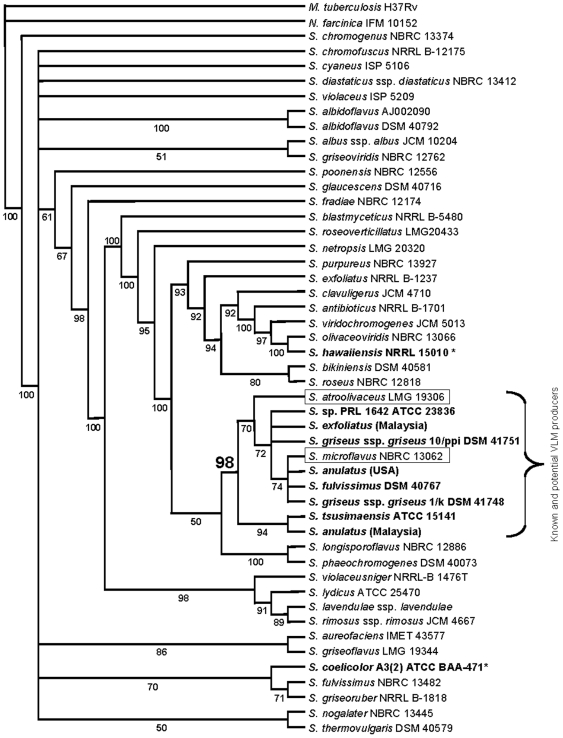
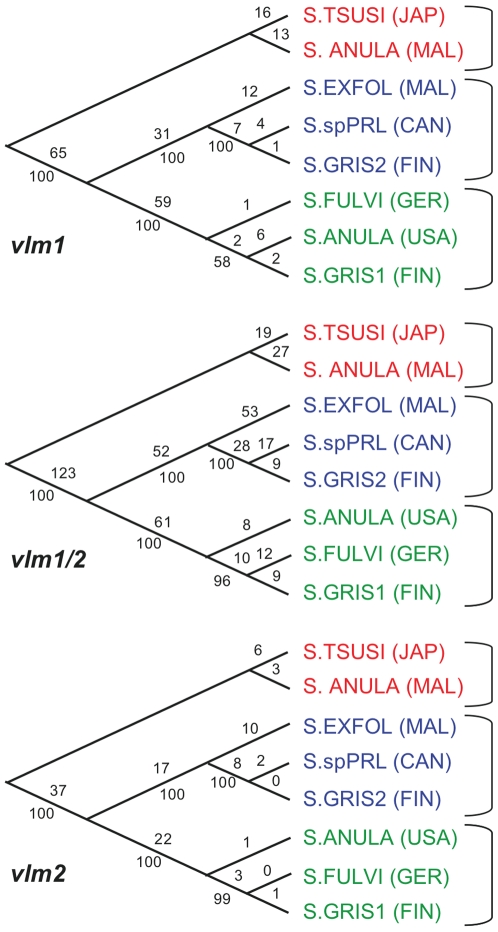
Many Streptomyces strains are known to produce valinomycin (VLM) antibiotic and the VLM biosynthetic gene cluster (vlm) has been characterized in two independent isolates. Here we report the phylogenetic relationships of these strains using both parsimony and likelihood methods, and discuss whether the vlm gene cluster shows evidence of horizontal transmission common in natural product biosynthetic genes. Eight Streptomyces strains from around the world were obtained and sequenced for three regions of the two large nonribosomal peptide synthetase genes (vlm1 and vlm2) involved in VLM biosynthesis. The DNA sequences representing the vlm gene cluster are highly conserved among all eight environmental strains. The geographic distribution pattern of these strains and the strict congruence between the trees of the two vlm genes and the housekeeping genes, 16S rDNA and trpB, suggest vertical transmission of the vlm gene cluster in Streptomyces with no evidence of horizontal gene transfer. We also explored the relationship of the sequence of vlm genes to that of the cereulide biosynthetic genes (ces) found in Bacillus cereus and found them highly divergent from each other at DNA level (genetic distance values >or= 95.6%). It is possible that the vlm gene cluster and the ces gene cluster may share a relatively distant common ancestor but these two gene clusters have since evolved independently.
许多链霉菌菌株被认为能产生缬氨霉素(VLM)抗生素,并且 VLM 生物合成基因簇(vlm)已经在两个独立的分离物中得到了描述。在这里,我们使用简约法和似然法来报告这些菌株的系统发育关系,并讨论 vlm 基因簇是否显示出在天然产物生物合成基因中常见的水平转移证据。从世界各地获得了 8 株链霉菌菌株,并对参与 VLM 生物合成的两个大型非核糖体肽合成酶基因(vlm1 和 vlm2)的三个区域进行了测序。代表 VLM 生物合成的 vlm 基因簇的 DNA 序列在所有 8 个环境菌株中高度保守。这些菌株的地理分布模式以及两个 vlm 基因与管家基因 16S rDNA 和 trpB 的树之间的严格一致性表明,vlm 基因簇在链霉菌中是垂直传递的,没有水平基因转移的证据。我们还探讨了 vlm 基因序列与在蜡状芽孢杆菌中发现的cereulide 生物合成基因(ces)的序列之间的关系,发现它们在 DNA 水平上高度不同(遗传距离值> = 95.6%)。vlm 基因簇和 ces 基因簇可能具有相对较远的共同祖先,但这两个基因簇此后已经独立进化。