Department of Cell Biology, Emory University School of Medicine, Atlanta, Georgia, United States of America.
PLoS One. 2009 Sep 29;4(9):e7083. doi: 10.1371/journal.pone.0007083.
Tumor Susceptibility Gene-101 (TSG101) promotes the endocytic degradation of transmembrane proteins and is implicated as a mutational target in cancer, yet the effect of TSG101 loss on cell proliferation in vertebrates is uncertain. By contrast, Drosophila epithelial tissues lacking the TSG101 ortholog erupted (ept) develop as enlarged undifferentiated tumors, indicating that the gene can have anti-growth properties in a simple metazoan. A full understanding of pathways deregulated by loss of Drosophila ept will aid in understanding potential links between mammalian TSG101 and growth control.
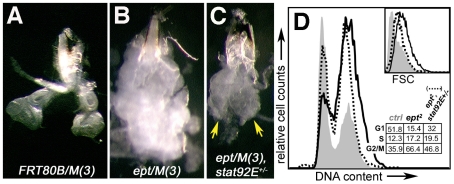
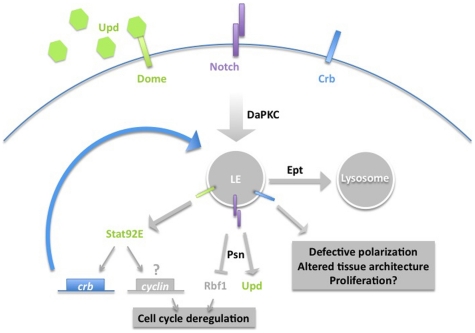
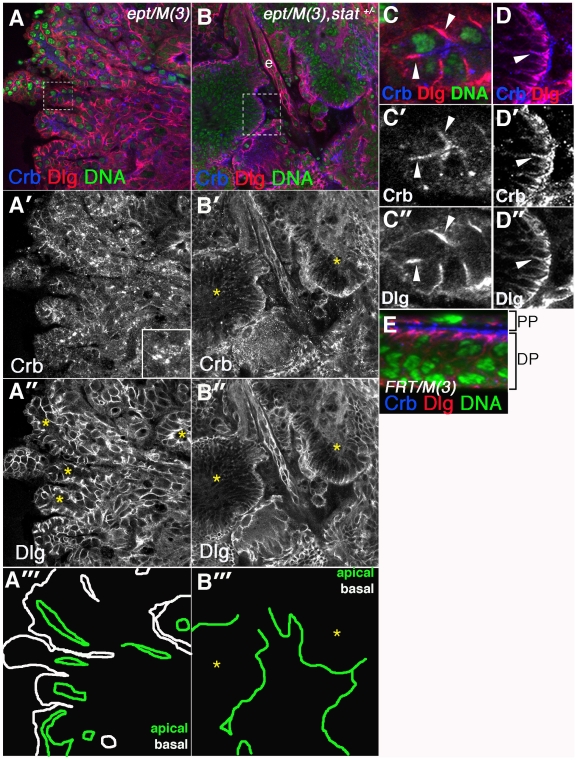
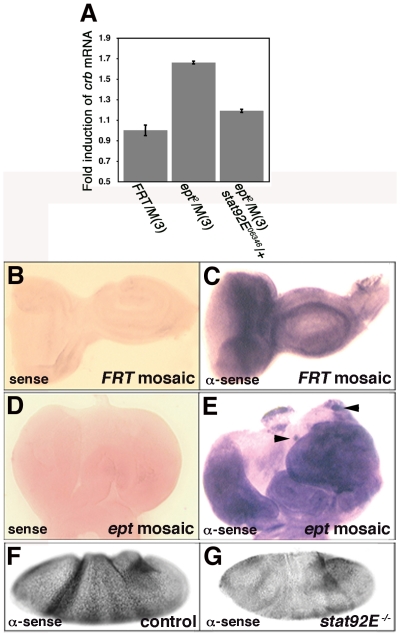
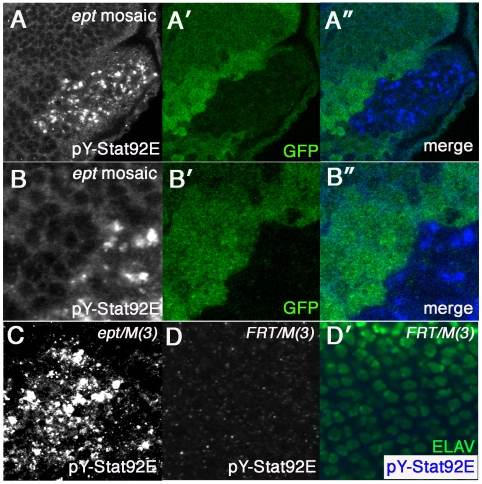
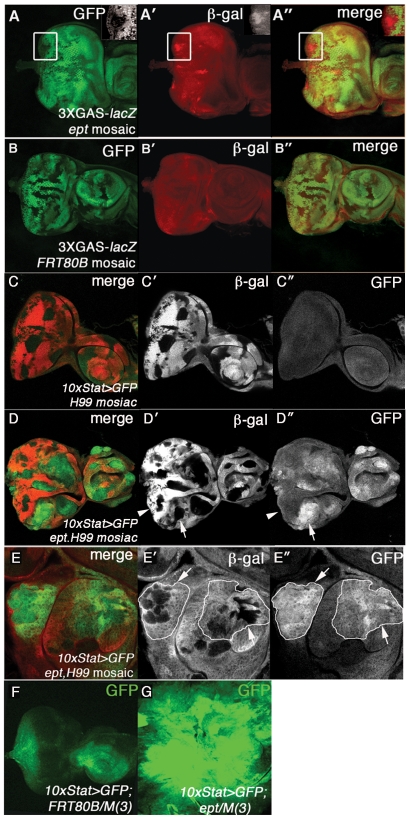
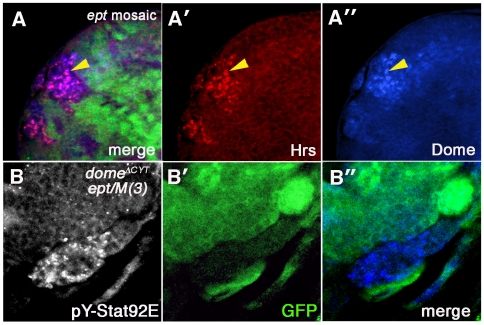
We have taken a genetic approach to the identification of pathways required for excess growth of Drosophila eye-antennal imaginal discs lacking ept. We find that this phenotype is very sensitive to the genetic dose of stat92E, the transcriptional effector of the Jak-Stat signaling pathway, and that this pathway undergoes strong activation in ept mutant cells. Genetic evidence indicates that stat92E contributes to cell cycle deregulation and excess cell size phenotypes that are observed among ept mutant cells. In addition, autonomous Stat92E hyper-activation is associated with altered tissue architecture in ept tumors and an effect on expression of the apical polarity determinant crumbs.
These findings identify ept as a cell-autonomous inhibitor of the Jak-Stat pathway and suggest that excess Jak-Stat signaling makes a significant contribution to proliferative and tissue architectural phenotypes that occur in ept mutant tissues.
肿瘤易感性基因-101(TSG101)促进跨膜蛋白的内吞降解,并被认为是癌症的突变靶标,但 TSG101 缺失对脊椎动物细胞增殖的影响尚不确定。相比之下,缺乏 TSG101 直系同源物的果蝇上皮组织爆发(ept)发育成增大的未分化肿瘤,表明该基因在简单的后生动物中具有抗生长特性。全面了解缺失果蝇 ept 后失调的途径将有助于理解哺乳动物 TSG101 与生长控制之间的潜在联系。
我们采用遗传方法鉴定了缺失 ept 的果蝇眼触角 imaginal 盘过度生长所需的途径。我们发现,这种表型对 Jak-Stat 信号通路的转录效应因子 stat92E 的遗传剂量非常敏感,并且该途径在 ept 突变细胞中强烈激活。遗传证据表明,stat92E 有助于细胞周期失调和 ept 突变细胞中观察到的细胞大小过度增加表型。此外,自主 Stat92E 过度激活与 ept 肿瘤中组织架构的改变以及顶端极性决定因素 crumbs 的表达有关。
这些发现将 ept 鉴定为 Jak-Stat 通路的细胞自主抑制剂,并表明过量的 Jak-Stat 信号对 ept 突变组织中发生的增殖和组织架构表型有重要贡献。