Suchodolski Jan S, Dowd Scot E, Westermarck Elias, Steiner Jörg M, Wolcott Randy D, Spillmann Thomas, Harmoinen Jaana A
Gastrointestinal Laboratory, Texas A&M University, College Station, TX, USA.
BMC Microbiol. 2009 Oct 2;9:210. doi: 10.1186/1471-2180-9-210.
Recent studies have shown that the fecal microbiota is generally resilient to short-term antibiotic administration, but some bacterial taxa may remain depressed for several months. Limited information is available about the effect of antimicrobials on small intestinal microbiota, an important contributor to gastrointestinal health. The antibiotic tylosin is often successfully used for the treatment of chronic diarrhea in dogs, but its exact mode of action and its effect on the intestinal microbiota remain unknown. The aim of this study was to evaluate the effect of tylosin on canine jejunal microbiota. Tylosin was administered at 20 to 22 mg/kg q 24 hr for 14 days to five healthy dogs, each with a pre-existing jejunal fistula. Jejunal brush samples were collected through the fistula on days 0, 14, and 28 (14 days after withdrawal of tylosin). Bacterial diversity was characterized using massive parallel 16S rRNA gene pyrosequencing.
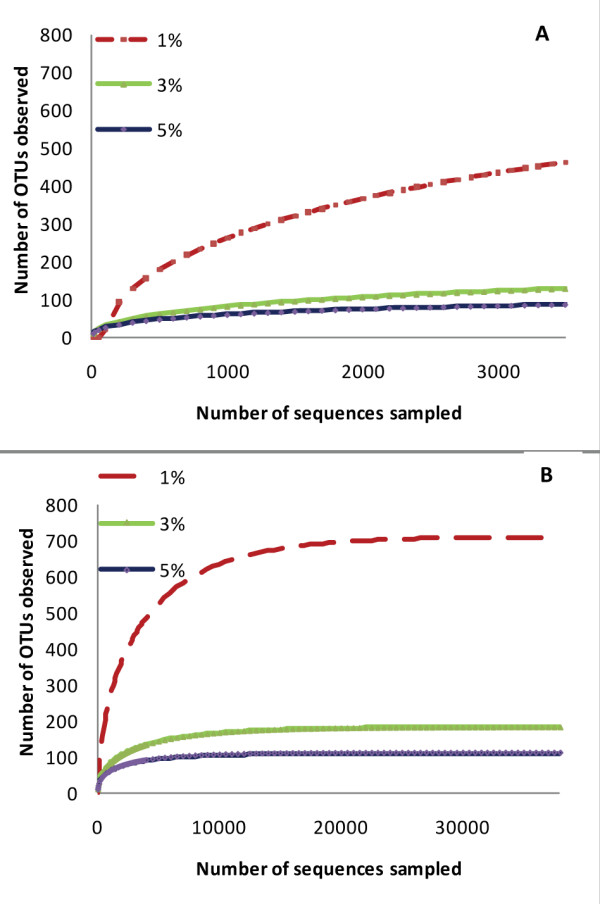
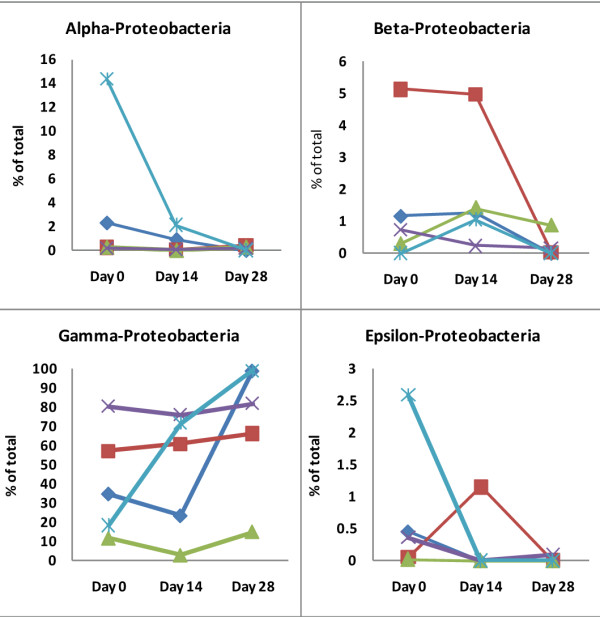
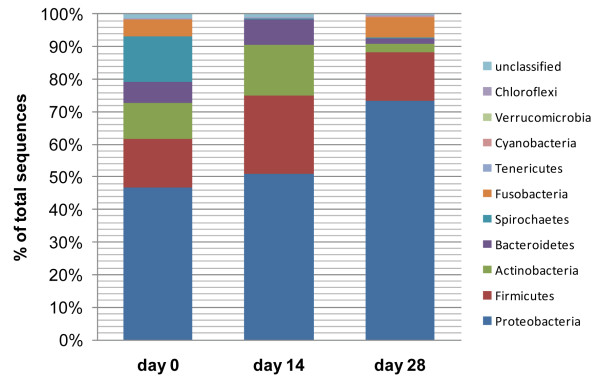
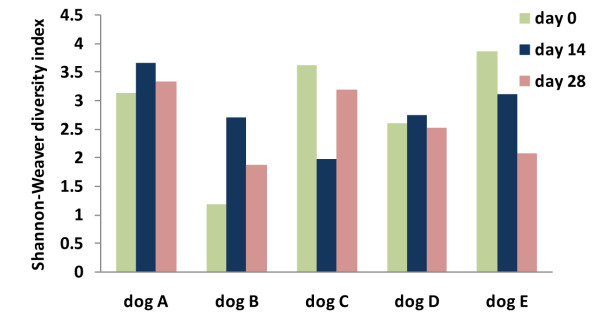
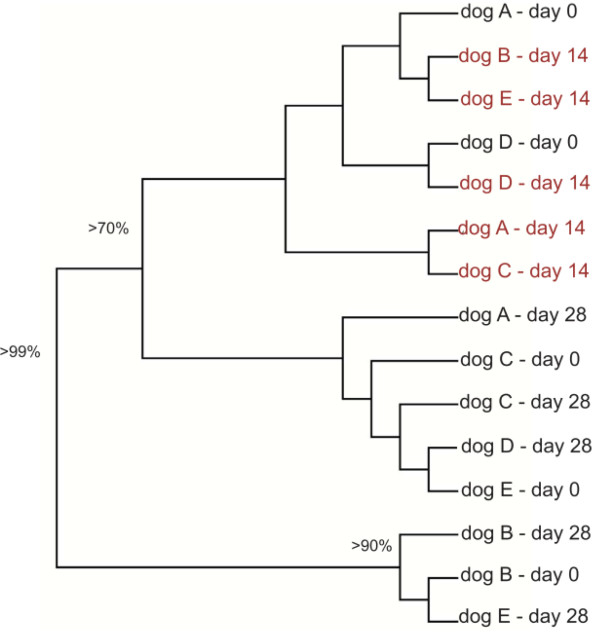
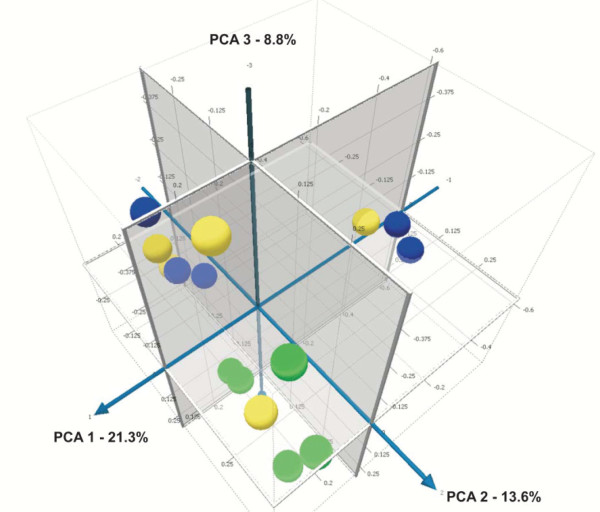
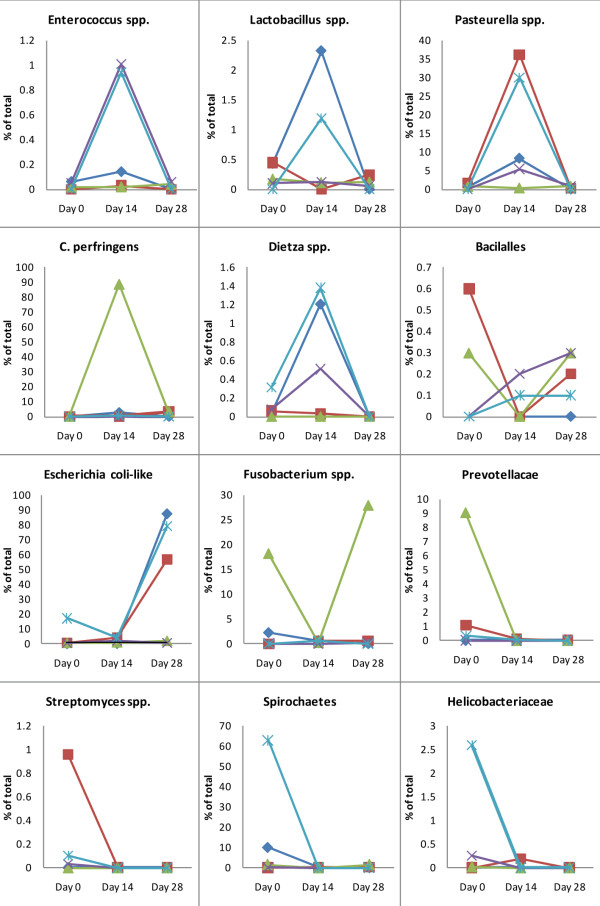
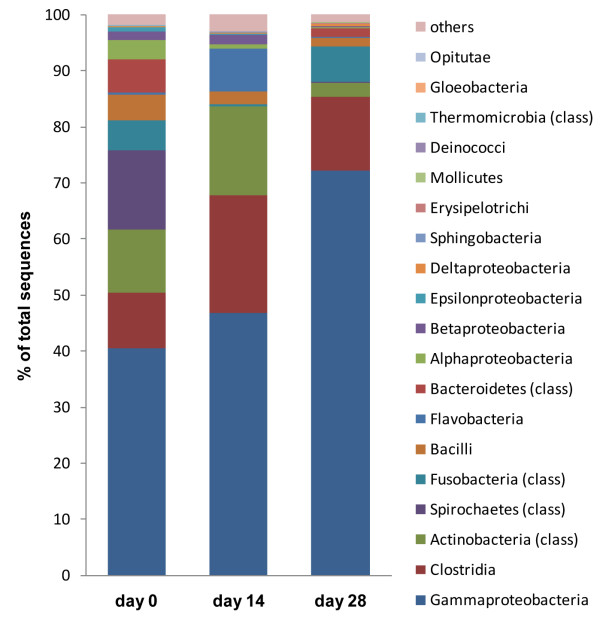
Pyrosequencing revealed a previously unrecognized species richness in the canine small intestine. Ten bacterial phyla were identified. Microbial populations were phylogenetically more similar during tylosin treatment. However, a remarkable inter-individual response was observed for specific taxa. Fusobacteria, Bacteroidales, and Moraxella tended to decrease. The proportions of Enterococcus-like organisms, Pasteurella spp., and Dietzia spp. increased significantly during tylosin administration (p < 0.05). The proportion of Escherichia coli-like organisms increased by day 28 (p = 0.04). These changes were not accompanied by any obvious clinical effects. On day 28, the phylogenetic composition of the microbiota was similar to day 0 in only 2 of 5 dogs. Bacterial diversity resembled the pre-treatment state in 3 of 5 dogs. Several bacterial taxa such as Spirochaetes, Streptomycetaceae, and Prevotellaceae failed to recover at day 28 (p < 0.05). Several bacterial groups considered to be sensitive to tylosin increased in their proportions.
Tylosin may lead to prolonged effects on the composition and diversity of jejunal microbiota. However, these changes were not associated with any short-term clinical signs of gastrointestinal disease in healthy dogs. Our results illustrate the complexity of the intestinal microbiota and the challenges associated with evaluating the effect of antibiotic administration on the various bacterial groups and their potential interactions.
最近的研究表明,粪便微生物群通常对短期使用抗生素具有恢复力,但一些细菌类群可能会在数月内持续受到抑制。关于抗菌药物对小肠微生物群(对胃肠道健康的重要贡献者)的影响,现有信息有限。抗生素泰乐菌素常用于成功治疗犬慢性腹泻,但其确切作用方式及其对肠道微生物群的影响仍不清楚。本研究的目的是评估泰乐菌素对犬空肠微生物群的影响。对五只健康犬(每只犬预先存在空肠瘘管)以20至22mg/kg的剂量每24小时给药一次,持续14天。在第0天、第14天和第28天(停用泰乐菌素后14天)通过瘘管采集空肠刷状样本。使用大规模平行16S rRNA基因焦磷酸测序对细菌多样性进行表征。
焦磷酸测序揭示了犬小肠中以前未被认识到的物种丰富度。鉴定出了十个细菌门。在泰乐菌素治疗期间,微生物种群在系统发育上更为相似。然而,观察到特定类群存在显著的个体间反应。梭杆菌、拟杆菌目和莫拉菌倾向于减少。在泰乐菌素给药期间,肠球菌样生物体、巴斯德菌属和Dietzia菌属的比例显著增加(p<0.05)。到第28天,大肠杆菌样生物体的比例增加(p=0.04)。这些变化未伴随任何明显的临床效应。在第28天,只有5只犬中的2只微生物群的系统发育组成与第0天相似。5只犬中有3只的细菌多样性类似于治疗前状态。在第28天,几个细菌类群,如螺旋体、链霉菌科和普雷沃菌科未能恢复(p<0.05)。几个被认为对泰乐菌素敏感的细菌类群比例增加。
泰乐菌素可能会对空肠微生物群的组成和多样性产生长期影响。然而,这些变化与健康犬胃肠道疾病的任何短期临床症状均无关。我们的结果说明了肠道微生物群的复杂性以及评估抗生素给药对各种细菌类群及其潜在相互作用的影响所面临的挑战。