• 文献检索
  • 文档翻译
  • 深度研究
  • 学术资讯
  • Suppr Zotero 插件Zotero 插件
  • 邀请有礼
  • 套餐&价格
  • 历史记录
应用&插件
Suppr Zotero 插件Zotero 插件浏览器插件Mac 客户端Windows 客户端微信小程序
定价
高级版会员购买积分包购买API积分包
服务
文献检索文档翻译深度研究API 文档MCP 服务
关于我们
关于 Suppr公司介绍联系我们用户协议隐私条款
关注我们

Suppr 超能文献

核心技术专利:CN118964589B侵权必究
粤ICP备2023148730 号-1Suppr @ 2026

文献检索

告别复杂PubMed语法,用中文像聊天一样搜索,搜遍4000万医学文献。AI智能推荐,让科研检索更轻松。

立即免费搜索

文件翻译

保留排版,准确专业,支持PDF/Word/PPT等文件格式,支持 12+语言互译。

免费翻译文档

深度研究

AI帮你快速写综述,25分钟生成高质量综述,智能提取关键信息,辅助科研写作。

立即免费体验

院外心脏骤停患者的降温治疗——下一个前沿领域?

Prehospital cooling in cardiac arrest--the next frontier?

机构信息

Department of Anaesthesia and Intensive Care, Stavanger University Hospital, Stavanger, Norway.

出版信息

Scand J Trauma Resusc Emerg Med. 2009 Oct 12;17:54. doi: 10.1186/1757-7241-17-54.

DOI:10.1186/1757-7241-17-54
PMID:19821973
原文链接:https://pmc.ncbi.nlm.nih.gov/articles/PMC2767341/
Abstract

Therapeutic hypothermia (TH) in unconscious survivors of out-of-hospital cardiac arrest (OHCA) is now a well-documented part of post-resuscitation care. Implementation of TH into daily clinical practice has been far more successful in the Scandinavian countries than in the rest of the world. Still, many questions remain. One of them is whether prehospital cooling will result in better outcomes.

摘要

治疗性低体温(TH)在院外心脏骤停(OHCA)无意识幸存者中现在是复苏后护理的一个有充分文献记录的部分。在日常临床实践中实施 TH 在斯堪的纳维亚国家比在世界其他地区更为成功。尽管如此,仍有许多问题悬而未决。其中之一是院前降温是否会带来更好的结果。
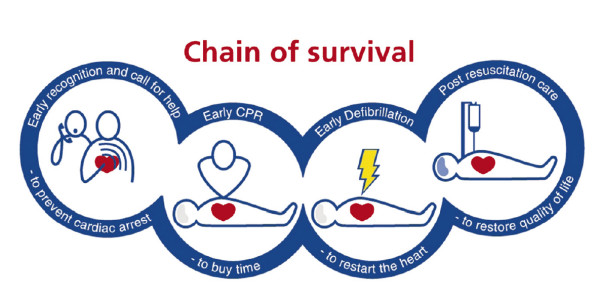
https://cdn.ncbi.nlm.nih.gov/pmc/blobs/4888/2767341/29b83ceefe83/1757-7241-17-54-1.jpg

相似文献

1
Prehospital cooling in cardiac arrest--the next frontier?院外心脏骤停患者的降温治疗——下一个前沿领域?
Scand J Trauma Resusc Emerg Med. 2009 Oct 12;17:54. doi: 10.1186/1757-7241-17-54.
2
Rapid implementation of therapeutic hypothermia in comatose out-of-hospital cardiac arrest survivors.对院外心脏骤停昏迷幸存者迅速实施治疗性低温治疗。
Acta Anaesthesiol Scand. 2006 Nov;50(10):1277-83. doi: 10.1111/j.1399-6576.2006.01147.x.
3
Therapeutic hypothermia for out-of-hospital cardiac arrest: an update for neurosurgeons.院外心脏骤停的治疗性低温:神经外科医生的最新进展。
World Neurosurg. 2010 Jul;74(1):120-8. doi: 10.1016/j.wneu.2010.02.065.
4
Out-of-hospital therapeutic hypothermia in cardiac arrest victims.院外心脏骤停患者的治疗性低温。
Scand J Trauma Resusc Emerg Med. 2009 Oct 12;17:52. doi: 10.1186/1757-7241-17-52.
5
Use of prehospital-induced hypothermia after out-of-hospital cardiac arrest: a survey of the National Association of Emergency Medical Services Physicians.院外心脏骤停后使用院前诱导低温治疗:美国急诊医师协会的一项调查
Prehosp Emerg Care. 2008 Jan-Mar;12(1):52-6. doi: 10.1080/10903120701707880.
6
Immediate prehospital hypothermia protocol in comatose survivors of out-of-hospital cardiac arrest.院外心脏骤停昏迷幸存者的院前即刻低温治疗方案
Am J Emerg Med. 2009 Jun;27(5):570-3. doi: 10.1016/j.ajem.2008.04.028.
7
Clinical Outcomes in Cardiac Arrest Patients Following Prehospital Treatment with Therapeutic Hypothermia.院外治疗性低温治疗后心脏骤停患者的临床结局
Prehosp Disaster Med. 2015 Oct;30(5):452-6. doi: 10.1017/S1049023X15004987. Epub 2015 Aug 12.
8
Prehospital resuscitated cardiac arrest patients: role for induced hypothermia.院外复苏的心脏骤停患者:亚低温治疗的作用
Prehosp Emerg Care. 2009 Jul-Sep;13(3):402-5. doi: 10.1080/10903120902935314.
9
The efficacy and safety of prehospital therapeutic hypothermia in patients with out-of-hospital cardiac arrest: A systematic review and meta-analysis.院外心脏骤停患者院前治疗性低温的疗效和安全性:一项系统评价和荟萃分析。
Resuscitation. 2015 Nov;96:170-9. doi: 10.1016/j.resuscitation.2015.08.005. Epub 2015 Aug 21.
10
Induction of prehospital therapeutic hypothermia after resuscitation from nonventricular fibrillation cardiac arrest*.**推荐**:心肺复苏后治疗性低温诱导用于治疗非室颤性心搏骤停*。 **注释**: - *:这是这篇文献的标题,由于是斜体,在翻译时保留。 - 非室颤性心搏骤停(nonventricular fibrillation cardiac arrest):即非室颤性心搏骤停,简称“非室颤”。
Crit Care Med. 2012 Mar;40(3):747-53. doi: 10.1097/CCM.0b013e3182377038.

引用本文的文献

1
Service as joint editor-in-chief for 11 years comes to an end: adieu, godspeed and auf wiedersehn!担任联合主编11年的任期结束:再见,祝你一切顺利,后会有期!
Scand J Trauma Resusc Emerg Med. 2015 Dec 30;23:110. doi: 10.1186/s13049-015-0192-1.

本文引用的文献

1
Prehospital therapeutic hypothermia after cardiac arrest--from current concepts to a future standard.心肺复苏后院前治疗性低温——从当前概念到未来标准。
Scand J Trauma Resusc Emerg Med. 2009 Oct 12;17:53. doi: 10.1186/1757-7241-17-53.
2
Out-of-hospital therapeutic hypothermia in cardiac arrest victims.院外心脏骤停患者的治疗性低温。
Scand J Trauma Resusc Emerg Med. 2009 Oct 12;17:52. doi: 10.1186/1757-7241-17-52.
3
Outcome, timing and adverse events in therapeutic hypothermia after out-of-hospital cardiac arrest.院外心脏骤停后治疗性低温的结局、时机及不良事件
Acta Anaesthesiol Scand. 2009 Aug;53(7):926-34. doi: 10.1111/j.1399-6576.2009.02021.x. Epub 2009 Jun 22.
4
Post-cardiac arrest syndrome: epidemiology, pathophysiology, treatment, and prognostication. A Scientific Statement from the International Liaison Committee on Resuscitation; the American Heart Association Emergency Cardiovascular Care Committee; the Council on Cardiovascular Surgery and Anesthesia; the Council on Cardiopulmonary, Perioperative, and Critical Care; the Council on Clinical Cardiology; the Council on Stroke.心脏骤停后综合征:流行病学、病理生理学、治疗及预后。国际复苏联合委员会、美国心脏协会急救心血管护理委员会、心血管外科和麻醉委员会、心肺、围手术期和重症监护委员会、临床心脏病学委员会、中风委员会的科学声明。
Resuscitation. 2008 Dec;79(3):350-79. doi: 10.1016/j.resuscitation.2008.09.017. Epub 2008 Oct 28.
5
Prognostication after out-of-hospital cardiac arrest, a clinical survey.院外心脏骤停后的预后评估,一项临床调查。
Scand J Trauma Resusc Emerg Med. 2008 Sep 15;16:9. doi: 10.1186/1757-7241-16-9.
6
Induced hypothermia and fever control for prevention and treatment of neurological injuries.诱导性低温与发热控制用于预防和治疗神经损伤。
Lancet. 2008 Jun 7;371(9628):1955-69. doi: 10.1016/S0140-6736(08)60837-5.
7
Rapid head cooling initiated coincident with cardiopulmonary resuscitation improves success of defibrillation and post-resuscitation myocardial function in a porcine model of prolonged cardiac arrest.
J Am Coll Cardiol. 2008 May 20;51(20):1988-90. doi: 10.1016/j.jacc.2007.12.057.
8
Therapeutic hypothermia after out-of hospital cardiac arrest: how to secure worldwide implementation.
Curr Opin Anaesthesiol. 2008 Apr;21(2):209-15. doi: 10.1097/ACO.0b013e3282f51d6d.