Jenkins Misty R, Tsun Andy, Stinchcombe Jane C, Griffiths Gillian M
Cambridge Institute for Medical Research, Addenbrooke's Hospital, Cambridge CB2 0XY, UK.
Immunity. 2009 Oct 16;31(4):621-31. doi: 10.1016/j.immuni.2009.08.024.
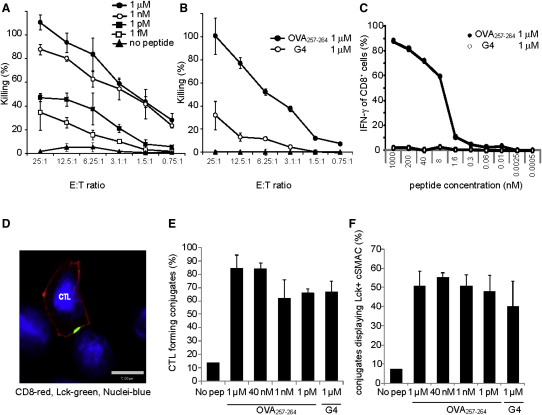
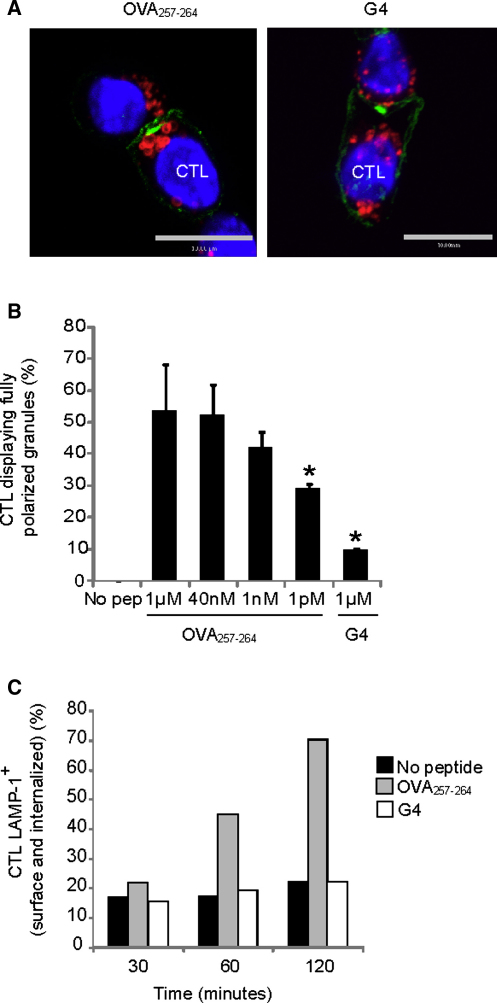
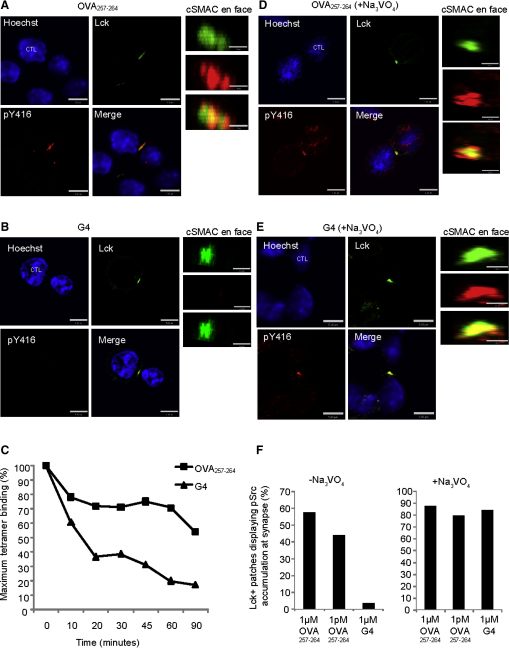
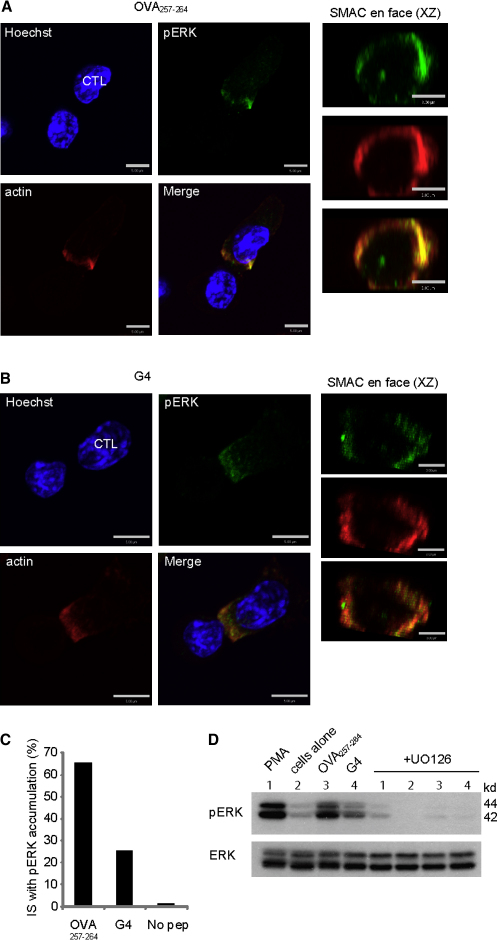
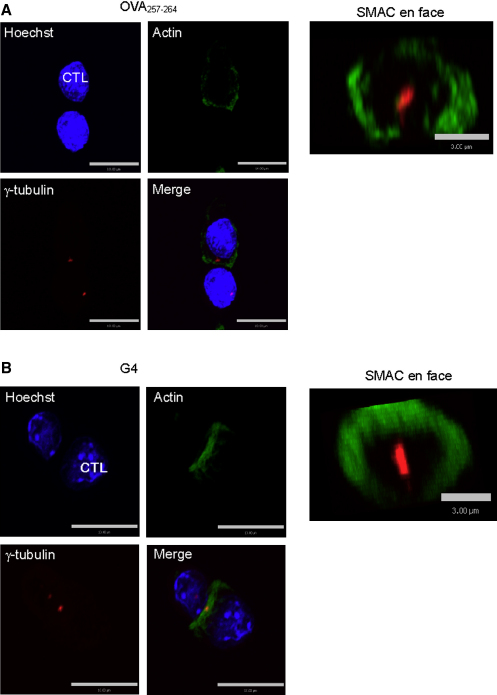
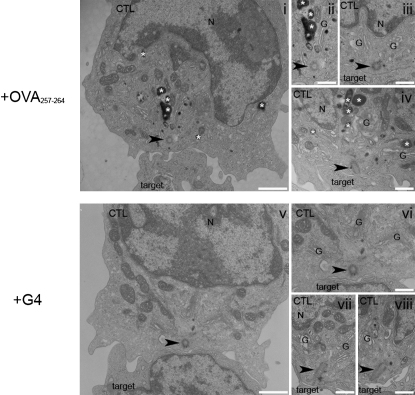
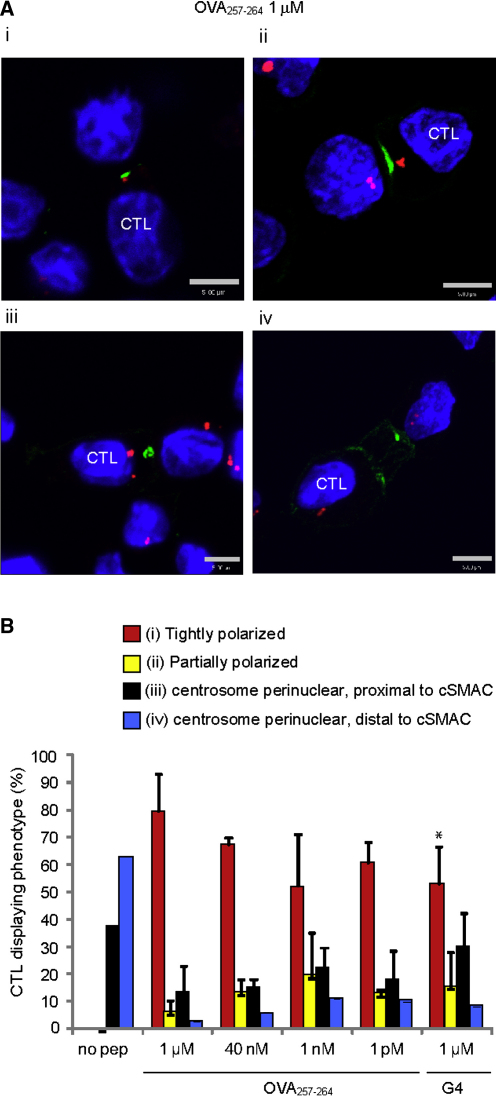
Killing by cytotoxic T lymphocytes (CTLs) is mediated by the secretion of lytic granules. The centrosome plays a key role in granule delivery, polarizing to the central supramolecular activation complex (cSMAC) within the immunological synapse upon T cell receptor (TCR) activation. Although stronger TCR signals lead to increased target cell death than do weaker signals, it is not known how the strength of TCR signal controls polarization of the centrosome and lytic granules. By using TCR transgenic OT-I CTLs, we showed that both high- and low-avidity interactions led to centrosome polarization to the cSMAC. However, only high-avidity interactions, which induced a higher threshold of intracellular signaling, gave rise to granule recruitment to the polarized centrosome at the synapse. By controlling centrosome and granule polarization independently, the centrosome is able to respond rapidly to weak signals so that CTLs are poised and ready for the trigger for granule delivery.
细胞毒性T淋巴细胞(CTL)介导的杀伤作用是由溶细胞颗粒的分泌介导的。中心体在颗粒递送中起关键作用,在T细胞受体(TCR)激活后,它会极化到免疫突触内的中央超分子激活复合物(cSMAC)。尽管较强的TCR信号比较弱的信号导致更多的靶细胞死亡,但尚不清楚TCR信号强度如何控制中心体和溶细胞颗粒的极化。通过使用TCR转基因OT-I CTL,我们发现高亲和力和低亲和力相互作用均导致中心体极化到cSMAC。然而,只有诱导更高细胞内信号阈值的高亲和力相互作用,才会使颗粒募集到突触处极化的中心体。通过独立控制中心体和颗粒极化,中心体能够对弱信号做出快速反应,从而使CTL做好准备并为颗粒递送触发做好准备。