Department of Medicine I, Division: Institute of Cancer Research, Medical University of Vienna, Borschke-Gasse 8a, A-1090 Vienna, Austria.
Future Oncol. 2009 Oct;5(8):1169-79. doi: 10.2217/fon.09.91.
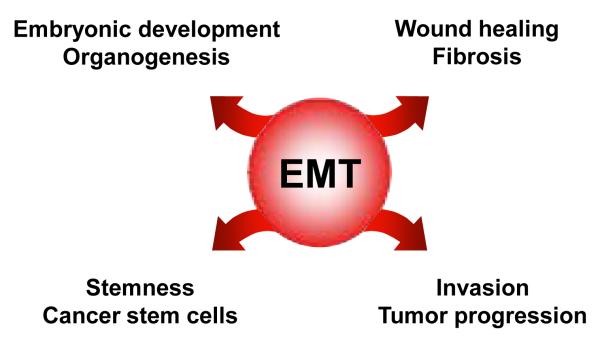
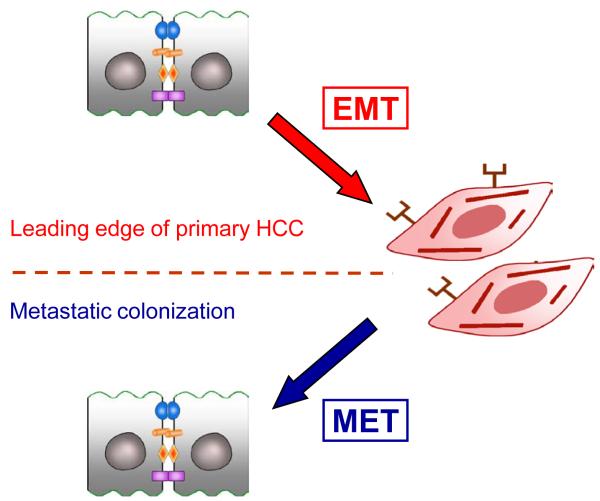
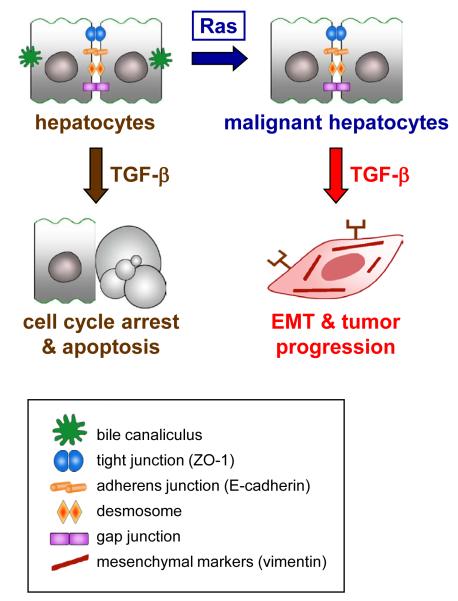
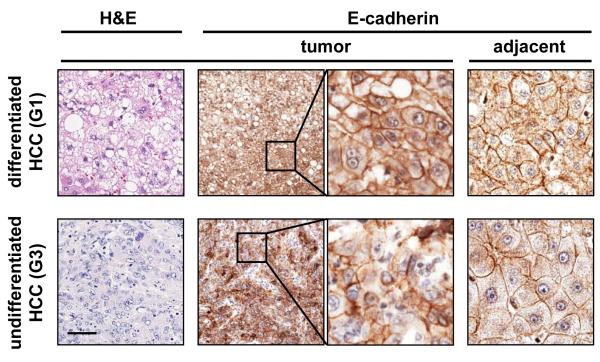
The transition of epithelial cells to a mesenchymal phenotype is of paramount relevance for embryonic development and adult wound healing. During the past decade, the epithelial-mesenchymal transition (EMT) has been increasingly recognized to occur during the progression of various carcinomas such as hepatocellular carcinoma (HCC). Here, we focus on EMT in both experimental liver models and human HCC, emphasizing the underlying molecular mechanisms which show partial recurrence of embryonic programs such as TGF-beta and Wnt/ beta-catenin signaling, including collaboration with hepatitis viruses. We further discuss the differentiation repertoire of malignant hepatocytes with respect to the potential acquisition of stemness, and the involvement of the mesenchymal to epithelial transition, the reversal of EMT, in cancer dissemination and metastatic colonization. The strong evidence for EMT in HCC patients demands novel strategies in pathological assessments and therapeutic concepts to efficiently combat HCC progression.
上皮细胞向间充质表型的转变对于胚胎发育和成人伤口愈合至关重要。在过去的十年中,人们越来越认识到上皮-间充质转化(EMT)在各种癌症如肝细胞癌(HCC)的进展过程中发生。在这里,我们重点介绍 EMT 在实验性肝模型和人类 HCC 中的作用,强调了潜在的分子机制,这些机制显示出部分胚胎程序的重现,如 TGF-β和 Wnt/β-catenin 信号通路,包括与肝炎病毒的合作。我们进一步讨论了恶性肝细胞的分化谱,以及获得干性的潜在可能性,以及间质到上皮的转变、EMT 的逆转在癌症扩散和转移定植中的作用。EMT 在 HCC 患者中的有力证据要求在病理评估和治疗概念方面采取新的策略,以有效地对抗 HCC 的进展。