Division of Gastroenterology, University of Colorado Health Sciences Center, Denver, Colorado 80045, USA.
Inflamm Bowel Dis. 2010 May;16(5):743-52. doi: 10.1002/ibd.21148.
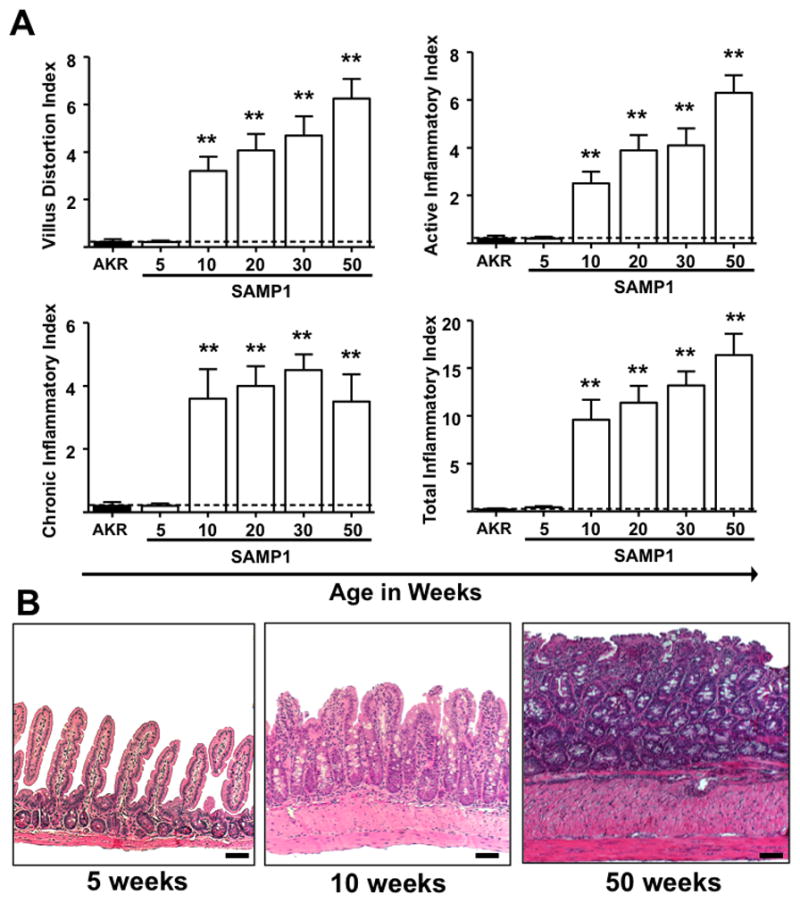
SAMP1/Yit mice develop spontaneous, segmental, transmural ileitis recapitulating many features of Crohn's disease (CD). The ileitic phenotype may have arisen during crosses of SAMP1 mice selected for the presence of skin lesions. We hereby describe that the original SAMP1 strain similarly develops ileitis. Our aim was to characterize the histopathological and immunological features of this model and assess its responsiveness to standard inflammatory bowel disease (IBD) therapy.
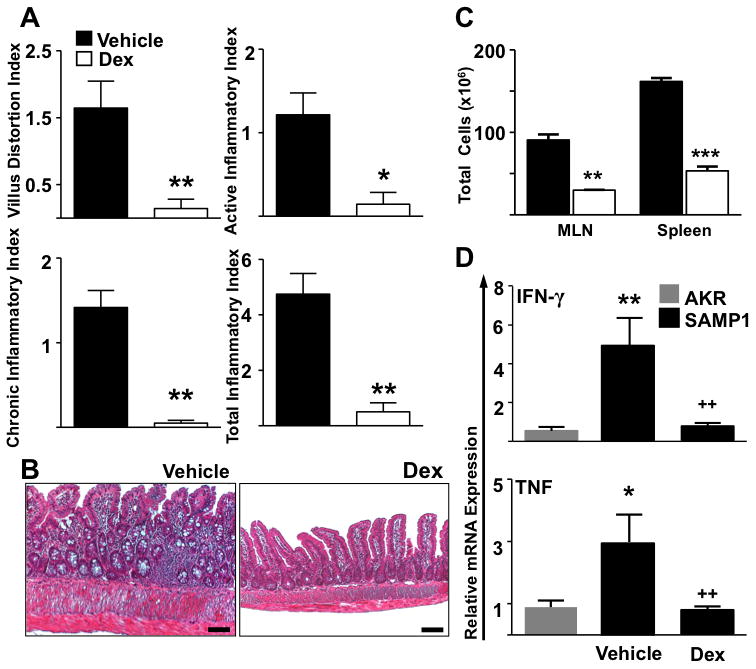
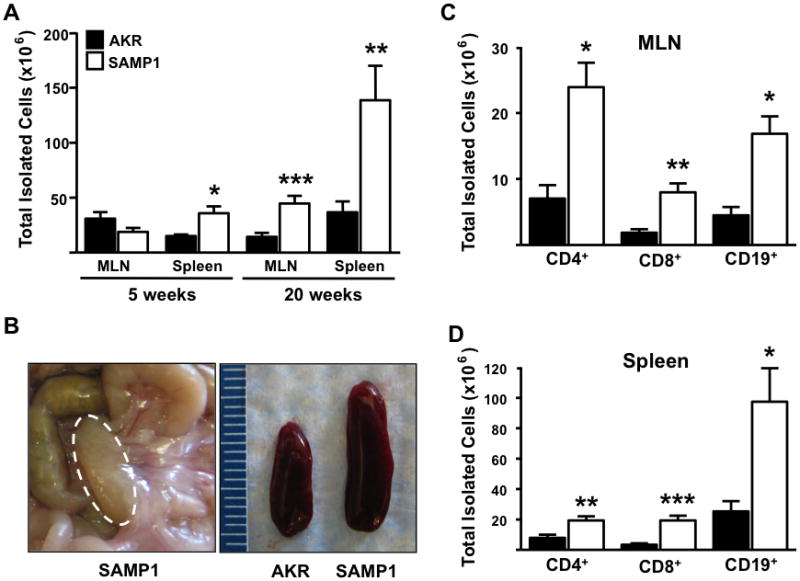
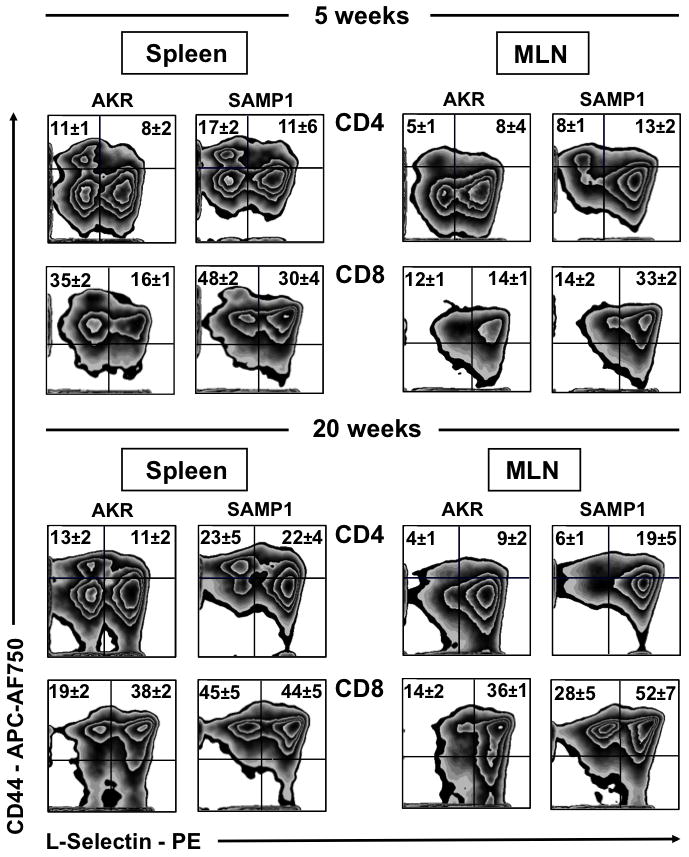
The time course of histopathological features of ileitis was assessed. Immune compartments were characterized by flow cytometry. Ileal cytokine profiles and transcription factors were determined by real-time reverse-transcription polymerase chain reaction (RT-PCR). Finally, response to corticosteroid therapy and its effect on immune compartments and cellularity was evaluated.
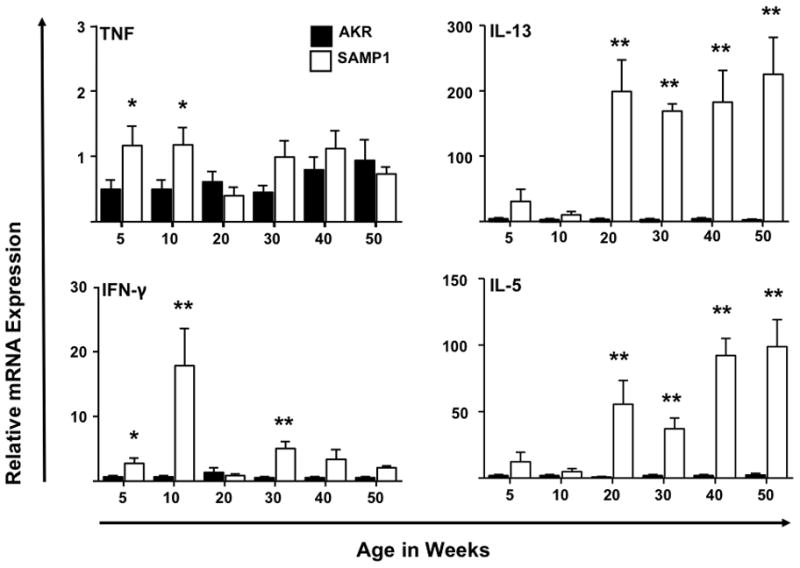
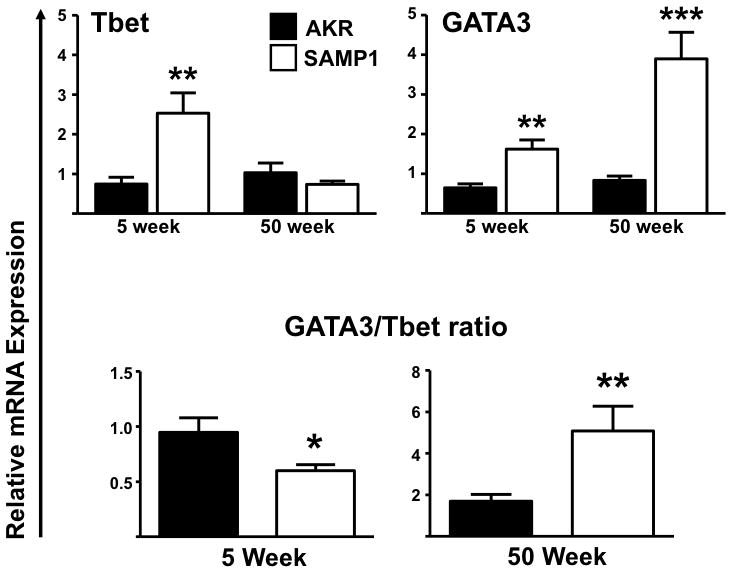
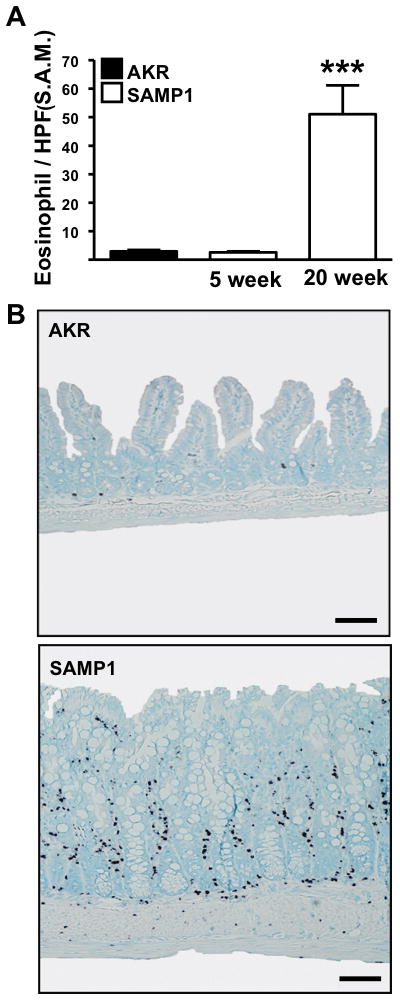
Histological features and time course of disease were conserved, compared to those reported in SAMP1/Yit strains, with similar expansion of CD19+, CD4+, and CD8+ effector (CD44(high) CD62L(low)), and central memory lymphocytes (CD44(high)CD62L(high)). However, different from SAMP1/YitFc mice, analysis of ileal cytokine profiles revealed initial T(H)1 polarization followed by T(H)2-polarized profile accompanied by prominent eosinophilia during late disease. Lastly, corticosteroids attenuated ileitis, resulting in decreased lymphocyte subsets and cellularity of compartments.
Here we report that the ileitic phenotype of SAMP1-related strains was already present in the original SAMP1 strain. By contrast, the cytokine profile within the terminal ilea of SAMP1 is distinct from the mixed T(H)1/T(H)2 profile of SAMP1/YitFc mice during late disease, as it shows predominant T(H)2 polarization. Dissemination of these strains may advance our understanding of CD pathogenesis, which in 60% of patients involves the terminal ileum.
SAMP1/Yit 小鼠自发发展为节段性、透壁性回肠炎,重现了许多克罗恩病(CD)的特征。回肠炎表型可能是在选择存在皮肤损伤的 SAMP1 小鼠的交叉中出现的。我们在此描述了原始 SAMP1 株同样会发展回肠炎。我们的目的是描述该模型的组织病理学和免疫学特征,并评估其对标准炎症性肠病(IBD)治疗的反应。
评估了回肠炎的组织病理学特征的时间进程。通过流式细胞术对免疫细胞群进行了表征。通过实时逆转录聚合酶链反应(RT-PCR)测定了回肠细胞因子谱和转录因子。最后,评估了皮质类固醇治疗的反应及其对免疫细胞群和细胞组成的影响。
与 SAMP1/Yit 株报道的结果相比,疾病的组织学特征和时间进程得到了保留,具有相似的 CD19+、CD4+和 CD8+效应(CD44(high) CD62L(low))和中央记忆淋巴细胞(CD44(high) CD62L(high))的扩张。然而,与 SAMP1/YitFc 小鼠不同,回肠细胞因子谱的分析显示初始 T(H)1 极化,随后在疾病晚期出现 T(H)2 极化伴有明显的嗜酸性粒细胞增多。最后,皮质类固醇可减轻回肠炎,导致淋巴细胞亚群和各腔室的细胞组成减少。
我们在此报告,SAMP1 相关株的回肠炎表型已经存在于原始 SAMP1 株中。相比之下,SAMP1 末端回肠的细胞因子谱在疾病晚期与 SAMP1/YitFc 小鼠的混合 T(H)1/T(H)2 谱不同,因为它显示出主要的 T(H)2 极化。这些菌株的传播可能会增进我们对 CD 发病机制的理解,其中 60%的患者涉及末端回肠。