Knuppe Molecular Urology Laboratory, Department of Urology, School of Medicine, University of California, San Francisco, California, USA.
Cytotherapy. 2010;12(1):88-95. doi: 10.3109/14653240903350265.
Effective treatment for stress urinary incontinence (SUI) is lacking. This study investigated whether transplantation of adipose tissue-derived stem cells (ADSC) can treat SUI in a rat model.
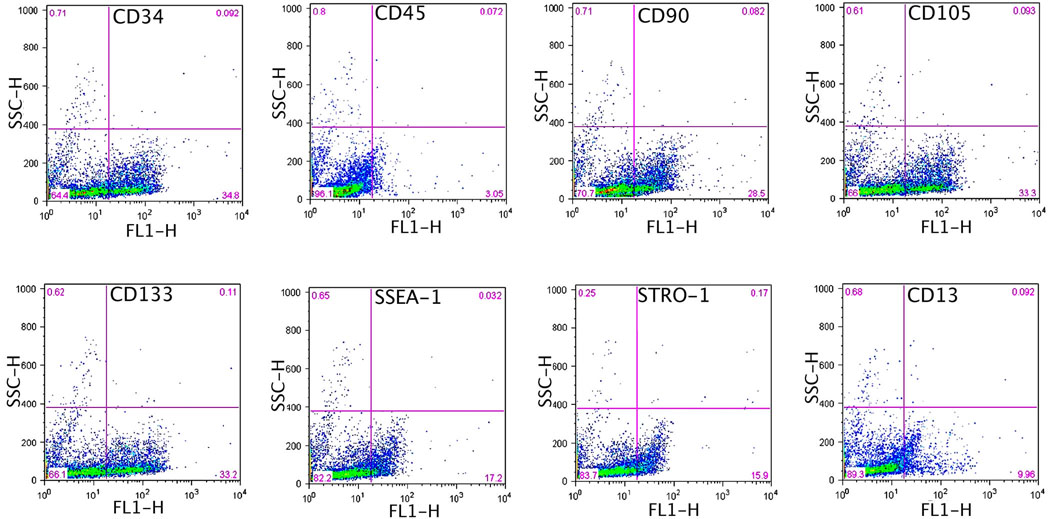
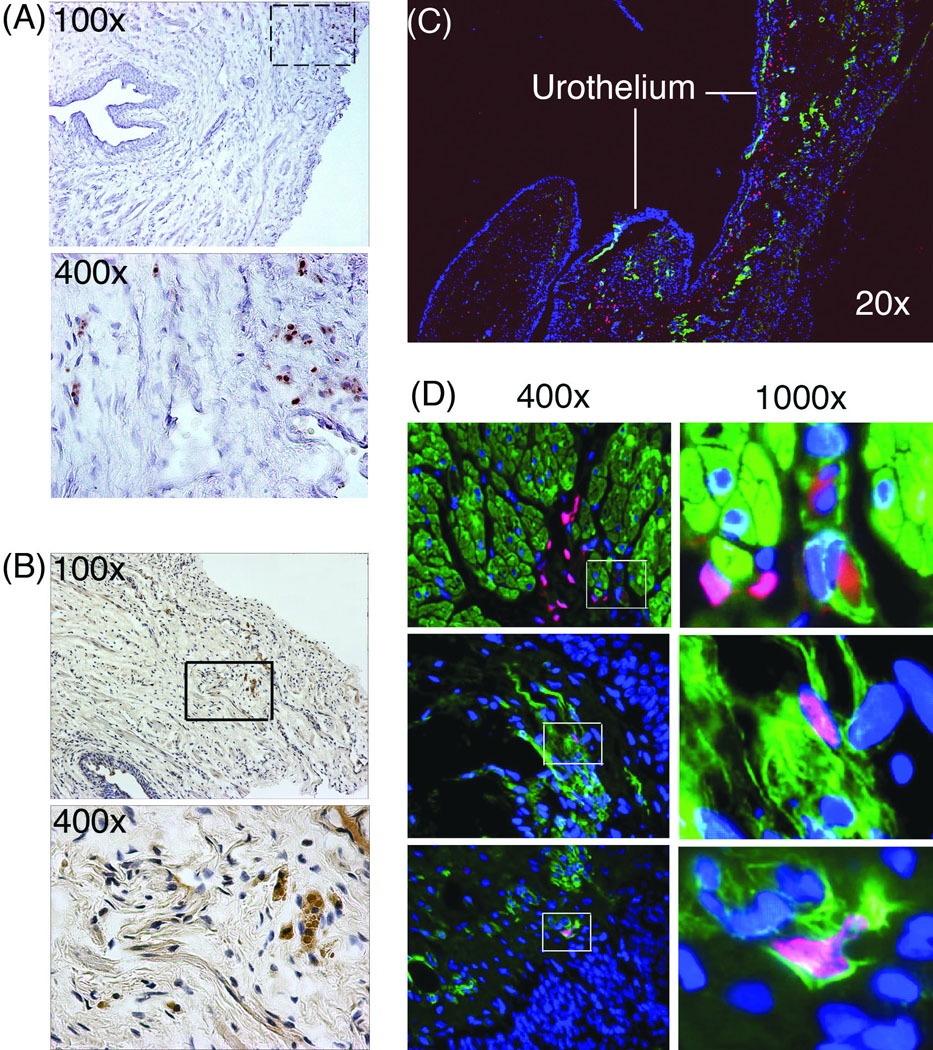
Rats were induced to develop SUI by postpartum vaginal balloon dilation and bilateral ovariectomy. ADSC were isolated from the peri-ovary fat, examined for stem cell properties, and labeled with thymidine analog BrdU or EdU. Ten rats received urethral injection of saline as a control. Twelve rats received urethral injection of EdU-labeled ADSC and six rats received intravenous injection of BrdU-labeled ADSC through the tail vein. Four weeks later, urinary voiding function was assessed by conscious cystometry. The rats were then killed and their urethras harvested for tracking of ADSC and quantification of elastin, collagen and smooth muscle contents.
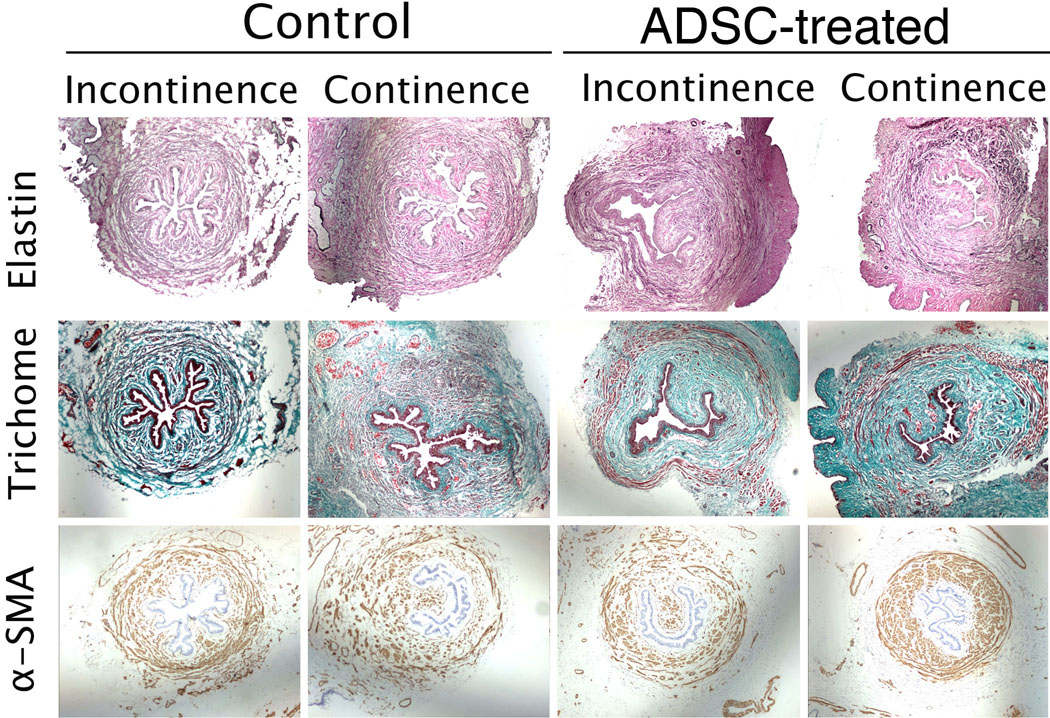
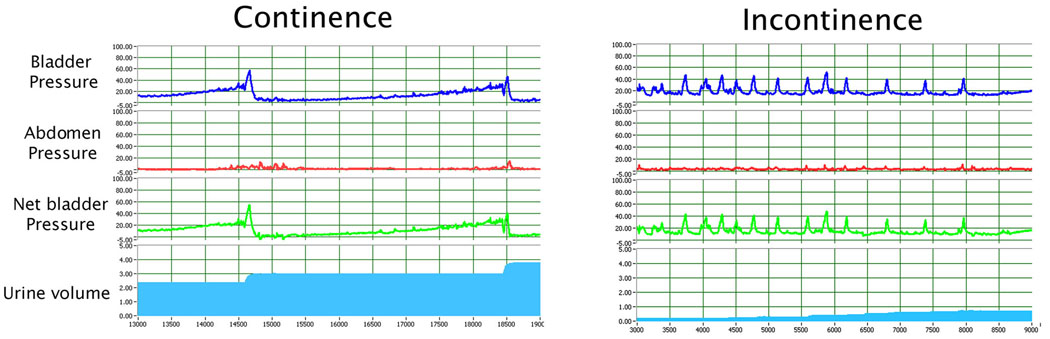
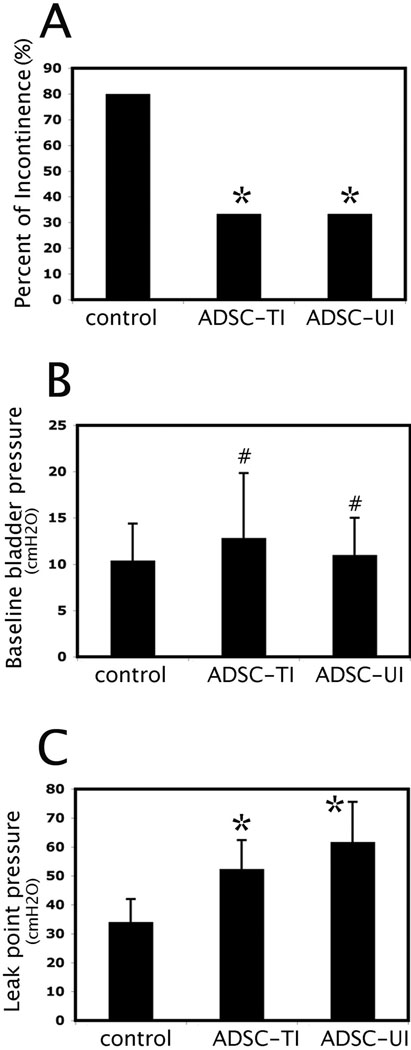
Cystometric analysis showed that eight out 10 rats in the control group had abnormal voiding, whereas four of 12 (33.3%) and two of six (33.3%) rats in the urethra-ADSC and tail vein-ADSC groups, respectively, had abnormal voiding. Histologic analysis showed that the ADSC-treated groups had significantly higher elastin content than the control group and, within the ADSC-treated groups, rats with normal voiding pattern also had significantly higher elastin content than rats with voiding dysfunction. ADSC-treated normal-voiding rats had significantly higher smooth muscle content than control or ADSC-treated rats with voiding dysfunction.
Transplantation of ADSC via urethral or intravenous injection is effective in the treatment and/or prevention of SUI in a pre-clinical setting.
目前缺乏有效的压力性尿失禁(SUI)治疗方法。本研究旨在探讨脂肪组织来源的干细胞(ADSC)移植是否能治疗大鼠 SUI 模型。
通过产后阴道球囊扩张和双侧卵巢切除术诱导大鼠发生 SUI。从卵巢周围脂肪中分离 ADSC,检测其干细胞特性,并使用胸腺嘧啶类似物 BrdU 或 EdU 进行标记。10 只大鼠接受尿道注射生理盐水作为对照。12 只大鼠接受尿道注射 EdU 标记的 ADSC,6 只大鼠经尾静脉注射 BrdU 标记的 ADSC。4 周后,通过清醒膀胱测压评估尿流功能。处死大鼠,取尿道进行 ADSC 追踪和弹性蛋白、胶原和平滑肌含量的定量分析。
膀胱测压分析显示,对照组 10 只大鼠中有 8 只出现异常排尿,而尿道注射 ADSC 组的 12 只大鼠中有 4 只(33.3%)和尾静脉注射 ADSC 组的 6 只大鼠中有 2 只(33.3%)出现异常排尿。组织学分析显示,ADSC 治疗组的弹性蛋白含量明显高于对照组,且在 ADSC 治疗组中,正常排尿模式的大鼠的弹性蛋白含量也明显高于排尿功能障碍的大鼠。ADSC 治疗的正常排尿大鼠的平滑肌含量明显高于对照组和 ADSC 治疗的排尿功能障碍大鼠。
尿道或静脉注射 ADSC 移植在临床前环境中有效治疗和/或预防 SUI。