Department of Chemical and Systems Biology, Stanford University School of Medicine, Stanford, California, USA.
PLoS Biol. 2009 Nov;7(11):e1000238. doi: 10.1371/journal.pbio.1000238. Epub 2009 Nov 10.
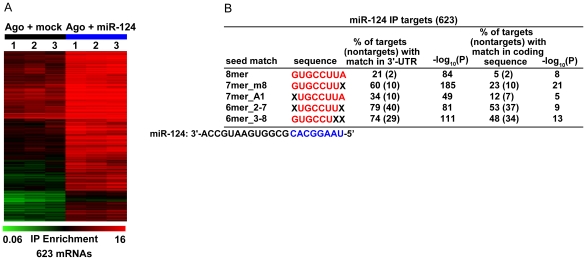
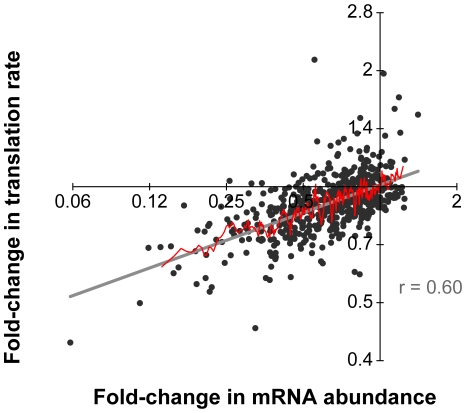
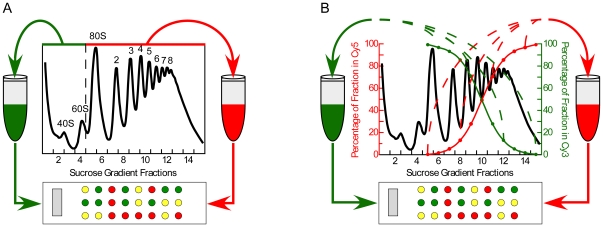
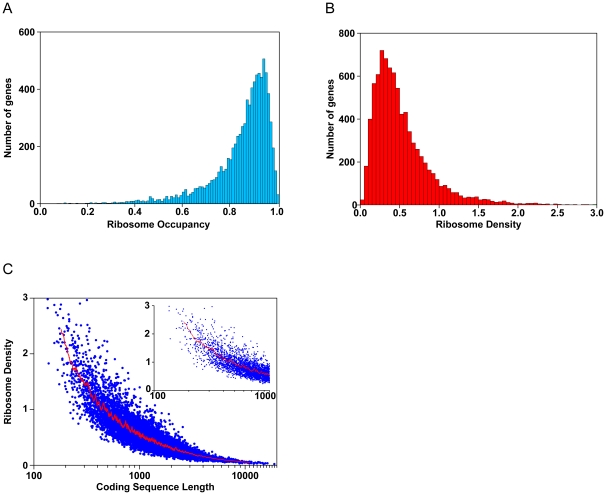
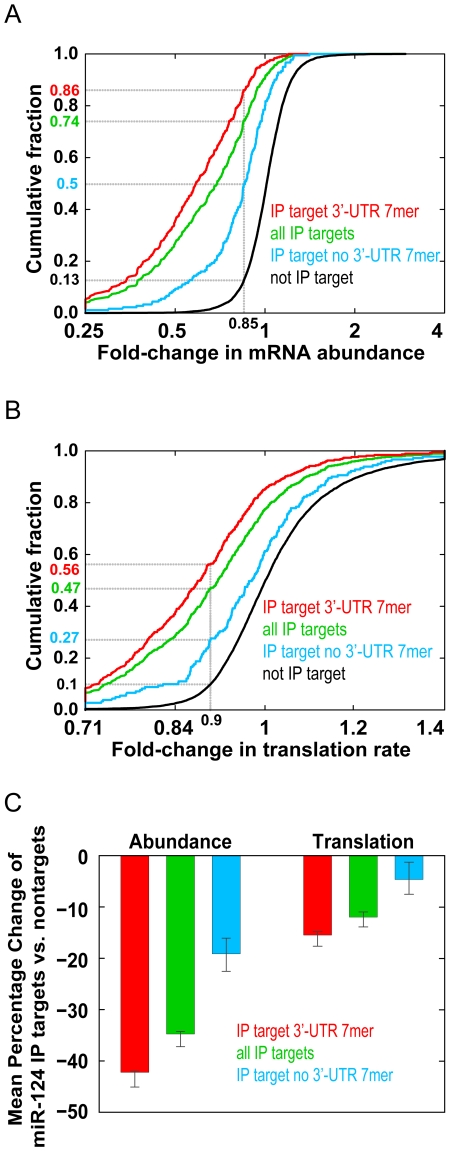
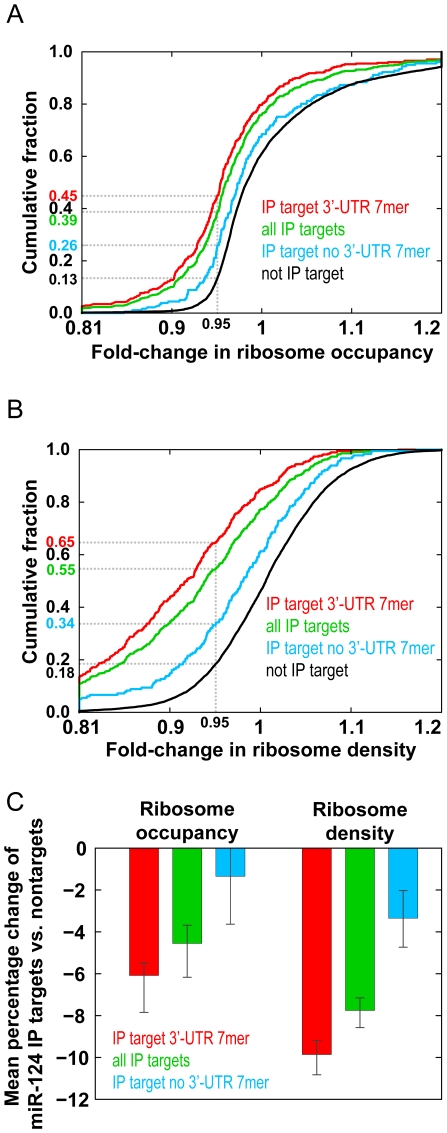
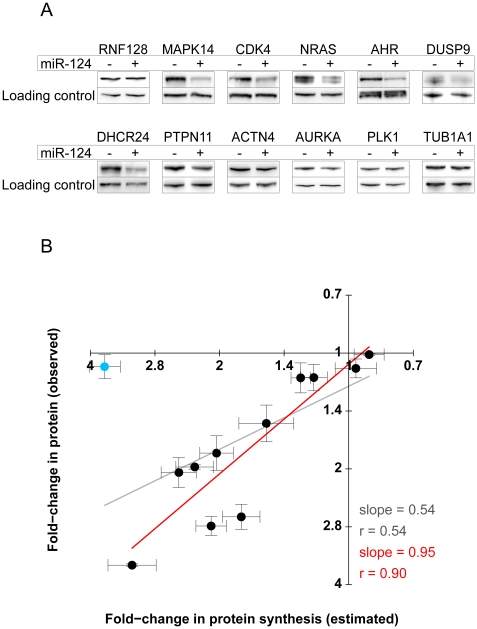
MicroRNAs (miRNAs) regulate gene expression posttranscriptionally by interfering with a target mRNA's translation, stability, or both. We sought to dissect the respective contributions of translational inhibition and mRNA decay to microRNA regulation. We identified direct targets of a specific miRNA, miR-124, by virtue of their association with Argonaute proteins, core components of miRNA effector complexes, in response to miR-124 transfection in human tissue culture cells. In parallel, we assessed mRNA levels and obtained translation profiles using a novel global approach to analyze polysomes separated on sucrose gradients. Analysis of translation profiles for approximately 8,000 genes in these proliferative human cells revealed that basic features of translation are similar to those previously observed in rapidly growing Saccharomyces cerevisiae. For approximately 600 mRNAs specifically recruited to Argonaute proteins by miR-124, we found reductions in both the mRNA abundance and inferred translation rate spanning a large dynamic range. The changes in mRNA levels of these miR-124 targets were larger than the changes in translation, with average decreases of 35% and 12%, respectively. Further, there was no identifiable subgroup of mRNA targets for which the translational response was dominant. Both ribosome occupancy (the fraction of a given gene's transcripts associated with ribosomes) and ribosome density (the average number of ribosomes bound per unit length of coding sequence) were selectively reduced for hundreds of miR-124 targets by the presence of miR-124. Changes in protein abundance inferred from the observed changes in mRNA abundance and translation profiles closely matched changes directly determined by Western analysis for 11 of 12 proteins, suggesting that our assays captured most of miR-124-mediated regulation. These results suggest that miRNAs inhibit translation initiation or stimulate ribosome drop-off preferentially near the start site and are not consistent with inhibition of polypeptide elongation, or nascent polypeptide degradation contributing significantly to miRNA-mediated regulation in proliferating HEK293T cells. The observation of concordant changes in mRNA abundance and translational rate for hundreds of miR-124 targets is consistent with a functional link between these two regulatory outcomes of miRNA targeting, and the well-documented interrelationship between translation and mRNA decay.
微小 RNA(miRNA)通过干扰靶 mRNA 的翻译、稳定性或两者兼而有之来进行转录后基因表达调控。我们试图剖析翻译抑制和 mRNA 降解对 miRNA 调控的各自贡献。我们通过在人组织培养细胞中转染 miR-124 来鉴定特定 miRNA(miR-124)的直接靶标,其通过与 Argonaute 蛋白(miRNA 效应复合物的核心组成部分)结合来识别。同时,我们评估了 mRNA 水平并使用一种新的全局方法获得翻译谱,该方法分析在蔗糖梯度上分离的多核糖体。对这些增殖的人类细胞中约 8000 个基因的翻译谱进行分析,发现基本的翻译特征与先前在快速生长的酿酒酵母中观察到的特征相似。对于大约 600 个被 miR-124 特异性招募到 Argonaute 蛋白的 mRNA,我们发现它们的 mRNA 丰度和推断的翻译率都在很大的动态范围内降低。这些 miR-124 靶标的 mRNA 水平的变化大于翻译的变化,分别平均降低 35%和 12%。此外,对于翻译反应占主导地位的 mRNA 靶标,没有可识别的亚组。当存在 miR-124 时,数百个 miR-124 靶标的核糖体占有率(给定基因的转录本与核糖体结合的部分)和核糖体密度(每个编码序列单位长度结合的核糖体的平均数量)都被选择性降低。从观察到的 mRNA 丰度和翻译谱的变化推断的蛋白质丰度变化与通过 Western 分析直接确定的 12 个蛋白质中的 11 个蛋白质的变化非常吻合,这表明我们的测定方法捕获了大部分 miR-124 介导的调控。这些结果表明,miRNA 优先在起始位点附近抑制翻译起始或刺激核糖体脱落,而不是抑制多肽延伸或新生多肽降解,这与在增殖的 HEK293T 细胞中 miRNA 介导的调控中显著相关。数百个 miR-124 靶标的 mRNA 丰度和翻译率的一致变化与 miRNA 靶向的这两种调控结果之间的功能联系一致,以及翻译和 mRNA 降解之间的良好记录的相互关系。