Department of Abiotic Stress and Plant Pathology, CEBAS-Consejo Superior de Investigaciones Cientificas, Murcia, Spain.
J Exp Bot. 2010;61(2):521-35. doi: 10.1093/jxb/erp321. Epub 2009 Nov 11.
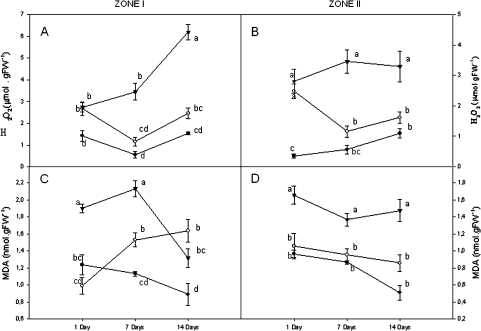
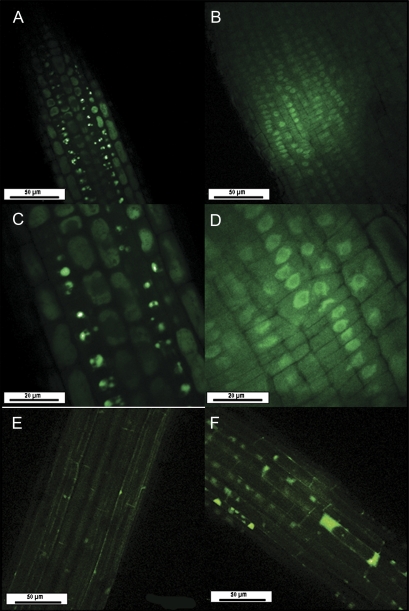
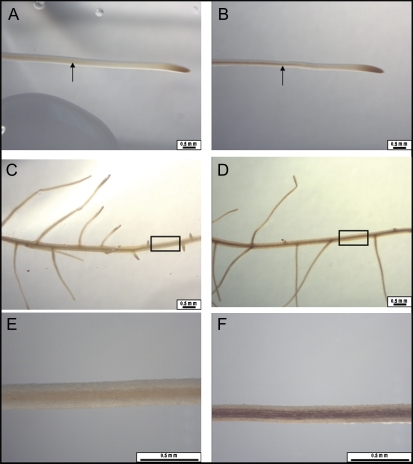
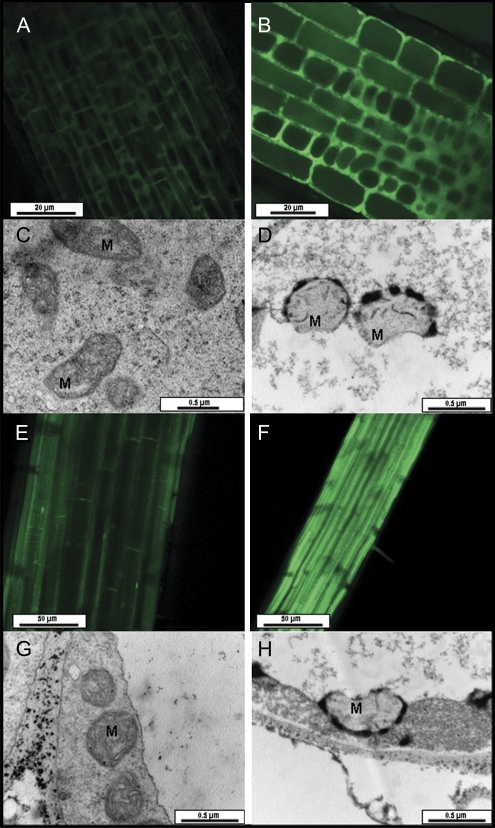
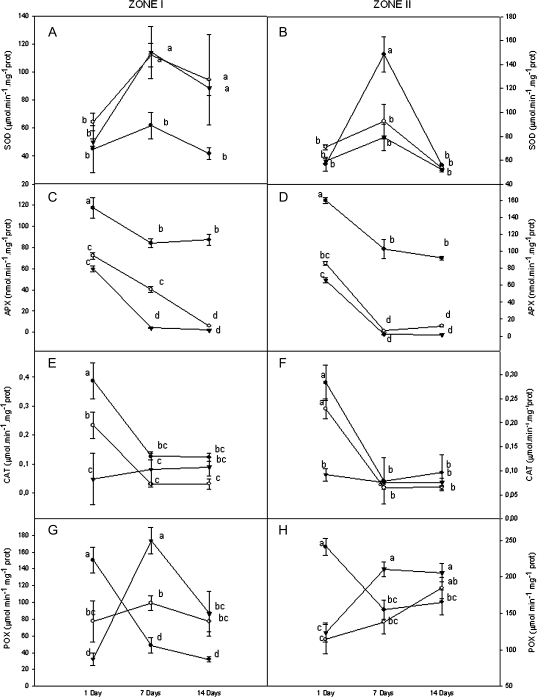
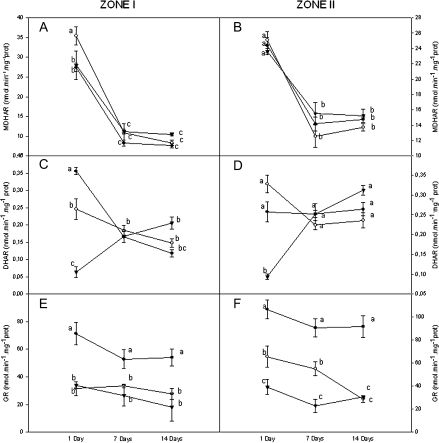
Salinity affects normal growth and development of plants depending on their capacity to overcome the induced stress. The present study was focused on the response and regulation of the antioxidant defence system in Brassica oleracea roots under short and long salt treatments. The function and the implications of hydrogen peroxide as a stressor or as a signalling molecule were also studied. Two different zones were analysed--the elongation and differentiation zone and the fully differentiated root zone--in order to broaden the knowledge of the different effects of salt stress in root. In general, an accumulation of hydrogen peroxide was observed in both zones at the highest (80 mM NaCl) concentration. A higher accumulation of hydrogen peroxide was observed in the stele of salt-treated roots. At the subcellular level, mitochondria accumulated hydrogen peroxide in salt-treated roots. The results confirm a drastic decrease in the antioxidant enzymes catalase, ascorbate peroxidase, and peroxidases under short salt treatments. However, catalase and peroxidase activities were recovered under long salt stress treatments. The two antioxidant molecules analysed, ascorbate and glutathione, showed a different trend during salt treatments. Ascorbate was progressively accumulated and its redox state maintained, but glutathione was highly accumulated at 24 h of salt treatment, but then its concentration and redox state progressively decreased. Concomitantly, the antioxidant enzymes involved in ascorbate and glutathione regeneration were modified under salt stress treatments. In conclusion, the increase in ascorbate levels and the maintenance of the redox state seem to be critical for root growth and development under salt stress.
盐度会影响植物的正常生长和发育,这取决于它们克服诱导压力的能力。本研究主要关注短时间和长时间盐处理下甘蓝根抗氧化防御系统的响应和调节。还研究了过氧化氢作为胁迫剂或信号分子的功能和意义。为了拓宽对根中盐胁迫不同影响的认识,分析了两个不同的区域——伸长和分化区以及完全分化的根区。一般来说,在最高(80mM NaCl)浓度下,两个区域都观察到了过氧化氢的积累。盐处理根的中柱中观察到更高的过氧化氢积累。在亚细胞水平上,线粒体在盐处理的根中积累了过氧化氢。结果证实,在短时间盐处理下,抗氧化酶过氧化氢酶、抗坏血酸过氧化物酶和过氧化物酶的活性急剧下降。然而,在长时间盐胁迫处理下,过氧化氢酶和过氧化物酶的活性得到了恢复。在盐处理过程中,分析的两种抗氧化分子,抗坏血酸和谷胱甘肽,表现出不同的趋势。抗坏血酸逐渐积累,其氧化还原状态得到维持,但谷胱甘肽在盐处理 24 小时时高度积累,但随后其浓度和氧化还原状态逐渐降低。同时,参与抗坏血酸和谷胱甘肽再生的抗氧化酶在盐胁迫处理下也发生了变化。总之,在盐胁迫下,抗坏血酸水平的增加和氧化还原状态的维持似乎对根的生长和发育至关重要。