Department of Pathology, State University of New York at Stony Brook, Stony Brook, NY, USA.
PLoS One. 2009 Nov 11;4(11):e7784. doi: 10.1371/journal.pone.0007784.
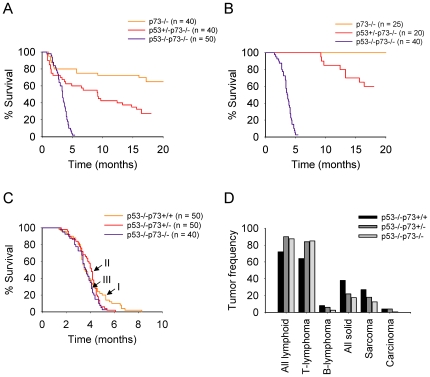
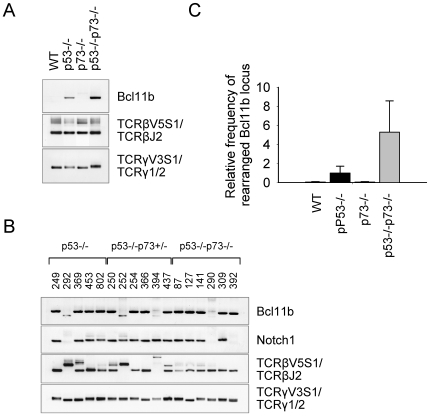
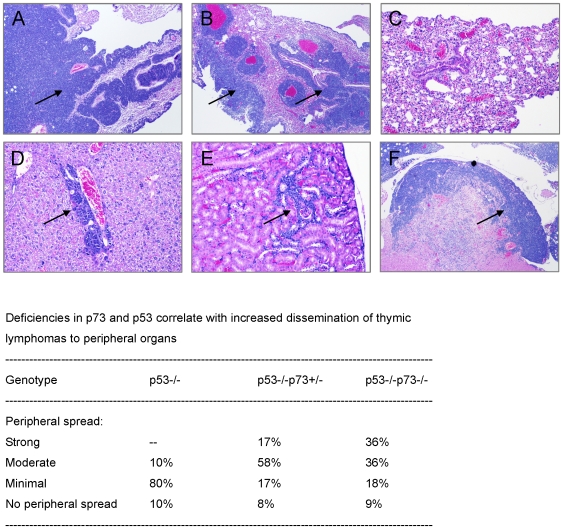
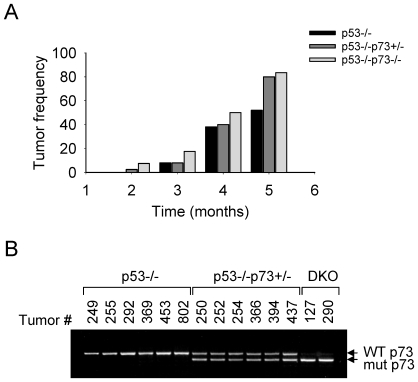
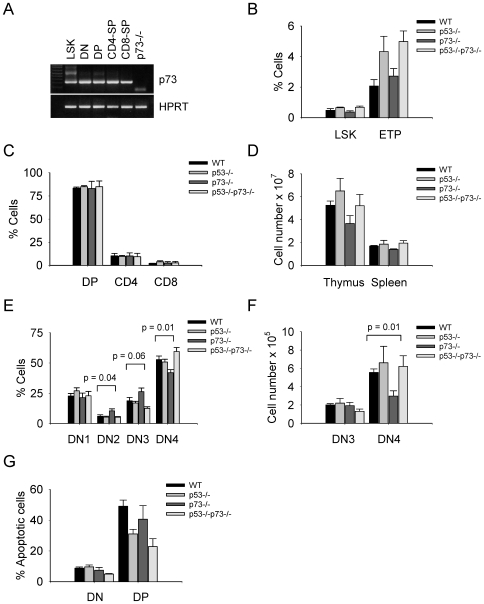
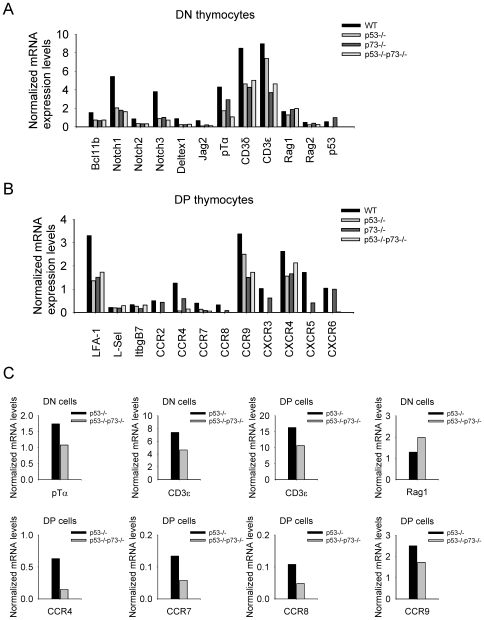
Transcriptional silencing of the p73 gene through methylation has been demonstrated in human leukemias and lymphomas. However, the role of p73 in the malignant process remains to be explored. We show here that p73 acts as a T cell-specific tumor suppressor in a genetically defined mouse model, and that concomitant ablation of p53 and p73 predisposes mice to an increased incidence of thymic lymphomas compared to the loss of p53 alone. Our results demonstrate a causal role for loss of p73 in progression of T cell lymphomas to the stage of aggressive, disseminated disease. We provide evidence that tumorigenesis in mice lacking p53 and p73 proceeds through mechanisms involving altered patterns of gene expression, defects in early T cell development, impaired apoptosis, and the ensuing accumulation of chromosomal aberrations. Collectively, our data imply that tumor suppressive properties of p73 are highly dependent on cellular context, wherein p73 plays a major role in T cell development and neoplasia.
p73 基因通过甲基化的转录沉默已在人类白血病和淋巴瘤中得到证实。然而,p73 在恶性过程中的作用仍有待探索。我们在这里表明,p73 在基因定义的小鼠模型中作为 T 细胞特异性肿瘤抑制因子发挥作用,并且与单独缺失 p53 相比,同时缺失 p53 和 p73 使小鼠更容易发生胸腺淋巴瘤。我们的结果表明,p73 的缺失在 T 细胞淋巴瘤进展为侵袭性、播散性疾病的阶段起着因果作用。我们提供的证据表明,缺乏 p53 和 p73 的小鼠的肿瘤发生是通过涉及改变基因表达模式、早期 T 细胞发育缺陷、凋亡受损以及随后染色体畸变积累的机制进行的。总的来说,我们的数据表明,p73 的肿瘤抑制特性高度依赖于细胞环境,其中 p73 在 T 细胞发育和肿瘤发生中发挥主要作用。