Department of Molecular-Targeting Cancer Prevention, Graduate School of Medical Science, Kyoto Prefectural University of Medicine, Kawaramachi-Hirokoji, Kyoto 602-8566, Japan.
Mol Cancer. 2009 Nov 12;8:100. doi: 10.1186/1476-4598-8-100.
The chemopreventive effects of dietary phytochemicals on malignant tumors have been studied extensively because of a relative lack of toxicity. To achieve desirable effects, however, treatment with a single agent mostly requires high doses. Therefore, studies on effective combinations of phytochemicals at relatively low concentrations might contribute to chemopreventive strategies.
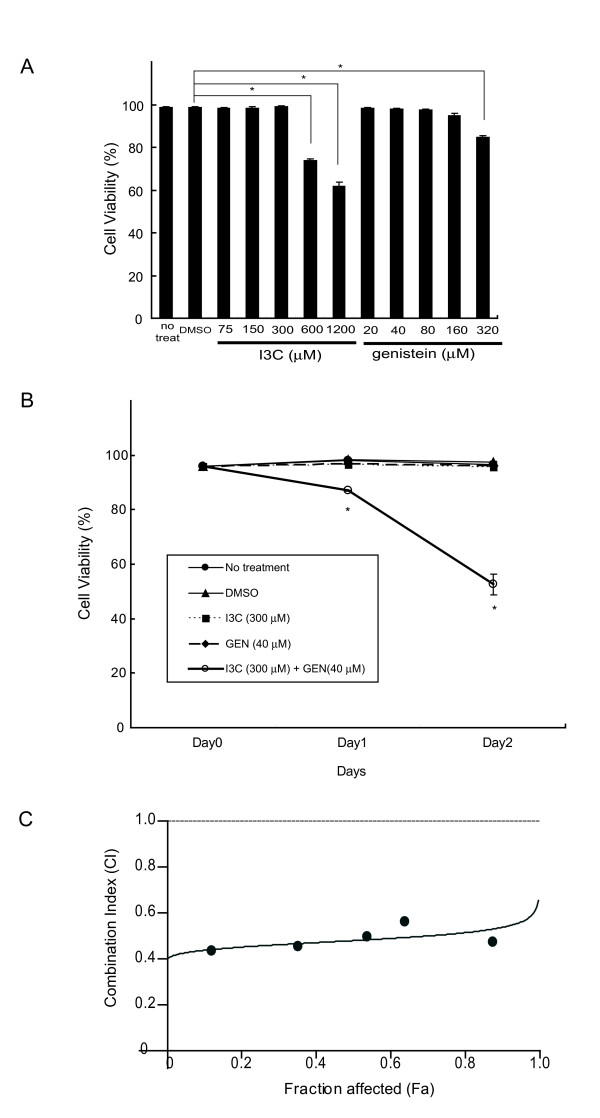
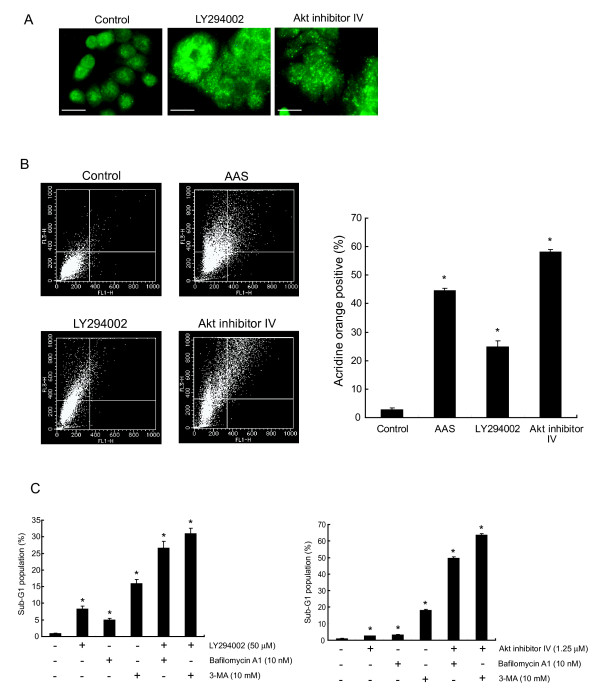
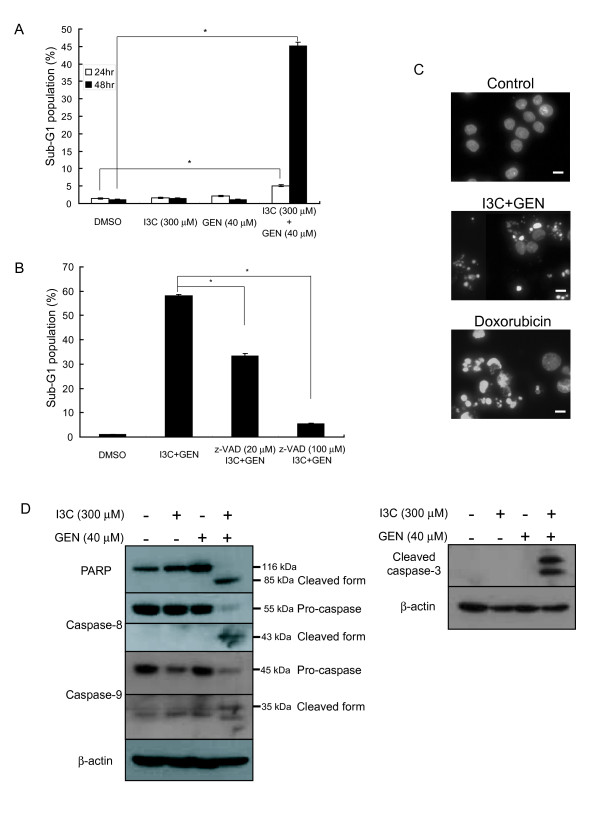
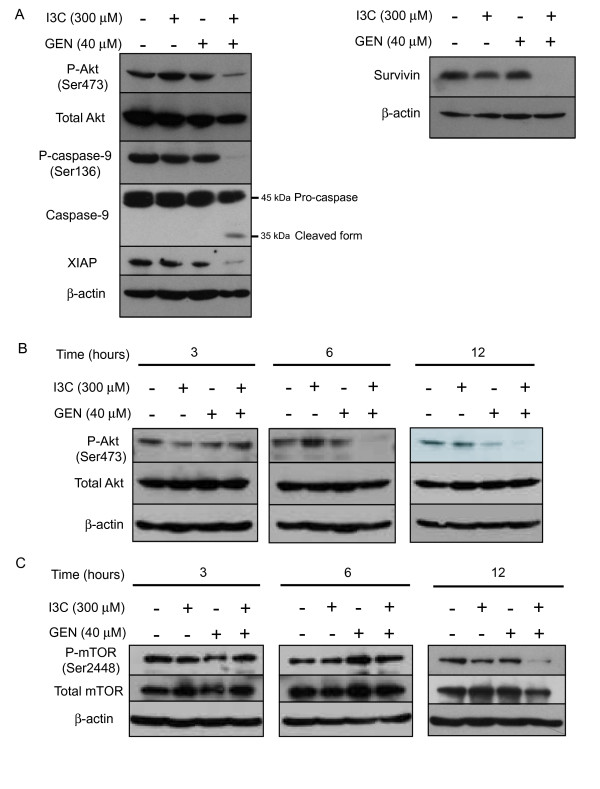
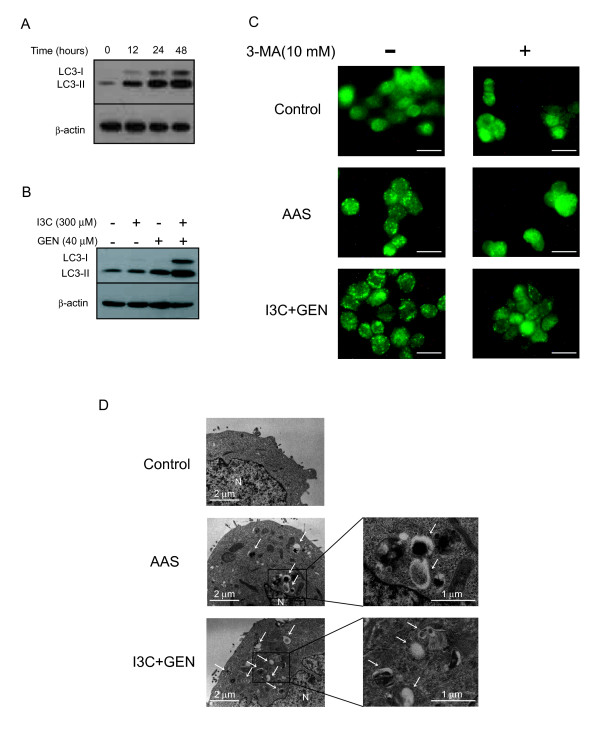
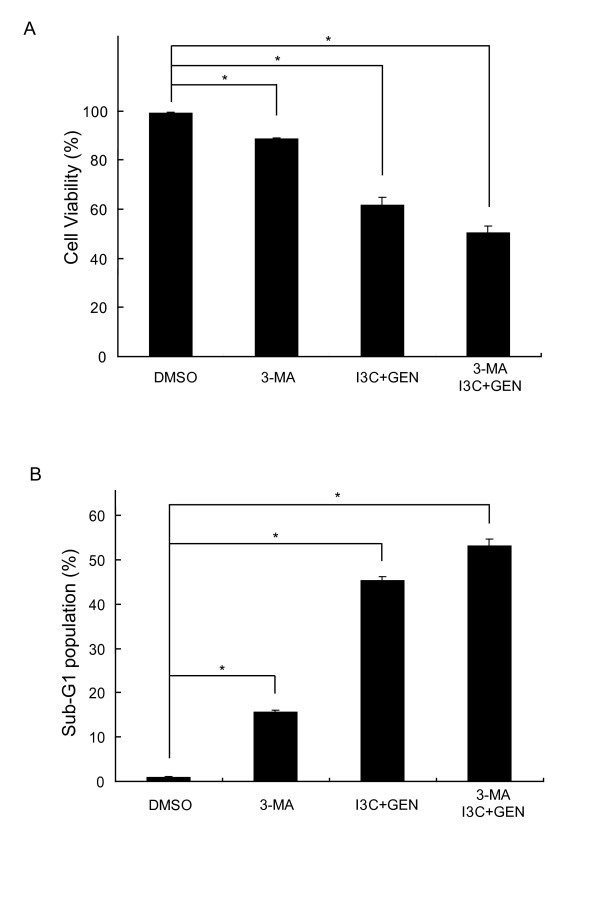
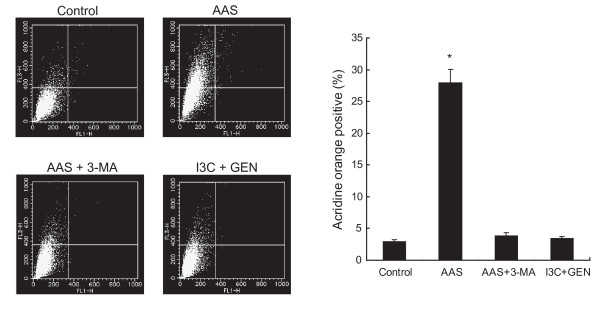
Here we found for the first time that co-treatment with I3C and genistein, derived from cruciferous vegetables and soy, respectively, synergistically suppressed the viability of human colon cancer HT-29 cells at concentrations at which each agent alone was ineffective. The suppression of cell viability was due to the induction of a caspase-dependent apoptosis. Moreover, the combination effectively inhibited phosphorylation of Akt followed by dephosphorylation of caspase-9 or down-regulation of XIAP and survivin, which contribute to the induction of apoptosis. In addition, the co-treatment also enhanced the induction of autophagy mediated by the dephosphorylation of mTOR, one of the downstream targets of Akt, whereas the maturation of autophagosomes was inhibited. These results give rise to the possibility that co-treatment with I3C and genistein induces apoptosis through the simultaneous inhibition of Akt activity and progression of the autophagic process. This possibility was examined using inhibitors of Akt combined with inhibitors of autophagy. The combination effectively induced apoptosis, whereas the Akt inhibitor alone did not.
Although in vivo study is further required to evaluate physiological efficacies and toxicity of the combination treatment, our findings might provide a new insight into the development of novel combination therapies/chemoprevention against malignant tumors using dietary phytochemicals.
由于毒性相对较低,膳食植物化学物质对恶性肿瘤的化学预防作用已得到广泛研究。然而,为了达到理想的效果,单一药物治疗大多需要高剂量。因此,研究相对低浓度的植物化学物质的有效组合可能有助于化学预防策略。
我们首次发现,来自十字花科蔬菜和大豆的 I3C 和染料木黄酮的联合治疗可协同抑制人结肠癌细胞 HT-29 在单独使用每种药物无效的浓度下的活力。细胞活力的抑制是由于诱导 caspase 依赖性细胞凋亡。此外,该联合治疗还有效抑制 Akt 的磷酸化,随后抑制 caspase-9 的去磷酸化或下调 XIAP 和 survivin,这有助于诱导细胞凋亡。此外,联合治疗还增强了 Akt 的下游靶标之一 mTOR 的去磷酸化介导的自噬诱导,而自噬体的成熟被抑制。这些结果表明,I3C 和染料木黄酮的联合治疗可能通过同时抑制 Akt 活性和自噬过程的进展来诱导细胞凋亡。使用 Akt 抑制剂和自噬抑制剂联合检查了这种可能性。联合治疗有效地诱导了细胞凋亡,而单独使用 Akt 抑制剂则没有。
尽管进一步的体内研究需要评估该联合治疗的生理功效和毒性,但我们的研究结果可能为利用膳食植物化学物质开发针对恶性肿瘤的新型联合治疗/化学预防提供新的见解。